Knee Replacement Recovery Timeline Tracker
Select your current time since surgery to see expected milestones and mobility status.
Current Phase: Assisted Walking
Stand with assistance within hours. Short corridor walks. Focus on preventing stiffness and clots. Pain is high but manageable.
Transition from walker to crutches/cane. Slight limp is normal due to quad weakness. Multiple short walks daily. Do not rush off aids.
Switch from cane to no aid indoors. Stairs become easier. PT focuses on functional strength and balance. Outdoor confidence grows.
Walk through supermarket without thinking. Full tissue healing continues. Minor clicking or numbness is normal. Goal is pain-free functionality.
You wake up in the hospital, your new artificial joint is in place, and the first question on everyone’s mind is simple: How long does it take to walk normally after knee replacement? The honest answer isn’t a single number. It’s a journey measured in weeks and months, not just days. Most people can stand and take a few steps with assistance within 24 hours of surgery. But "walking normally"-meaning without a limp, without pain holding you back, and without needing a cane-is a different milestone entirely.
If you’re facing this surgery or helping someone who is, knowing what to expect at each stage reduces anxiety. It helps you set realistic goals. Let’s break down the actual timeline based on typical orthopedic outcomes, so you know exactly where you should be when.
The First 72 Hours: Getting Moving
Modern knee replacement protocols are aggressive about early movement. Surgeons don’t want you lying in bed for three days. Why? Because immobility leads to stiffness, blood clots, and muscle loss. Within four to six hours after waking from anesthesia, a physiotherapist will likely ask you to sit on the edge of the bed and then stand up.
Yes, it hurts. Yes, it feels wobbly. But you’ll use a walker or crutches. This initial mobilization is critical. It gets blood flowing and prevents the joint from locking up. By day two or three, most patients are walking short distances down the hospital corridor. This isn’t "normal" walking yet-it’s assisted, cautious, and often accompanied by significant swelling. But it proves the mechanics work. Your brain needs to trust the new leg before your body can move naturally.
Weeks 1-6: The Assisted Walking Phase
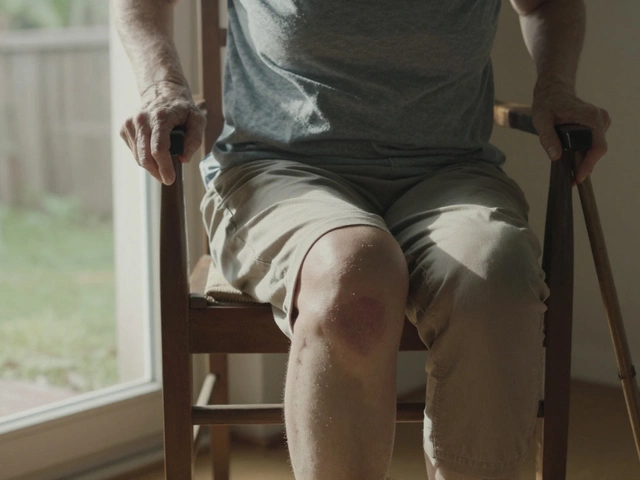
This is the hardest part mentally. You’re home, managing pain meds, doing exercises that feel repetitive, and still relying on aids. During these first six weeks, you transition from a walker to crutches, and eventually to a cane. Some lucky patients ditch all aids by week four, but don’t panic if you need them until week eight.
Here’s what "walking" looks like now:
- Gait Pattern: You might have a slight limp. This is normal. Your quadriceps (thigh muscles) are weak from surgery and disuse. They control knee stability during the stance phase of walking. Until they strengthen, you’ll compensate.
- Distance: You’ll start with five minutes around the house. Gradually increase this. Aim for multiple short walks rather than one long marathon.
- Pain Level: Discomfort should decrease steadily. If pain spikes, check your form. Are you leaning too much on the cane? Are you twisting the knee?
A key rule here: Do not rush off the crutches. Using them longer than necessary actually helps. It ensures you walk with proper posture instead of hunching over to protect the sore knee. Bad habits formed now take months to fix.
Months 3-6: Breaking Free from Aids
By the three-month mark, many patients report feeling significantly better. The sharp surgical pain is gone, replaced by occasional ache after activity. This is usually when people switch from a cane to no aid at all, especially indoors.
Is it "normal" walking? Closer, but maybe not quite. You might notice you favor the operated leg slightly when tired. Stairs become easier-you can often go up leading with the good leg and down leading with the bad, but soon you’ll do both legs simultaneously. Outdoor walking becomes more confident. You might tackle uneven ground, though gravel paths or steep hills could still trigger caution.
Physical therapy shifts focus from basic mobility to functional strength. Exercises like step-ups, squats, and balance drills become central. These build the proprioception-the body’s sense of position-that allows for fluid, natural movement.

Months 6-12: Achieving True Normalcy
This is the finish line for most people. By six months, roughly 80-90% of the final range of motion and strength is achieved. For many, "normal" walking happens here. You can walk through a supermarket without thinking about your knees. You can climb stairs two at a time if you’re feeling bold. You can sleep through the night without turning positions due to pain.
However, full tissue healing takes up to a year. Scar tissue continues to remodel. Nerves that were cut or stretched during surgery continue to regenerate slowly. This means minor sensations-like numbness near the incision or occasional clicking-are normal even at the ten-month mark. Clicking isn’t always a sign of failure; it’s often gas bubbles in the joint fluid or soft tissue moving over hardware. Unless it’s painful, ignore it.
At twelve months, the knee is fully integrated into your life. You’ve forgotten which leg was operated on because you’re just living again. That’s the true definition of walking normally.
Factors That Speed Up or Slow Down Recovery
Why does your neighbor walk unaided at week five while you’re still using a cane at week seven? Biology plays a role, but behavior matters more.
| Factor | Impact on Recovery | Actionable Tip |
|---|---|---|
| Pre-Surgery Fitness | Stronger quads lead to faster rehab. | Do pre-hab exercises if possible. |
| Weight | Excess weight stresses the new joint and slows gait normalization. | Maintain a healthy diet to reduce load. |
| Age | Older adults heal slower but adapt well. | Focus on consistency over intensity. |
| Comorbidities | Diabetes or arthritis in other joints complicates gait. | Manage underlying health conditions strictly. |
| Adherence to PT | Skipping exercises delays strength gains. | Treat PT as non-negotiable medicine. |
Notice that age alone doesn’t stop you from walking normally. An active 70-year-old often recovers faster functionally than a sedentary 50-year-old. Muscle memory and cardiovascular health are huge advantages.

What Does "Normal" Actually Look Like?
Let’s define terms. "Normal" walking involves a heel-to-toe roll, arm swing opposite to the leg, and a symmetrical stride length. After knee replacement, some asymmetry may persist forever, especially if you had severe bow-leggedness or knock-knees before surgery. The goal isn’t perfection; it’s pain-free functionality.
You should be able to:
- Walk on flat surfaces for 30+ minutes without stopping.
- Climb standard household stairs safely.
- Get in and out of cars without groaning.
- Sleep comfortably.
If you can do these things, you’re winning. Don’t compare your gait to an Olympic athlete. Compare it to how you walked before surgery, when every step hurt.
When to Worry About Your Gait
Most deviations are temporary. But watch for red flags. If you suddenly lose ability to straighten the knee, or if the calf becomes hot, red, and swollen, call your doctor immediately-this could be a clot. If you experience a sudden "pop" followed by inability to bear weight, seek urgent care. Otherwise, trust the process. Fluctuations in progress are normal. Some weeks feel great; others feel like setbacks. Keep showing up to your exercises.
Practical Tips for Faster Walking Recovery
Small changes make big differences in how quickly you regain confidence.
- Ice After Activity: Swelling limits motion. Ice the knee for 20 minutes after walks to keep inflammation down.
- Elevate Properly: When resting, elevate the leg above heart level. This drains fluid and reduces morning stiffness.
- Wear Supportive Shoes: Avoid flip-flops or high heels. Wear shoes with good arch support and cushioning. This stabilizes the entire kinetic chain.
- Visualize the Movement: Before standing, mentally rehearse the sequence: push up, shift weight, step forward. This primes neural pathways.
- Hydrate: Dehydration thickens synovial fluid, making the joint feel stiffer.
Remember, the knee implant itself doesn’t get tired. Your muscles do. Fatigue causes poor form, which causes pain. Rest before you hit the wall, not after.
Can I drive a car after knee replacement?
Typically, you can drive an automatic car 4-6 weeks after right knee replacement, once you can perform an emergency stop safely. For left knee replacements, you might drive sooner (2-3 weeks) if you have an automatic transmission. Always test reaction times in a safe area first and consult your surgeon.
Will my knee click or pop when I walk?
Yes, clicking or popping sounds are very common and usually harmless. They result from scar tissue breaking up or air bubbles in the joint fluid. As long as there is no pain or instability associated with the sound, it is considered normal and does not indicate implant failure.
How far should I walk each day during recovery?
Start with 5-minute walks several times a day. Gradually increase duration by 1-2 minutes per week. By month 3, aim for 20-30 minutes total daily walking. Listen to your body-if pain exceeds a 3/10 scale, rest and ice, then try again later.
Is it normal to still limp at 6 months?
A mild limp can persist at 6 months, often due to residual muscle weakness or fear of pain. Continued strengthening exercises and physical therapy usually resolve this by 9-12 months. If the limp is pronounced or painful, request a gait analysis from your therapist.
Can I walk on uneven terrain after recovery?
Yes, most patients return to hiking trails, beaches, and parks by 6-12 months. Start on gentle slopes and ensure you wear supportive footwear. Balance training during rehab prepares you for these challenges.