Open-Heart Surgery Travel Calculator
This tool calculates your safe travel window after open-heart surgery based on your recovery status. Enter your details below to get personalized recommendations.
Passenger Safety
Driver Safety
Long Trip Readiness
After open-heart surgery, your body is still healing - not just the incision, but your heart, lungs, and muscles too. You might be eager to get back to normal life: driving to the grocery store, visiting family, or taking a short road trip. But rushing into car travel too soon can put unnecessary stress on your recovery. So how long should you wait? The answer isn’t one-size-fits-all, but most people can safely ride as a passenger within 2 to 4 weeks and drive again between 4 to 6 weeks - if their recovery is going well.
Why timing matters after open-heart surgery
Your sternum (breastbone) was cut open during surgery and held together with wires. It takes about 6 to 8 weeks to fully heal. That’s longer than most people realize. Even if the pain feels gone after two weeks, the bone is still fragile. Sudden movements - like braking hard, turning sharply, or even sitting in a stiff car seat for too long - can strain your chest and slow healing.
Also, your heart is still adjusting. Open-heart surgery often means you’ve had a bypass, valve repair, or other major intervention. Your heart’s ability to handle physical stress - like the slight jolts of driving or the pressure changes during a long ride - isn’t back to normal yet. Doctors monitor your heart rate, blood pressure, and oxygen levels during recovery. If those are stable, you’re more likely to be cleared for travel.
Passenger vs. driver: Different rules apply
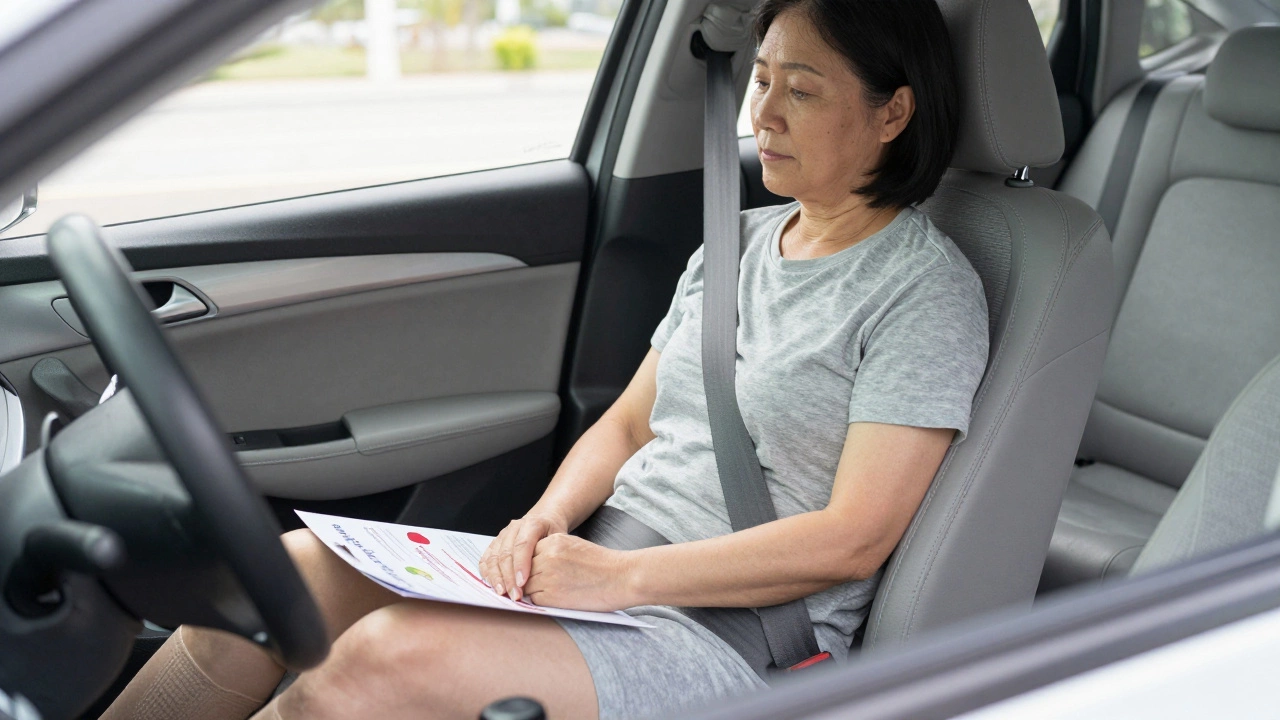
Being a passenger is much easier than driving. As a passenger, you don’t need to use your arms or core muscles to steer, brake, or turn. You can sit back, relax, and let your body recover. Most cardiac rehab teams say it’s usually safe to ride as a passenger after 2 to 4 weeks, as long as you’re off strong painkillers and can sit comfortably without dizziness or shortness of breath.
Driving is a different story. You need full control of your body. You must be able to:
- Turn the steering wheel quickly without pain
- Press the brake pedal firmly and suddenly
- React fast in traffic without hesitation
- Sit upright for 30 minutes or more without discomfort
Most patients are cleared to drive between 4 and 6 weeks after surgery. But this depends on:
- How you’re feeling - no chest pain, dizziness, or fatigue
- Whether you’re still taking opioids or strong pain meds - these can slow your reaction time
- Your surgeon’s or cardiologist’s specific advice - some are more cautious than others
One 2023 study from the European Society of Cardiology followed 1,200 patients after bypass surgery. Those who drove before 6 weeks had a 34% higher chance of reporting chest discomfort during travel. Only 8% of those who waited until 6 weeks had any issues.
What to watch for before getting in the car
Don’t rely on how you feel alone. Use these practical checks before you even think about driving:
- No pain at rest or with movement - If you feel sharp pain when you twist to check your blind spot, wait longer.
- No dizziness or lightheadedness - These could mean your blood pressure isn’t stable yet.
- You’re off opioid painkillers - Medications like oxycodone or hydrocodone can make you drowsy. Even if you feel alert, your reflexes may be slowed.
- You can walk 15-20 minutes without stopping - This shows your heart can handle mild exertion.
- Your surgeon or cardiac rehab team says it’s OK - Never skip this step.
If you’re unsure, ask your doctor to test you. Some clinics do a simple “drive simulation” - they have you sit in a car, turn the wheel, and press the brake while monitoring your heart rate and symptoms.
Long car trips: What to plan for
Even after you’re cleared to drive, long trips need planning. Sitting for hours can cause swelling, stiffness, and even blood clots - especially if you’ve had heart surgery.
Here’s what works:
- Break up the drive - Stop every 60 to 90 minutes. Walk around for 5 minutes. Stretch your legs. Move your arms gently.
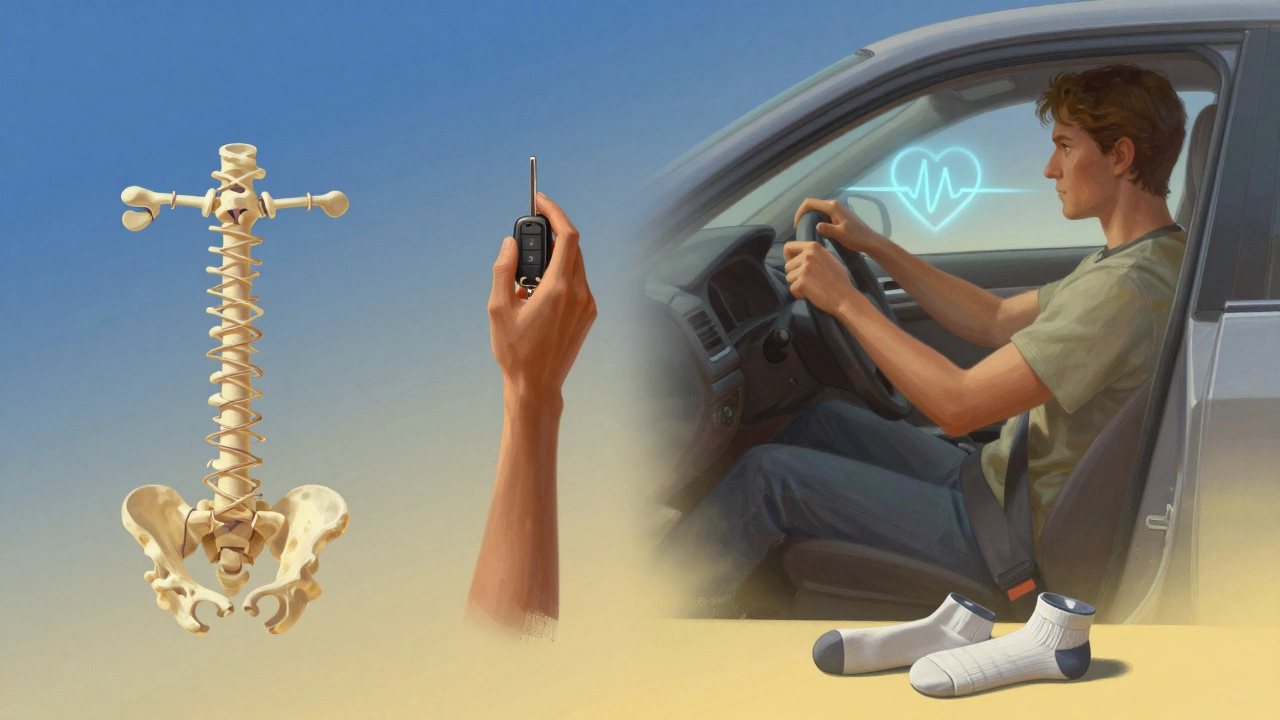
- Use a lumbar roll or cushion - A small pillow behind your lower back helps reduce strain on your chest and spine.
- Wear compression socks - These help prevent swelling and reduce the risk of deep vein thrombosis (DVT).
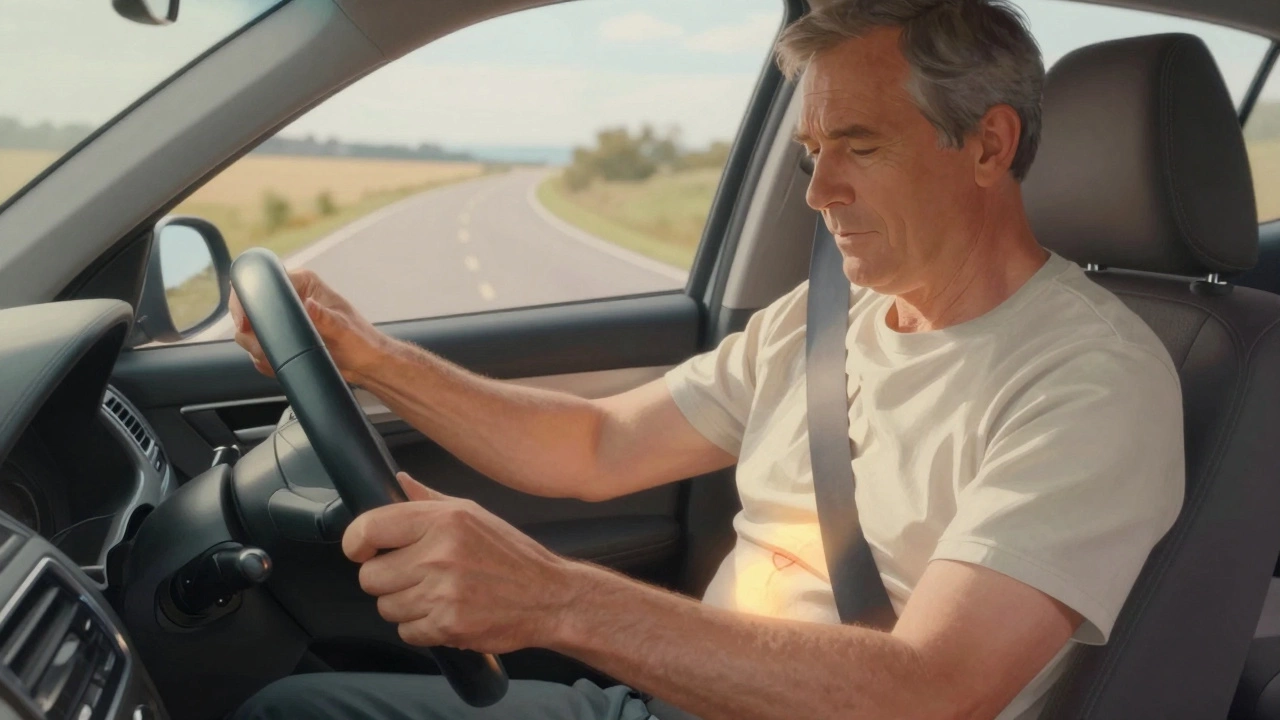
- Keep your seatbelt low - Position it under your sternum, not across the incision. If it rubs, use a soft cloth or seatbelt pad.
- Bring your medications - Don’t rely on your car’s glove compartment. Keep pills in your pocket or a small bag you can reach without twisting.
One patient I spoke with, a 68-year-old retired teacher from Manchester, drove 3 hours to visit her grandchildren 5 weeks after her bypass. She stopped every hour, wore compression socks, and kept her seatbelt adjusted. She had no issues. But she waited until her cardiac rehab nurse gave her the green light - and she didn’t drive again for another 2 weeks after that trip.
When to delay travel - red flags
Don’t travel by car if you have any of these symptoms:
- Chest pain or pressure - even mild
- Shortness of breath when sitting still
- Swelling in your legs or ankles
- Irregular heartbeat or palpitations
- Fever, chills, or fluid leaking from your incision
If you have any of these, call your doctor. Traveling could make things worse. It’s not worth the risk.
What your medical team will ask you
When you’re cleared for travel, your doctor or cardiac rehab nurse will likely ask:
- Can you climb a flight of stairs without stopping?
- Do you feel dizzy when you stand up quickly?
- Are you still taking pain meds that make you sleepy?
- Have you had any episodes of fainting or near-fainting?
- Have you completed your cardiac rehab program?
Answer honestly. They’ve seen patients rush back too soon - and end up back in the hospital with complications.
What about air travel or long-distance travel?
Car travel is just the first step. Most doctors recommend waiting at least 6 to 8 weeks before flying. Airplane cabins have lower oxygen levels and pressure changes that can stress your heart. Plus, sitting for hours on a plane increases clot risk. If you need to fly, talk to your doctor about getting a medical clearance letter and wearing compression garments.
But for now - focus on the car. It’s the first real test of your independence after surgery.
Final advice: Patience wins
You want to get back to your life. You miss driving. You miss seeing your family. But your heart needs more time than your mind wants to give it. Rushing this step doesn’t speed up recovery - it slows it down.
Waiting 6 weeks to drive isn’t a punishment. It’s protection. It’s the difference between getting back on the road and staying on it - safely.
When in doubt, wait. Your body will thank you.
Can I ride in a car as a passenger after open-heart surgery?
Yes, most patients can ride as a passenger 2 to 4 weeks after surgery, as long as they’re not on strong painkillers, have no dizziness, and can sit comfortably without chest pain. Always check with your doctor first.
When can I start driving again after open-heart surgery?
Most people can drive again between 4 to 6 weeks after surgery, but only if they’ve stopped taking opioid pain meds, can move without pain, and have been cleared by their doctor or cardiac rehab team. Never drive if you’re still feeling weak or dizzy.
Is it safe to drive with a seatbelt after heart surgery?
Yes, but position the seatbelt low across your hips, not over your sternum. Use a soft pad or cloth under the strap if it rubs against your incision. Never skip the seatbelt - it’s still your best protection in a crash.
What should I do if I feel chest pain while driving?
Stop driving immediately. Pull over safely. Rest and take your prescribed nitroglycerin if you have it. Call your doctor or emergency services if the pain doesn’t go away in a few minutes. Don’t ignore chest pain - it’s a warning sign.
How long should I wait before taking a long road trip?
Wait at least 6 to 8 weeks after surgery, and only after completing cardiac rehab. Break the trip into short segments, stop every hour, wear compression socks, and keep your medications handy. Always have someone with you on your first long drive.
Does my age affect when I can travel by car?
Age alone doesn’t determine when you can drive, but older adults often heal slower and may have other conditions like arthritis or diabetes that affect recovery. Your doctor will consider your overall health, not just your age, when giving clearance.