
Arthritis Risk Assessment Tool
This tool assesses your risk of arthritis based on your symptoms. It's not a replacement for medical diagnosis, but can help determine if you should see an orthopedic doctor for further evaluation.
When your knees ache every morning, or your fingers stiffen up after typing, it’s natural to wonder: Can an orthopedic doctor diagnose arthritis? The short answer is yes-orthopedic doctors don’t just fix broken bones. They’re trained to spot, manage, and treat joint diseases like arthritis, often before they turn into something worse.
What Exactly Is Arthritis?
Arthritis isn’t one disease. It’s a group of over 100 conditions that attack joints. The two most common types are osteoarthritis and rheumatoid arthritis. Osteoarthritis happens when the cartilage between your bones wears down over time. You’ll feel it in your knees, hips, hands, or spine. Rheumatoid arthritis is an autoimmune disorder where your immune system attacks your own joints, causing swelling, heat, and pain-even when you’re not moving.
People often mistake arthritis for simple aging. But it’s not just about getting older. A 42-year-old office worker with constant wrist pain might have early rheumatoid arthritis. A 60-year-old with knee pain after walking might have osteoarthritis. Both need different treatments-and both can be diagnosed by an orthopedic doctor.
Why See an Orthopedic Doctor for Joint Pain?
Primary care doctors can spot red flags, but they don’t have the tools or training to dig deep into joint structure. Orthopedic doctors specialize in the musculoskeletal system: bones, joints, ligaments, tendons, and muscles. They know how these parts move, how they break down, and how to fix them.
Think of it like this: if your car makes a grinding noise, you don’t take it to a general mechanic-you go to someone who knows engines. Same with your joints. An orthopedic doctor has seen hundreds of arthritic joints. They recognize patterns: how the cartilage thins, how bone spurs form, how inflammation changes the joint lining.
How Do Orthopedic Doctors Diagnose Arthritis?
Diagnosis isn’t just one test. It’s a mix of history, physical exam, and imaging.
- Medical history: They’ll ask when the pain started, what makes it better or worse, if you’ve had injuries, and if anyone in your family has arthritis.
- Physical exam: They’ll check your range of motion, look for swelling or warmth, press on joints to find tender spots, and listen for grinding sounds.
- X-rays: The most common imaging tool. Shows bone changes, cartilage loss, and bone spurs-classic signs of osteoarthritis.
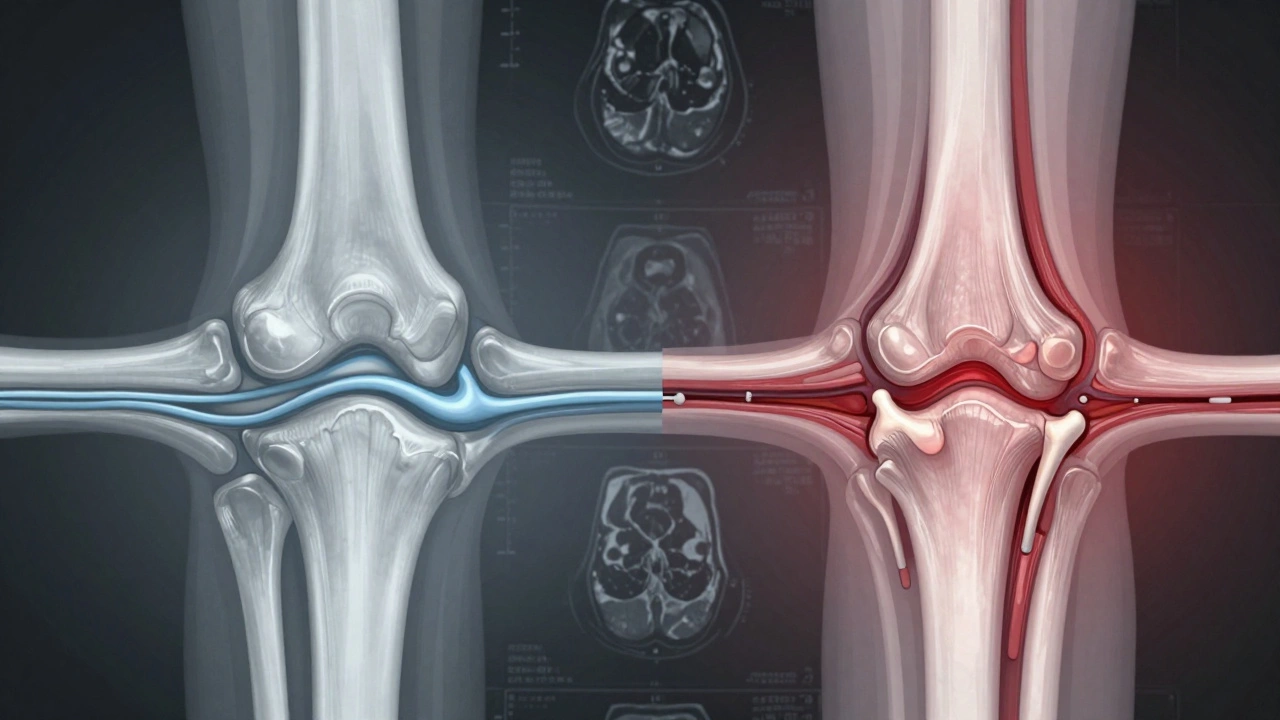
- MRI or ultrasound: Used when soft tissue damage is suspected, like in rheumatoid arthritis. These show inflammation in the joint lining that X-rays miss.
- Blood tests: While not always needed, doctors may order them to check for rheumatoid factor or anti-CCP antibodies, which point to autoimmune arthritis.
Some patients think blood tests alone can confirm arthritis. That’s not true. Many people with osteoarthritis have normal blood work. And some with rheumatoid arthritis don’t test positive right away. That’s why the physical exam and imaging matter just as much.
What’s the Difference Between an Orthopedic Doctor and a Rheumatologist?
This is a common confusion. Both treat arthritis. But they focus on different things.
Rheumatologists are internal medicine doctors who specialize in autoimmune and inflammatory diseases. They’re experts in complex cases-like when arthritis affects your lungs, eyes, or skin. They often manage medications like methotrexate or biologics.
Orthopedic doctors focus on structural damage and mechanical problems. If your joint is severely worn out, they’re the ones who’ll recommend injections, physical therapy, or surgery. Many patients see both: a rheumatologist to control inflammation, and an orthopedic doctor to fix the damage.
For most people with joint pain, starting with an orthopedic doctor makes sense. They can rule out fractures, tumors, or tendon tears-and if it’s arthritis, they’ll know whether it’s time to bring in a rheumatologist.
When Should You Go Straight to an Orthopedic Doctor?
You don’t need to wait for your primary care doctor to refer you. Go straight to an orthopedic doctor if:
- Your pain lasts more than two weeks without improvement
- You hear grinding or popping in your joints when you move
- Your joint locks up or gives out unexpectedly
- You have swelling, redness, or warmth that doesn’t go down
- You’ve tried rest, ice, and over-the-counter painkillers with no relief
Delaying care can lead to irreversible damage. A study from the Arthritis Foundation found that people who waited more than six months to get diagnosed lost 30% more joint function than those who saw a specialist within three months.
What Happens After Diagnosis?
An orthopedic doctor won’t just say, “You have arthritis.” They’ll give you a plan.
For mild osteoarthritis: weight management, physical therapy, braces, and maybe cortisone shots. For moderate cases: viscosupplementation (lubricant injections) or radiofrequency ablation. For severe cases: partial or total joint replacement.
With rheumatoid arthritis, they’ll work with your rheumatologist to monitor how well your meds are working. If the joint is already destroyed, they’ll plan for surgery. The goal isn’t just to reduce pain-it’s to keep you moving.

Common Myths About Arthritis and Orthopedic Doctors
Myth: “Only older people get arthritis.”
Truth: While osteoarthritis is more common after 50, rheumatoid arthritis can strike in your 20s or 30s. Athletes, manual laborers, and even desk workers can develop it early due to injury or repetitive stress.
Myth: “Arthritis means you’ll need surgery.”
Truth: Most people never need joint replacement. Early diagnosis and lifestyle changes can delay or even prevent surgery.
Myth: “Orthopedic doctors only do surgery.”
Truth: Less than 20% of orthopedic visits lead to surgery. Most treatments are non-invasive: exercise, injections, braces, or activity modification.
What to Bring to Your First Appointment
Make your visit more efficient by preparing:
- A list of symptoms: when they started, how often they happen, what triggers them
- A record of medications and supplements you take
- Any prior imaging (X-rays, MRIs) or lab results
- Questions: “Is this arthritis?”, “Will I need surgery?”, “What can I do at home?”
The more detail you give, the faster they’ll find the cause-and the sooner you’ll get relief.
Final Thoughts
Yes, an orthopedic doctor can diagnose arthritis-and they’re often the best first step. They combine medical knowledge with hands-on experience to tell you what’s really going on inside your joints. You don’t need to suffer through months of guesswork. If your joints hurt, get them checked. Early action means less pain, better mobility, and more years on your feet.
Can an orthopedic doctor diagnose rheumatoid arthritis?
Yes. While rheumatologists specialize in autoimmune conditions, orthopedic doctors are trained to recognize the joint damage and inflammation patterns of rheumatoid arthritis. They use physical exams, X-rays, MRIs, and blood tests to confirm the diagnosis. If it’s confirmed, they’ll often refer you to a rheumatologist for long-term medication management.
Do I need a referral to see an orthopedic doctor for arthritis?
Not always. Many insurance plans allow direct access to orthopedic specialists, especially for joint pain. Check with your provider, but in most cases, you can book an appointment without a referral. If you’re unsure, call the orthopedic clinic-they’ll tell you what’s required.
What’s the fastest way to get diagnosed with arthritis?
Go straight to an orthopedic doctor with a clear history of joint pain. Bring any prior imaging or lab results. The fastest diagnosis comes from combining your symptoms, a physical exam, and an X-ray-often done in the same visit. Blood tests may take a few days, but the initial diagnosis can happen within 30 minutes.
Can arthritis be misdiagnosed?
Yes, especially if only one test is used. Some conditions like gout, tendonitis, or nerve compression mimic arthritis symptoms. That’s why orthopedic doctors rely on multiple tools: history, exam, imaging, and sometimes blood work. A misdiagnosis usually happens when only pain is treated without checking the joint structure.
Is arthritis diagnosis covered by insurance?
Yes, most insurance plans cover orthopedic visits, X-rays, and basic blood tests for arthritis. Some may require prior authorization for MRIs or specialist referrals. Always confirm coverage with your insurer before your appointment, but the diagnostic process itself is typically included.
If you’ve been ignoring joint pain, thinking it’s just part of aging, it’s time to reconsider. Arthritis doesn’t have to control your life. With the right diagnosis and early care, you can stay active, reduce pain, and protect your joints for years to come.