Stage 4 Treatment Response Guide
Instruction: Select a cancer type below to see the typical treatment goals and common chemotherapy approaches for advanced stages.
Please select a cancer type from the left menu to view the details.
The Difference Between Remission and a Cure
When we talk about chemotherapy for advanced cancer, doctors rarely use the word "cure." They prefer Remission. Why? Because cancer cells are sneaky. Even if a PET scan shows nothing, a few dormant cells could still be hiding in the bone marrow or a lymph node. If the cancer doesn't come back for years, we call it a complete response. If it stays away for a decade, it feels like a cure.
In stage 4, the focus is often on Palliative Care. People often mistake this for "end-of-life care," but that's not true. Palliative care is about quality of life. It's about stopping the pain and the nausea so you can actually enjoy your time while the stage 4 cancer treatment does its work. You can be in palliative care and still be fighting for a full remission.
Which Cancers Are Most Likely to Respond?
Not all stage 4 cancers are the same. Some are incredibly aggressive, and others are surprisingly responsive to drugs. For instance, certain types of Lymphoma and Leukemia-even when they've spread throughout the body-are often highly sensitive to chemotherapy. There are cases where patients with these blood cancers reach a state where no detectable cancer remains in the body.
Then you have Testicular Cancer. This is a classic example of a cancer that can be stage 4 (spreading to the lungs or brain) but still has a high cure rate because the cells are very sensitive to specific chemo drugs like Cisplatin. On the flip side, stage 4 pancreatic or lung cancers are historically much harder to "cure," though new treatments are changing those odds every year.
| Cancer Type | Response Potential | Primary Goal | Common Approach |
|---|---|---|---|
| Testicular | High | Cure/Remission | Aggressive Chemo |
| Lymphoma | High/Moderate | Remission | Combination Chemo |
| Breast (HER2+) | Moderate | Long-term Control | Targeted Therapy + Chemo |
| Pancreatic | Low | Life Extension | Palliative Chemo |
How Chemotherapy Actually Works in Stage 4
Chemotherapy uses powerful chemicals to kill fast-growing cells. Since cancer cells grow faster than normal cells, they get hit the hardest. In stage 4, the chemo travels through the bloodstream, which is why it's called "systemic therapy." It doesn't just hit one tumor; it hunts down cancer cells wherever they've traveled in the body.
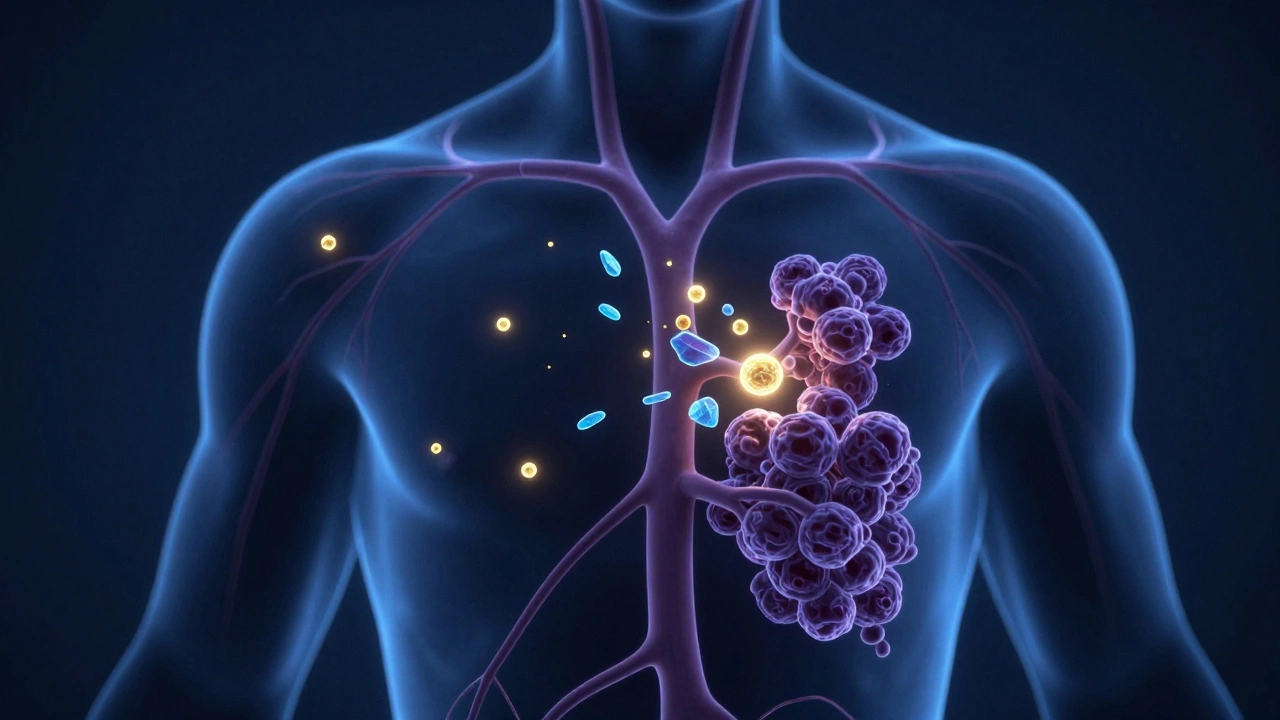
Modern medicine rarely uses chemo alone anymore. We now use Targeted Therapy, which acts like a heat-seeking missile for specific genetic mutations in a tumor. When you combine the "sledgehammer" effect of chemo with the "sniper" precision of targeted drugs, the chances of shrinking stage 4 tumors increase significantly. We've seen this work wonders in cases of HER2-positive breast cancer, where drugs like Trastuzumab are paired with chemotherapy to turn a dire prognosis into a manageable one.
The Rise of Immunotherapy
If you're looking at the possibility of "curing" stage 4, you have to talk about Immunotherapy. Unlike chemo, which kills cells directly, immunotherapy trains your own immune system to recognize and attack the cancer. This has led to something called a "durable response."
In some cases of advanced melanoma-a skin cancer that used to be a death sentence at stage 4-checkpoint inhibitors have allowed some patients to live for years and years with no active disease. It's not a "cure" in the 1950s sense of the word, but for a patient who was told they had six months to live, a decade of cancer-free living is a miracle in practice.
What Happens When Chemo Doesn't "Cure" but Still Helps?
Most of the time, chemotherapy for stage 4 is about "downstaging." This means shrinking a tumor enough so that a surgeon can actually remove it, or shrinking a brain tumor so it stops pressing on a nerve, allowing the patient to speak or walk again. This is a massive win, even if the cancer isn't gone forever.
There's also the concept of "stable disease." If the tumors stop growing, you've won a battle. Stable disease can last for years. Imagine a patient with stage 4 colon cancer who stays stable for five years; they've essentially gained five years of birthdays, graduations, and memories that they wouldn't have had without the drugs. That's the real-world value of systemic treatment.

The Mental Toll and the "War" Mentality
You'll hear people talk about "fighting" or "winning the war" against cancer. While that's inspiring, it can be exhausting. Chemo is brutal. The fatigue, the "chemo brain," and the loss of hair are heavy burdens. It's important to remember that the goal isn't just to survive, but to live. Many patients find that focusing on mental health and nutrition alongside their medical treatment helps them tolerate the drugs better.
Support groups and counseling aren't just "extras"; they are part of the treatment. When you're dealing with the fear of a stage 4 recurrence, having a community that understands the specific anxiety of a "clear scan" is vital. The stress of waiting for scan results-often called "scanxiety"-is a real psychological phenomenon that requires its own management strategy.
Practical Steps for Navigating Treatment
If you or a loved one are facing stage 4, the sheer amount of information can be overwhelming. The best way to handle it is to ask specific, data-driven questions. Don't just ask "will this work?" Ask "what is the objective response rate for this specific drug in patients with my genetic mutation?"
- Get a second opinion from a major cancer center. Different hospitals have different access to clinical trials.
- Ask about Clinical Trials. Often, the most promising "cures" for stage 4 are found in trials for new drugs that aren't yet FDA or EMA approved.
- Discuss a "quality of life" baseline. Decide what activities are non-negotiable for you (like visiting grandkids) and tell your doctor so they can adjust dosages if the side effects are too high.
- Keep a symptom diary. Tracking exactly when nausea or pain peaks helps the medical team tweak your supportive medications.
Can stage 4 cancer ever be completely gone?
Yes, it is possible. This is called a complete response or complete remission. While it is less common in stage 4 than in stage 1, certain cancers like some lymphomas, leukemias, and testicular cancers can disappear entirely from scans after aggressive chemotherapy. However, doctors usually avoid the word "cured" because microscopic cells can remain.
Does chemotherapy always work for stage 4?
No, it doesn't always work. Some cancers develop resistance to chemotherapy, meaning the drug stops killing the cells. This is why doctors often switch to a "second-line" or "third-line" therapy, using different combinations of drugs to try and bypass the cancer's resistance.
Is chemotherapy the only option for advanced cancer?
Not at all. Depending on the cancer type, patients may use targeted therapy, immunotherapy, hormone therapy (common in some breast and prostate cancers), or radiation. Many modern plans use a "cocktail" of these approaches together for the best result.
How long does it take to know if chemo is working in stage 4?
Usually, doctors wait until a few cycles are completed (often 2 to 4 months) before performing a follow-up CT, MRI, or PET scan. They look for a decrease in tumor size or the disappearance of new lesions to determine if the treatment is effective.
What is the difference between palliative chemo and curative chemo?
Curative chemo is given with the intent to eliminate all cancer from the body. Palliative chemo is given to shrink tumors to reduce pain, improve organ function, and extend life, even if the doctor believes the cancer cannot be fully eliminated.
Next Steps and Support
If you are currently in treatment, the most important thing is to maintain a bridge between your medical team and your support system. If you feel the side effects are becoming unbearable, speak up immediately. There are modern anti-emetics and fatigue management protocols that can make a huge difference.
For those in the research phase, look into genomic sequencing of the tumor. Knowing the specific mutation of your cancer can open doors to targeted therapies that are far more effective-and often less toxic-than standard chemotherapy. This precision medicine approach is the future of treating advanced-stage malignancies.