When you're starting IVF, one of the first questions that pops up isn’t about success rates or clinics-it’s about money. Specifically: What is the cost of IVF injection? It’s not just one price. It’s a chain of costs, some hidden, some unavoidable. And if you’re in the UK, the numbers can feel overwhelming without a clear map.
What Exactly Are IVF Injections?
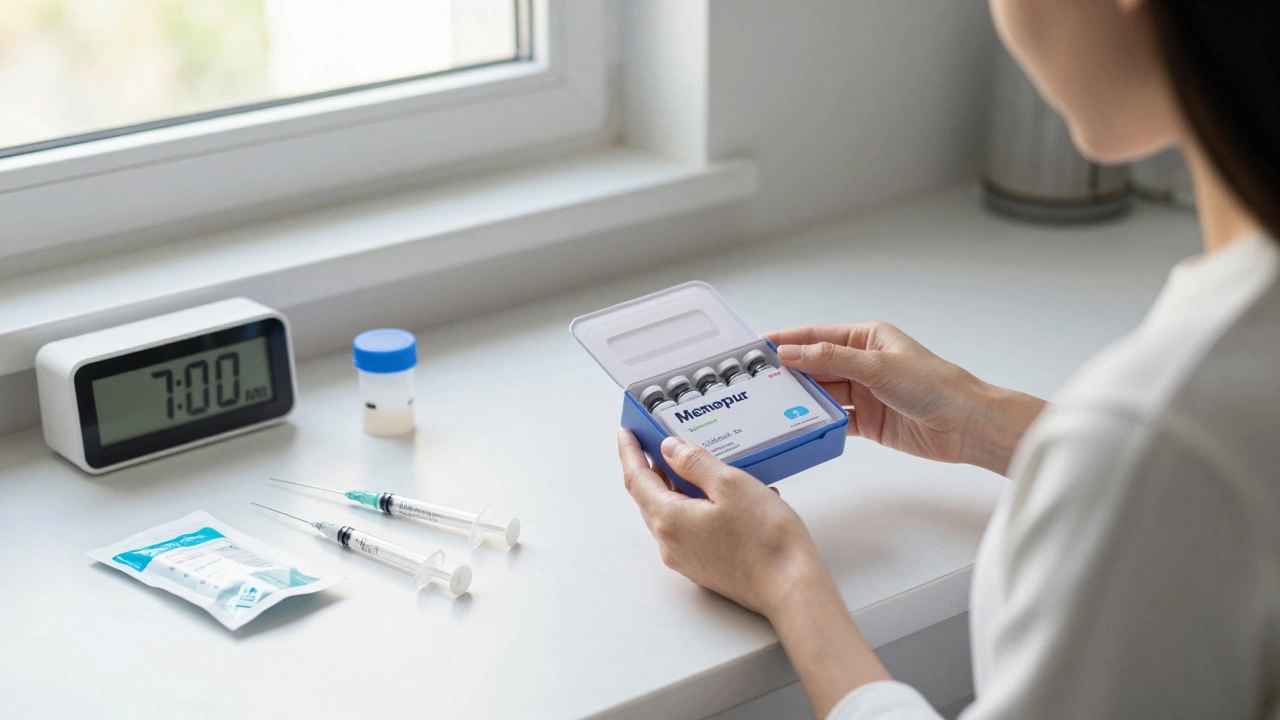
IVF injections aren’t single shots. They’re a daily routine of hormone medications designed to stimulate your ovaries to produce multiple eggs. These aren’t over-the-counter pills. They’re prescription-only, sterile, and often require precise timing. Common brands include Gonal-F, Menopur, and Cetrotide. Each has a different purpose: one triggers egg growth, another prevents early ovulation, and a third helps trigger final egg maturation.
Most patients get 10 to 14 days of daily injections. Some need more. Some need less. The exact mix depends on your age, ovarian reserve, and how your body responds. That’s why there’s no fixed cost. But you can expect to pay between £800 and £2,500 for the full injection pack in the UK.
Why Is There Such a Big Price Range?
Not all IVF injections are created equal. The cost varies based on three things: brand, dosage, and where you buy them.
Brand-name drugs like Gonal-F can cost £150-£250 per vial. Generic versions, often called ‘biosimilars’, cost about half that. Many clinics now use generics to cut costs without lowering effectiveness. The NHS sometimes supplies these, but wait times can be long.
Dosage matters too. A 300 IU vial costs more than a 150 IU one. If you’re over 35 or have low ovarian reserve, you might need higher doses-sometimes two vials a day. That can push your monthly injection bill over £2,000.
And then there’s where you buy them. Private clinics often bundle the injections into a flat IVF package. That’s convenient, but not always cheaper. Buying directly from a pharmacy-like Boots or a specialist fertility pharmacy-can save you 20-30%. Some patients order from EU-based online pharmacies, but that carries risks if the supply chain isn’t regulated.
What Else Is Included in the Injection Cost?
It’s easy to think the injection cost is just the vials. But it’s not. You’ll also need:
- Needles and syringes (usually £10-£20 for a pack)
- Alcohol wipes and sharps disposal containers (£5-£15)
- Refrigerated storage (some clinics provide cool bags, others don’t)
- Delivery fees if ordering online (often £10-£25)
- Consultation fees for dose adjustments (sometimes £50-£100 per visit)
Some clinics include all of this in their IVF quote. Others charge extra. Always ask: ‘Is the injection cost all-inclusive?’ If they say ‘yes,’ get it in writing.

How Does the UK Compare to Other Countries?
IVF injections in the UK are more expensive than in countries like India, Spain, or the Czech Republic. In India, the same medication package might cost £200-£400. In Spain, it’s around £500-£800. But there’s a catch: travel, accommodation, language barriers, and follow-up care add hidden costs.
In the UK, you’re paying for regulated quality, local support, and access to your doctor. If you’re doing IVF here, you’re not just buying drugs-you’re buying continuity of care. That’s worth something.
Can You Get IVF Injections on the NHS?
Yes-but only if you meet strict criteria. In England, you’re typically eligible for up to one full cycle of IVF if you’re under 40, have been trying for at least two years, and neither partner has a child from a previous relationship. Even then, it’s not guaranteed. Many Clinical Commissioning Groups (CCGs) have cut funding or reduced eligibility to just one cycle-or none at all.
If you qualify, the NHS covers the injections, monitoring, egg collection, and embryo transfer. But wait times can be 12-18 months. And if you’re over 35, or have PCOS or low sperm count, you might be turned down.
Many people end up paying privately after waiting too long. That’s why understanding private costs is critical, even if you hope for NHS support.
How to Save Money on IVF Injections
You don’t have to pay full price. Here are proven ways to cut costs:
- Ask for biosimilars. They’re just as effective and cost 30-50% less.
- Buy from a specialist fertility pharmacy like IVF Pharmacy or Fertility247. They often have better prices than clinic bundles.
- Use price comparison tools. Sites like FertilityIQ and IVF England let you see what others paid in your area.
- Check if your employer offers fertility benefits. Some companies now cover part of IVF costs.
- Join a support group. Women often share unused medication or know where to find discounted stock.
One patient in Manchester saved £600 by switching from her clinic’s branded Gonal-F to a generic version bought online with a valid prescription. She still had the same number of eggs retrieved.

What Happens If You Can’t Afford It?
You’re not alone. Over 60% of IVF patients in the UK pay out-of-pocket. Many take out personal loans, use savings, or crowdfund through platforms like GoFundMe. Some clinics offer payment plans-spread the cost over 6-12 months with 0% interest.
There are also charities like Fertility Network UK and The Baby Quest Foundation that offer small grants. They don’t cover everything, but they can help with medication costs. Applications take 4-8 weeks, so plan ahead.
If you’re considering going abroad, make sure the clinic is accredited by ESHRE or the HFEA. Unregulated clinics can lead to failed cycles, infections, or worse.
Is the Cost Worth It?
There’s no easy answer. The average IVF cycle in the UK costs £5,000-£8,000. Injections make up 20-35% of that. For some, that’s the biggest financial hurdle. For others, it’s the most manageable part.
What matters is knowing what you’re paying for. You’re not just buying vials of hormones. You’re paying for precision, safety, and a chance at parenthood. And while the cost feels high, it’s not arbitrary. These drugs are complex, tightly regulated, and require years of research to develop.
Many people who’ve been through IVF say the injections were the hardest part-not because of the pain, but because of the stress of the cost. That’s why transparency matters. If you walk into a clinic and no one tells you the injection price upfront, walk out. You deserve clarity.
Are IVF injections painful?
Most people describe the injections as a quick pinch, similar to a flu shot. The needles are very fine, and the injections are usually given in the stomach or thigh. Some women feel mild soreness or bruising, but it rarely lasts more than a day. Using a numbing cream or ice pack before the shot helps reduce discomfort.
Do IVF injections have side effects?
Yes. Common side effects include bloating, mood swings, headaches, and breast tenderness. These are caused by rising hormone levels and usually ease after egg retrieval. A small number of people develop Ovarian Hyperstimulation Syndrome (OHSS), which can be serious. Your clinic will monitor you with blood tests and scans to catch this early. The risk is low-under 5%-if you’re properly supervised.
Can I reuse IVF injection needles?
Never. IVF needles are single-use only. Reusing them increases the risk of infection, tissue damage, and inaccurate dosing. Even if the needle looks clean, microscopic damage can occur after one use. Always dispose of used needles in a sharps container and never touch the tip.
How long do IVF injections last once opened?
Most IVF injectables are stable for 28 days after opening, as long as they’re kept refrigerated. Always check the expiry date on the vial and the manufacturer’s instructions. Some newer formulations last longer. Never use a vial past its expiry, even if it looks fine.
Why do some clinics charge more for IVF injections than others?
Clinics that bundle injections into a full IVF package often charge more because they include consultations, nursing support, and refrigerated delivery. Cheaper clinics may just sell you the vials without guidance. Higher cost doesn’t always mean better-but no support can mean higher risk. Ask what’s included before you pay.
Next Steps: What to Do Now
If you’re considering IVF, start by getting a clear breakdown of injection costs from at least two clinics. Don’t accept a vague quote like ‘medication included.’ Ask for a line item: brand names, dosage, number of vials, and total. Compare that to what you’d pay buying directly from a pharmacy.
Call Fertility Network UK at 020 7377 7777. They offer free cost calculators and can connect you with clinics that offer payment plans. Talk to others in online forums like IVF Babble. Real stories help more than brochures.
And remember: the cost of IVF injections isn’t just a number. It’s part of a journey. Knowing the price upfront doesn’t make it easier-but it makes it less scary.