Aggressive Cancer Comparison Tool
Select a cancer type to view detailed statistics, key challenges, and common symptoms based on current medical data.
Cancer Name
Subtitle--
--
--
Common Symptoms
Treatment Overview
When people hear the word "cancer," they often imagine a slow-moving disease that gives patients time to prepare. But for some types of cancer, that is not the reality. These cancers grow fast, spread early, and are incredibly difficult to treat. If you or a loved one has been diagnosed with an aggressive form of cancer, understanding what makes it so dangerous is the first step toward fighting back.
The term aggressive cancer does not refer to just one specific disease. Instead, it describes tumors that multiply rapidly, invade nearby tissues, and metastasize (spread to other parts of the body) quickly. While there is no single "most aggressive" cancer for every person, medical experts generally point to three major contenders: Glioblastoma, a highly malignant brain tumor, Pancreatic Cancer, specifically pancreatic ductal adenocarcinoma, and Small Cell Lung Cancer, a fast-growing type of lung cancer. Each of these poses unique challenges due to its location, biology, and resistance to standard treatments.
Why Some Cancers Are More Aggressive Than Others
To understand why certain cancers are labeled as aggressive, we need to look at their biological behavior. Aggressiveness is usually measured by two factors: how fast the cells divide and how easily they spread. Fast-dividing cells are harder to control because they outpace many traditional treatments like chemotherapy, which targets rapidly dividing cells but can struggle if the tumor grows faster than the drug can kill it.
Another key factor is the tumor's microenvironment. Aggressive cancers often create a protective shield around themselves, blocking drugs from reaching the cancer cells. They also tend to mutate quickly, meaning that even if a treatment works initially, the cancer can evolve to become resistant within months. This rapid evolution is what makes diseases like glioblastoma and small cell lung cancer so formidable opponents in the fight against cancer.
Glioblastoma: The Most Aggressive Brain Tumor
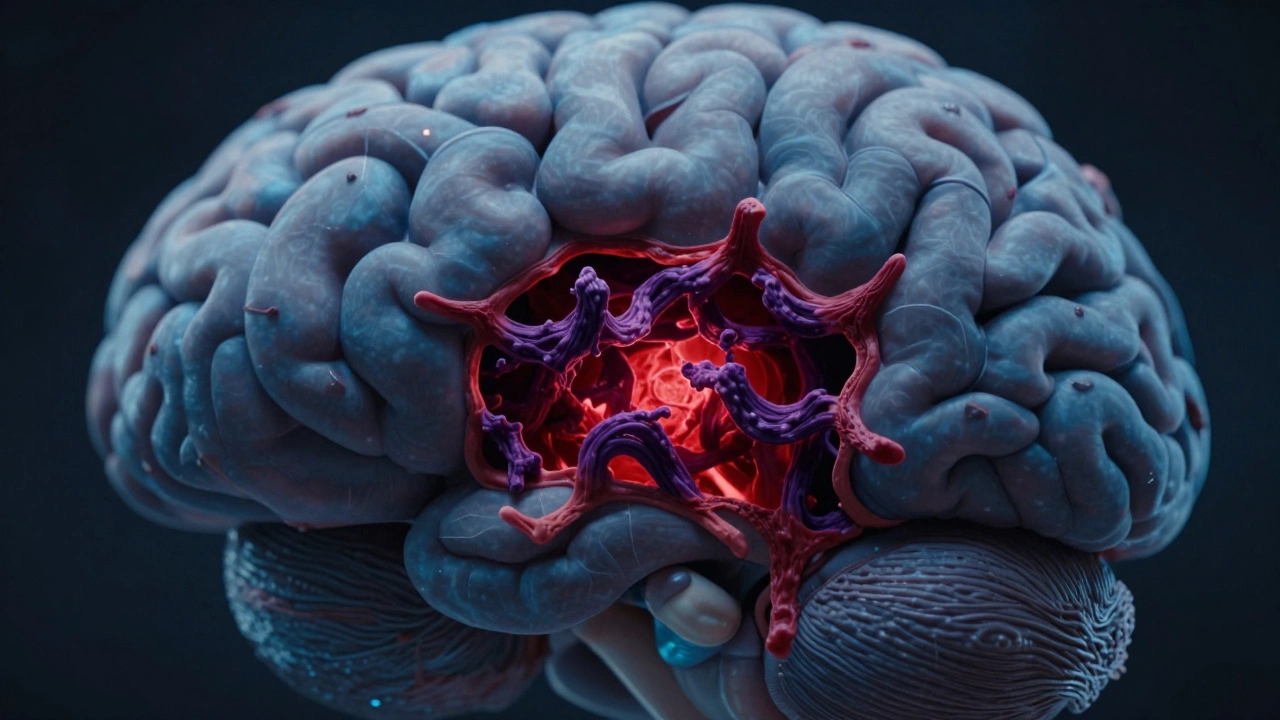
If we are talking about sheer speed and lethality, Glioblastoma (often abbreviated as GBM) stands out as one of the most aggressive cancers known to medicine. It is a type of Glioma, a tumor originating from glial cells in the brain. According to the American Cancer Society, a leading nonprofit organization providing cancer information, glioblastoma accounts for about 48% of all primary malignant brain tumors in adults.
What makes glioblastoma so dangerous is its location and its invasive nature. Unlike other tumors that form a distinct lump, glioblastoma cells infiltrate healthy brain tissue, making complete surgical removal nearly impossible. Even after surgery, radiation, and chemotherapy, the median survival rate is only 15 months. However, recent advances in Tumor Treating Fields (TTFields), a therapy using electric fields to disrupt cancer cell division have shown promise in extending life for some patients.
- Symptoms: Headaches, seizures, nausea, and changes in personality or cognition.
- Treatment: Surgery, radiation therapy, temozolomide chemotherapy, and TTFields.
- Challenge: The blood-brain barrier prevents many drugs from reaching the tumor effectively.
Pancreatic Cancer: The Silent Killer
While glioblastoma attacks the brain, Pancreatic Ductal Adenocarcinoma (PDAC), the most common type of pancreatic cancer strikes silently and spreads before symptoms appear. The pancreas is located deep in the abdomen, behind the stomach, which means tumors can grow significantly without causing pain or noticeable issues until they press on nerves or block bile ducts.
Pancreatic cancer is often called the "silent killer" because it is rarely detected in its early stages. By the time most patients are diagnosed, the cancer has already metastasized to the liver, lungs, or lining of the abdomen. The five-year survival rate for pancreatic cancer remains low, hovering around 12%, according to recent data from the National Cancer Institute, the U.S. government's principal agency for cancer research. However, this number is slowly improving thanks to better imaging techniques and targeted therapies.
One of the biggest hurdles in treating pancreatic cancer is its dense stroma-the fibrous tissue that surrounds the tumor. This stroma acts like a fortress, preventing chemotherapy drugs from penetrating the cancer cells. Researchers are currently developing new drugs designed to break down this barrier, offering hope for more effective treatments in the future.
| Cancer Type | Primary Location | Average Survival Rate | Key Challenge |
|---|---|---|---|
| Glioblastoma | Brain | 15 months (median) | Infiltration into healthy brain tissue |
| Pancreatic Cancer | Pancreas | 12% (5-year) | Late detection and drug resistance |
| Small Cell Lung Cancer | Lungs | 2-5% (5-year distant stage) | Rapid metastasis and relapse |
Small Cell Lung Cancer: Speed and Spread
Among lung cancers, Small Cell Lung Cancer (SCLC), a neuroendocrine tumor of the lung is considered far more aggressive than non-small cell lung cancer. SCLC accounts for about 13-15% of all lung cancer cases but is responsible for a disproportionate number of deaths. It is strongly linked to smoking, with over 90% of cases occurring in current or former smokers.
The hallmark of SCLC is its incredible speed. Tumors can double in size in just a few weeks. Because of this, it often spreads to other parts of the body-such as the brain, bones, and liver-before it is even detected. Doctors classify SCLC into two stages: limited stage (confined to one side of the chest) and extensive stage (spread beyond). Unfortunately, most patients are diagnosed with extensive-stage disease.
Treatment for SCLC typically involves a combination of chemotherapy and radiation. Immunotherapy has recently joined the arsenal, showing improved outcomes for some patients. However, SCLC has a high tendency to recur, meaning that even if initial treatment shrinks the tumor, it often comes back stronger and more resistant to drugs.
Other Highly Aggressive Cancers
While the three mentioned above are frequently cited as the most aggressive, other cancers deserve attention due to their rapid progression and poor prognosis. Triple-Negative Breast Cancer (TNBC), breast cancer lacking estrogen, progesterone, and HER2 receptors is more common in younger women and tends to grow faster than other breast cancers. Because it lacks the receptors that targeted therapies attack, treatment options are more limited, relying heavily on chemotherapy.
Similarly, Acute Myeloid Leukemia (AML), a cancer of the blood and bone marrow progresses rapidly without treatment. AML affects white blood cells, causing them to multiply uncontrollably and crowd out healthy blood cells. Without immediate intervention, AML can be fatal within weeks or months. Advances in Stem Cell Transplantation, a procedure replacing damaged bone marrow with healthy stem cells and targeted therapies like venetoclax have improved survival rates, but it remains a critical emergency.
Treatment Options for Aggressive Cancers
Facing an aggressive cancer diagnosis can feel overwhelming, but modern medicine offers more tools than ever before. Treatment plans are highly personalized, depending on the cancer type, stage, and the patient's overall health. Here are the main approaches used today:
- Surgery: Removing the tumor physically. For aggressive cancers, surgery is often combined with other treatments to catch any remaining cells.
- Chemotherapy: Using drugs to kill fast-dividing cells. It is systemic, meaning it travels throughout the body, which helps address metastasis.
- Radiation Therapy: Using high-energy rays to target and destroy cancer cells in a specific area.
- Immunotherapy: Helping the body's immune system recognize and attack cancer cells. Drugs like checkpoint inhibitors have revolutionized treatment for melanoma and lung cancer.
- Targeted Therapy: Medications that specifically target genetic mutations in cancer cells, sparing healthy cells from damage.
Clinical trials are also a vital option for patients with aggressive cancers. These trials provide access to cutting-edge treatments that are not yet widely available. Many breakthroughs in cancer care come from clinical trials, making participation a potentially life-saving choice.
Living with an Aggressive Cancer Diagnosis
An aggressive cancer diagnosis is not just a physical battle; it is an emotional and psychological one as well. Patients and families often face uncertainty, fear, and grief. Support systems play a crucial role in navigating this journey. Counseling, support groups, and palliative care teams can help manage symptoms and improve quality of life.
Palliative care is often misunderstood as end-of-life care, but it is actually specialized medical care focused on relieving symptoms and stress. It can be provided alongside curative treatment and has been shown to improve both the length and quality of life for many patients. Whether through pain management, nutritional support, or emotional counseling, palliative care ensures that patients are treated as whole individuals, not just as a disease.
Prevention and Early Detection
While not all aggressive cancers can be prevented, lifestyle choices can significantly reduce risk. Quitting smoking is the single most effective way to prevent lung cancer and many other types. Maintaining a healthy weight, eating a balanced diet rich in fruits and vegetables, and exercising regularly also lower the risk of pancreatic and breast cancers.
Early detection is key to improving outcomes. Regular screenings, such as mammograms for breast cancer and colonoscopies for colorectal cancer, can catch abnormalities before they become aggressive. For those with a family history of cancer, genetic testing can identify predispositions and allow for proactive monitoring.
What is the most aggressive cancer?
There is no single "most aggressive" cancer, but glioblastoma, pancreatic cancer, and small cell lung cancer are widely considered among the most aggressive due to their rapid growth, early spread, and resistance to treatment.
Can aggressive cancers be cured?
While challenging, some aggressive cancers can be managed or even cured, especially if caught early. Treatments like immunotherapy and targeted therapy have improved outcomes for many patients. Clinical trials offer access to experimental treatments that may provide new hope.
What are the symptoms of aggressive cancer?
Symptoms vary by cancer type but may include unexplained weight loss, persistent fatigue, pain, lumps, changes in bowel or bladder habits, and unusual bleeding. Early detection is crucial, so consult a doctor if you experience persistent or worsening symptoms.
How does immunotherapy work for aggressive cancers?
Immunotherapy boosts the body's immune system to recognize and attack cancer cells. It includes drugs like checkpoint inhibitors that remove the "brakes" on immune cells, allowing them to fight cancer more effectively. It has shown remarkable success in treating melanoma, lung cancer, and others.
Is genetic testing recommended for aggressive cancers?
Genetic testing can be beneficial for individuals with a family history of cancer. It helps identify inherited mutations that increase cancer risk, allowing for personalized screening and prevention strategies. Discussing this with a healthcare provider can help determine if testing is right for you.