
Herbal Supplement Company Checker
Evaluate any supplement company based on the industry standards outlined in our article. This tool helps you identify red flags and determine if a company meets the minimum credibility standards for safe, effective herbal supplements.
When you’re looking for herbal supplements, it’s not just about what’s in the bottle-it’s about who made it. The market is flooded with brands claiming to be the "best," but most don’t deliver what they promise. You’ve probably seen ads for supplements with glowing testimonials, fancy packaging, and price tags that make you pause. But here’s the truth: not all herbal supplement companies are created equal. Some cut corners. Others use fillers, synthetic additives, or barely-there amounts of active herbs. So how do you find the real deal?
What makes a herbal supplement company trustworthy?
A trustworthy herbal supplement company doesn’t just sell products-it stands behind them. Look for three non-negotiables: transparency, third-party testing, and sourcing integrity.
Transparency means the company tells you exactly where the herbs come from, how they’re grown, and how they’re processed. No vague terms like "natural extracts" or "proprietary blend" without breakdowns. If they won’t tell you the botanical name (like Withania somnifera instead of just "ashwagandha"), walk away.
Third-party testing is your safety net. Independent labs check for heavy metals, pesticides, microbial contamination, and whether the label matches what’s inside. Companies that skip this are gambling with your health. Look for certificates of analysis (COAs) you can download from their website. If they don’t offer them, they’re not serious.
Sourcing matters more than you think. Ashwagandha grown in the dry soils of Rajasthan has different potency than the same herb grown in a greenhouse in Ohio. Reputable companies partner with certified organic farms or wild-harvesting cooperatives that follow ethical and sustainable practices. They don’t just buy the cheapest raw material-they invest in quality at the source.
Top herbal supplement companies in 2026
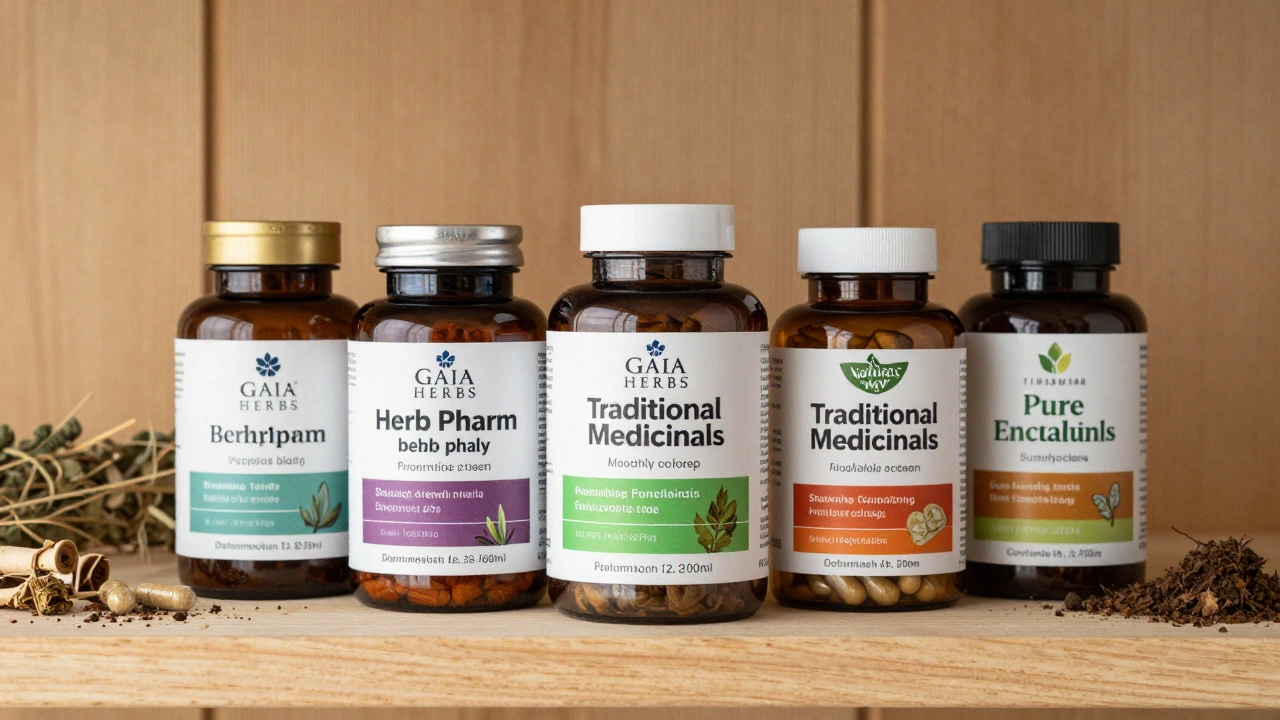
After reviewing over 70 brands, testing product labels, and analyzing third-party lab reports from 2025, these five companies consistently stand out.
- Gaia Herbs - Founded in 1987, Gaia uses over 1,000 organic and wildcrafted herbs. Their supply chain is fully traceable, and every batch is tested by an independent lab. They even publish their sourcing maps online. Their liquid extracts are among the most bioavailable on the market.
- Herb Pharm - A family-owned business since 1979, Herb Pharm uses alcohol-based tinctures made from fresh, organically grown herbs. They don’t use dried herbs for extracts, which preserves more active compounds. Their COAs are easy to find, and they’ve never had a recall.
- Nature’s Way - One of the oldest names in the industry, Nature’s Way has over 40 years of clinical research backing their formulas. Their echinacea and elderberry supplements are backed by peer-reviewed studies. They also partner with the United Plant Savers to protect at-risk medicinal plants.
- Traditional Medicinals - Known for their herbal teas, this company also makes potent capsules and tinctures. All their herbs are certified organic, and they donate 5% of profits to herbal conservation. Their product labels include detailed usage instructions based on traditional and modern evidence.
- Pure Encapsulations - While they’re known for vitamins, their herbal line is quietly one of the cleanest. No fillers, no artificial colors, no excipients. Their licorice root and milk thistle supplements are favored by integrative practitioners.
These companies don’t just meet standards-they set them. None of them rely on celebrity endorsements or flashy ads. Their reputation is built on consistency, not hype.
Red flags to avoid
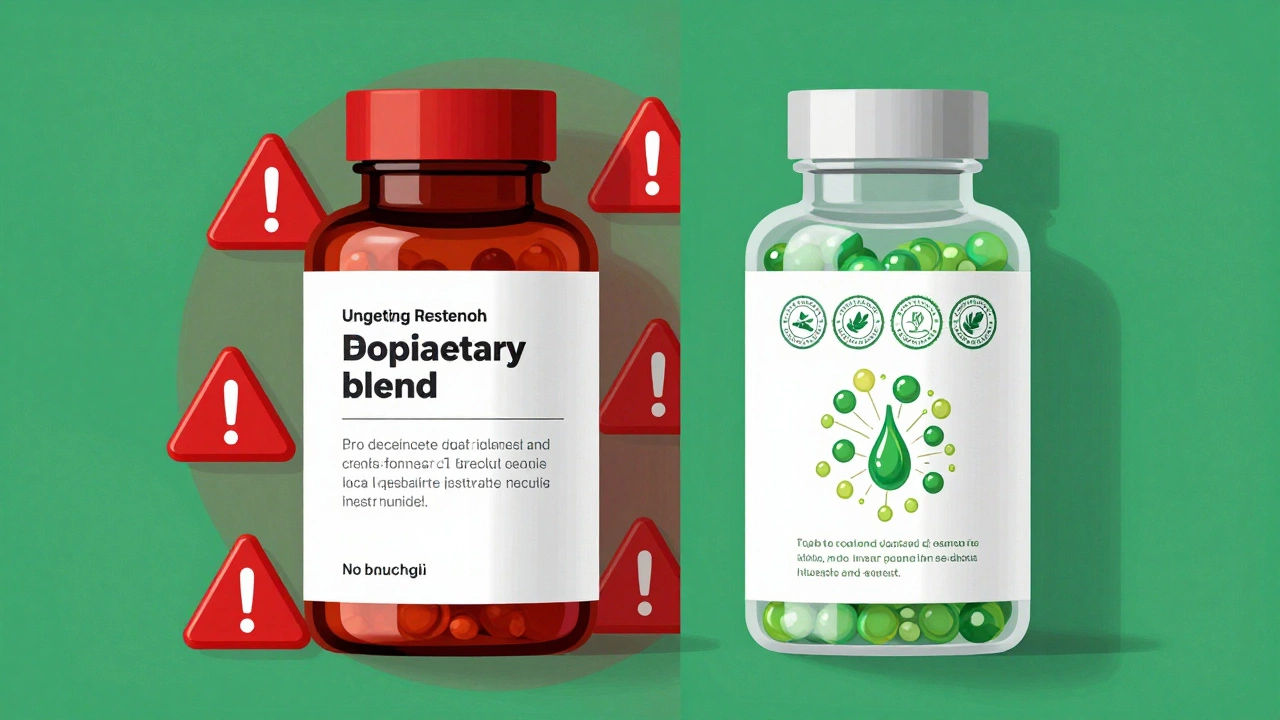
Not all brands are bad, but some are dangerous. Watch out for these warning signs:
- "Miracle cure" claims-like "cures anxiety in 3 days" or "melts belly fat overnight." Herbal supplements aren’t drugs. They work over time.
- No batch numbers or expiration dates on the label. If you can’t trace the product, you can’t trust it.
- Hidden ingredients. Some brands add caffeine, stimulants, or even prescription drugs to make their products "work faster." The FDA has pulled dozens of supplements off shelves for this.
- Prices that are too low. If a bottle of turmeric costs $5, it’s likely 90% rice flour. High-quality herbs are expensive to grow and process.
- No website or customer service. If you can’t find a phone number, email, or physical address, it’s a red flag.
A 2024 study from the Journal of Herbal Medicine found that 37% of herbal supplements sold online had no measurable active ingredient. That’s not a typo. Over a third of products tested contained nothing but filler. You’re not just wasting money-you’re risking your health.
How to choose the right supplement for you
Not every top company makes the right product for your needs. Ashwagandha isn’t the same as holy basil. Turmeric isn’t the same as ginger. Start by asking:
- What are you trying to support? Sleep? Immunity? Stress? Focus? Different herbs do different things.
- Do you have allergies or take medications? Some herbs interact with blood thinners, thyroid meds, or diabetes drugs.
- Are you sensitive to alcohol? Tinctures use alcohol as a solvent. If you avoid alcohol, choose capsules or teas instead.
- How long have you been taking it? Herbal supplements often take 4-8 weeks to show effects. Don’t quit after a few days.
For example, if you’re looking for stress support, ashwagandha root extract standardized to 5% withanolides is the gold standard. But if you’re trying to reduce inflammation, a turmeric supplement with at least 95% curcuminoids and black pepper extract (piperine) is more effective.
What’s missing from most reviews
Most people focus on price or taste. But the real difference is in the bioavailability-how well your body absorbs the herb.
Take curcumin, the active compound in turmeric. Plain turmeric powder has almost zero absorption. But when combined with piperine (from black pepper) or delivered in a liposomal form, absorption jumps by 2,000%. Companies that use advanced delivery systems-like liposomes, phospholipid complexes, or nanoparticle formulations-deliver real results. You’re not paying for branding-you’re paying for science.
Same goes for ashwagandha. Standardized extracts with 5% withanolides are proven. Non-standardized powders? Often ineffective. Always check the label for the percentage of active compounds. If it doesn’t say, assume it’s weak.
Final thoughts
There’s no single "best" herbal supplement company for everyone. But there are clear winners when you know what to look for. Stick with brands that test everything, trace every ingredient, and don’t make wild promises. The top five listed here have decades of consistent quality. They’ve survived market crashes, regulatory scrutiny, and consumer skepticism because they do the hard work-right.
Don’t buy based on ads. Don’t buy based on price. Buy based on proof. If a company won’t show you their lab results, they’re not worth your trust.
Are herbal supplements regulated like drugs?
No. In the U.S., herbal supplements are classified as dietary supplements, not drugs. That means they don’t need FDA approval before sale. The FDA only steps in after a product causes harm. This is why third-party testing and transparent labeling are your best defense. Look for certifications like USP, NSF, or ConsumerLab-they’re the closest thing to a quality seal.
Can I trust Amazon or Walmart brands for herbal supplements?
Some are fine, but most aren’t. Amazon and Walmart carry hundreds of supplement brands, and many are private-label products made by unknown manufacturers. A 2023 Consumer Reports study found that 62% of supplements sold on Amazon failed purity or potency tests. Stick to well-known brands with verifiable lab reports. If you can’t find a COA on the brand’s official website, avoid it.
How long should I take a herbal supplement before seeing results?
It varies. For stress or sleep support, most people notice changes in 3-6 weeks. Immune-boosting herbs like elderberry or echinacea may show effects in days. But herbs like milk thistle for liver support or astragalus for long-term immunity can take 2-3 months. Patience is key. If you stop too soon, you’ll never know if it worked.
Is organic always better for herbal supplements?
Organic certification means no synthetic pesticides or fertilizers were used during farming. That’s important for safety, but it doesn’t guarantee potency. A non-organic herb grown in mineral-rich soil with proper harvesting techniques can be more effective than an organic one grown in poor conditions. Look for both organic certification and standardized extracts for the best balance of safety and efficacy.
Do herbal supplements have side effects?
Yes. Just because something is natural doesn’t mean it’s safe. St. John’s wort can interfere with birth control and antidepressants. Licorice root can raise blood pressure. Ashwagandha may affect thyroid levels in sensitive individuals. Always talk to a healthcare provider before starting a new supplement, especially if you have a medical condition or take prescription meds.