Knee Recovery Range of Motion Tracker
Current Status
Why This Matters
Achieving 90 degrees of flexion allows you to sit in chairs and use the toilet safely without straining the new joint.
Critical Tip
Don't force it through sharp pain. Use ice before exercises to reduce swelling, which acts as a brake on your muscles.
Waking up after Total Knee Arthroplasty (TKA), commonly known as a knee replacement, is only the first step. The real work begins the moment you sit up in bed. Many patients ask me for the "fastest" way to get back to normal life. The truth is uncomfortable but empowering: speed isn't about rushing; it's about consistency and precision in your early days.
If you want to walk without a cane within weeks rather than months, you need to treat your rehabilitation like a full-time job for the first six weeks. This guide breaks down the exact actions that differentiate a sluggish recovery from a rapid one, based on current orthopedic protocols and physical therapy best practices.
The Golden Rule: Early Motion is Everything
The single biggest factor in how quickly you recover is not the surgeon’s skill-it is your movement. Stiffness is the enemy of a fast recovery. When your new joint sits still, scar tissue forms rapidly, locking up your range of motion. Once that stiffness sets in, breaking it takes weeks of painful effort.
To prevent this, you must prioritize early mobilization. Most surgeons now recommend getting out of bed on the same day as surgery or the very next morning. Yes, it hurts. Yes, you will be shaky. But standing up signals your body to reduce swelling and prevents blood clots. Your goal in the first 48 hours is simple: stand up, take a few steps with a walker, and sit down again. Repeat this every hour while awake.
Managing Swelling to Unlock Movement
You cannot move well if your knee is swollen. Swelling acts like a brake on your muscles. If your knee is puffy, your quadriceps (thigh muscles) shut down-a phenomenon called arthrogenic muscle inhibition. To move fast, you must manage fluid buildup aggressively.
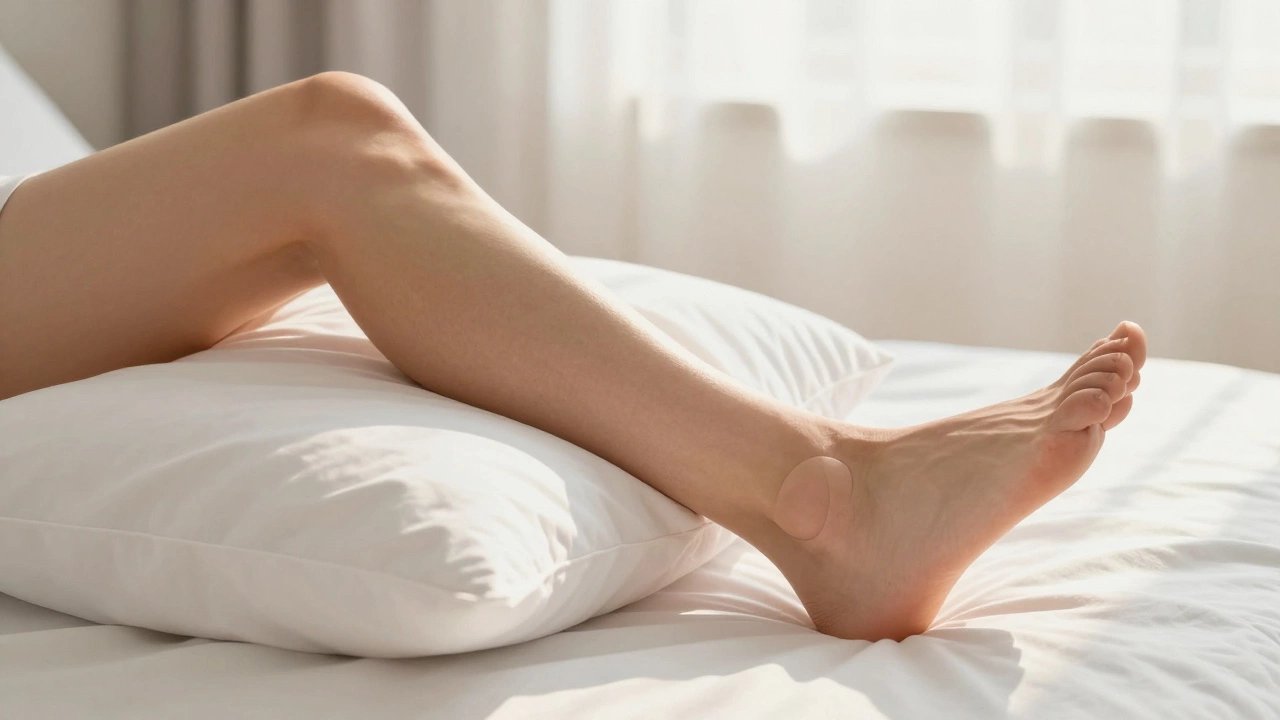
- Elevation: Lie on your back with your leg propped up on pillows so your ankle is higher than your knee, and your knee is higher than your heart. Do this for 30 minutes, four times a day. Just resting your foot on a stool is not enough; gravity needs to drain the fluid toward your torso.
- Cryotherapy: Use ice packs for 20 minutes every two hours during the first week. Don’t apply ice directly to the skin; use a thin towel barrier. Cold reduces inflammation and numbs pain, allowing you to do your exercises more effectively.
- Compression: Wear your compression stockings as prescribed. They help push fluid out of the leg and into circulation.
The Critical Exercises: Flexion and Extension
Your physical therapist will give you a list of exercises, but two matter more than all others combined: bending (flexion) and straightening (extension). These are the metrics surgeons track to decide when you can return to driving or work.
| Timeframe | Extension Goal (Straightening) | Flexion Goal (Bending) | Why It Matters |
|---|---|---|---|
| Day 1-3 | Full extension (0 degrees) | 90 degrees | Allows sitting in chairs and using the toilet safely. |
| Week 2 | Full extension (0 degrees) | 110-120 degrees | Necessary for walking stairs and normal gait. |
| Week 6 | Full extension (0 degrees) | 135+ degrees | Required for squatting, kneeling, and high-impact activities. |
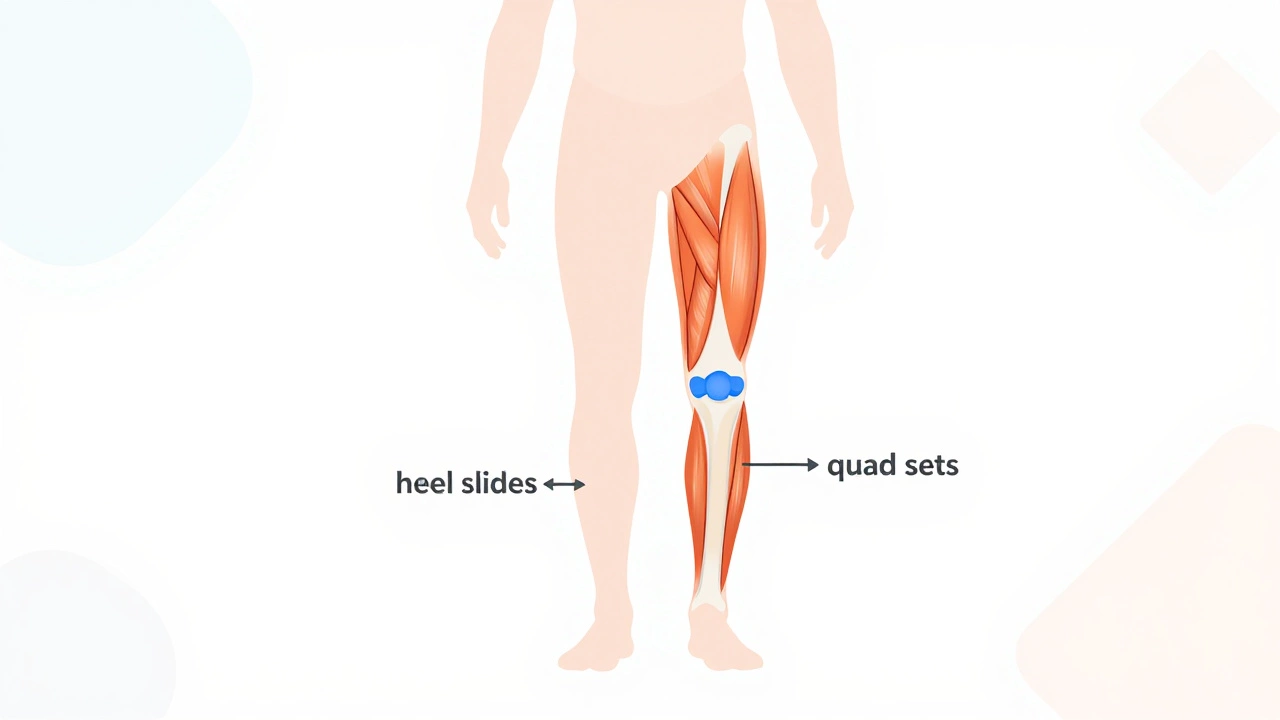
Heel Slides: Lie on your back and slowly slide your heel toward your buttocks, bending your knee. Hold for 5 seconds, then slide it back out. Do this 10 times every hour. This is the most effective exercise for gaining flexion.
Quad Sets: Tighten your thigh muscle by pressing the back of your knee into the bed. Hold for 5 seconds. This wakes up your quadriceps, which are essential for stability. Weak quads lead to limping, which slows down overall progress.
Pain Management: A Tool, Not an Enemy
Many people fear becoming addicted to pain medication, so they under-medicate themselves. This is a strategic error. If you are in too much pain to move, you lose range of motion. You should take your prescribed pain medication before your physical therapy session or before doing your hourly exercises. The goal is to keep pain at a level where you can move comfortably-usually a 3 or 4 out of 10. Numbing yourself completely isn't necessary, but ignoring sharp pain that stops movement is detrimental.
Discuss a multimodal approach with your doctor. This often combines non-narcotic anti-inflammatories (like NSAIDs, if safe for you), acetaminophen, and occasional short-acting opioids for breakthrough pain. Better pain control equals better exercise performance, which equals faster recovery.
Nutrition: Fueling Tissue Repair
Your body is rebuilding bone and soft tissue around the new implant. This process requires specific nutrients. Ignoring diet can subtly slow down healing.
- Protein: Aim for 1.2 to 1.5 grams of protein per kilogram of body weight daily. Include sources like lean chicken, fish, eggs, or plant-based proteins like lentils and tofu. Protein provides the amino acids needed to repair muscle tissue damaged during surgery.
- Vitamin C: Essential for collagen formation, which strengthens tendons and ligaments. Eat citrus fruits, bell peppers, or strawberries.
- Zinc: Plays a role in wound healing. Found in nuts, seeds, and whole grains.
- Hydration: Dehydration increases muscle cramping and fatigue. Drink at least 2 liters of water daily. Avoid excessive alcohol, as it interferes with sleep quality and medication effectiveness.

Avoiding Common Pitfalls That Stall Progress
Even with good intentions, many patients unknowingly sabotage their recovery. Here are the most common mistakes I see in London clinics:
- Sitting Too Long: Sitting for more than 30 minutes at a time causes the knee to stiffen. Set a timer. Stand up, walk around the house, and sit back down. Break up long periods of rest.
- Ignoring Extension: Patients focus heavily on bending their knee because it feels harder. However, lacking full extension (straightening) causes a permanent limp. Prioritize straightening your knee fully when lying down or sitting.
- Overdoing It: Doing 100 exercises in one day and then collapsing for three days is counterproductive. Consistency beats intensity. Do fewer reps more frequently.
- Fear of Weight Bearing: Unless your surgeon specifically restricted it, you are usually allowed to bear full weight immediately. Trust your brace or walker. Putting weight through the leg stimulates bone growth around the implant.
When to Return to Normal Activities
"Fast" recovery doesn't mean returning to everything at once. Here is a realistic timeline for active patients who follow the protocol strictly:
- Driving: Typically 4-6 weeks for left-knee replacements (if you have an automatic car). For right-knee replacements, wait until you can perform an emergency stop without flinching, usually 6-8 weeks.
- Work: Desk jobs can often be resumed within 2-3 weeks if you can elevate your leg. Physical labor may require 3-6 months.
- Exercise: Low-impact activities like swimming and cycling can start at 6-8 weeks. High-impact activities like running or tennis are generally discouraged permanently to protect the implant longevity.
How much pain is normal during knee replacement recovery?
It is normal to experience moderate pain, especially after physical therapy or heavy exercise. Pain should be manageable with medication and should decrease gradually over weeks. Sharp, shooting pain or pain accompanied by fever, redness, or significant swelling increase could indicate infection or complications and requires immediate medical attention.
Can I speed up recovery by doing more exercises?
No, doing more exercises than prescribed can lead to increased swelling and inflammation, which actually slows down healing. Consistency is key. Follow your physical therapist's recommended frequency and intensity. Overworking the joint can cause micro-trauma to the healing tissues.
How long does it take to walk without a cane?
Most patients transition from a walker to a cane within 2-4 weeks. Walking without any assistive device typically occurs between 4-6 weeks post-surgery, provided you have good balance, strength, and near-full range of motion. Some individuals may take up to 8 weeks depending on pre-surgery fitness levels.
Does age affect the speed of knee replacement recovery?
Age is a factor, but pre-surgical fitness is more important. Older adults who maintain muscle mass and cardiovascular health often recover just as quickly as younger patients. Conversely, younger patients with poor baseline fitness may struggle more. Focus on what you can control: adherence to therapy and nutrition.
Should I use heat or ice after knee replacement?
Use ice primarily during the first 2-3 weeks to reduce swelling and pain. Heat can be used later in the recovery phase (after 3-4 weeks) to relax tight muscles before stretching, but avoid heat if there is still significant swelling. Always consult your physiotherapist for personalized advice.