Cancer Survival Calculator
Early Detection Impact Calculator
Select your cancer type and detection stage to see survival rates based on medical data
When someone hears the word "cancer," their mind often jumps to the worst-case scenario: long treatments, painful side effects, and low chances of survival. But not all cancers are the same. Some types are surprisingly easy to treat-especially when caught early. The truth is, there are cancers today that doctors can cure in over 90% of cases. If you or someone you know has been diagnosed, knowing which cancers have the best outcomes can bring real hope.
Why "easiest to treat" doesn’t mean "easy to find"
When people ask what the easiest cancer to treat is, they’re really asking: "Which one has the highest chance of being cured?" The answer isn’t about how mild the cancer feels. It’s about how well modern medicine can stop it before it spreads.
Thyroid cancer, for example, often grows slowly and doesn’t cause obvious symptoms. Many people don’t even know they have it until a routine checkup finds a lump in their neck. But because it’s usually detected early and responds so well to surgery and radioactive iodine, the five-year survival rate is over 98% for localized cases. That’s higher than the survival rate for many common infections.
Same goes for testicular cancer. It’s rare compared to breast or lung cancer, but when found in Stage I, it’s nearly 100% curable with surgery alone. Even if it spreads to nearby lymph nodes, chemotherapy can still cure more than 90% of cases. These cancers aren’t "easy" in the sense that they’re harmless-they still need treatment. But they’re easy to treat, because the tools we have work extremely well.
The top three most treatable cancers
Based on data from the American Cancer Society and the National Cancer Institute, here are the three cancers with the highest cure rates when caught early:
- Thyroid cancer: Over 98% five-year survival rate for localized cases. Treatment usually involves removing part or all of the thyroid, followed by radioactive iodine therapy. Most people return to normal life with daily hormone pills.
- Testicular cancer: Nearly 100% survival rate for Stage I. Even in Stage II, survival stays above 95%. Surgery removes the affected testicle, and chemo or radiation handles any remaining cells.
- Prostate cancer: When confined to the prostate, the five-year survival rate is almost 100%. Many men with slow-growing prostate cancer don’t need immediate treatment-just active monitoring. When treatment is needed, surgery or radiation works in over 90% of cases.
These cancers share a few key traits: they grow slowly, respond well to surgery or radiation, and rarely spread before being noticed. That’s why they’re called "easiest to treat." Not because they’re harmless-but because we know exactly how to beat them.
What about skin cancer?
Basal cell carcinoma (BCC) and squamous cell carcinoma (SCC) are the most common forms of skin cancer. Together, they make up over 90% of all skin cancer cases. Both are highly treatable, with cure rates near 99% when removed early.
A simple outpatient procedure-like scraping and cauterizing, or a quick excision-can remove these cancers completely. No chemo. No radiation. Just a local anesthetic and a few stitches. The key? Catching them before they grow deep or spread. That’s why regular skin checks matter. A weird mole, a sore that won’t heal, or a patch of skin that changes color? Get it looked at. It’s not just about melanoma.
Even melanoma, the deadliest skin cancer, has a 99% five-year survival rate if caught before it spreads beyond the skin. Once it reaches lymph nodes, that number drops. So early detection is everything.
Why early detection changes everything
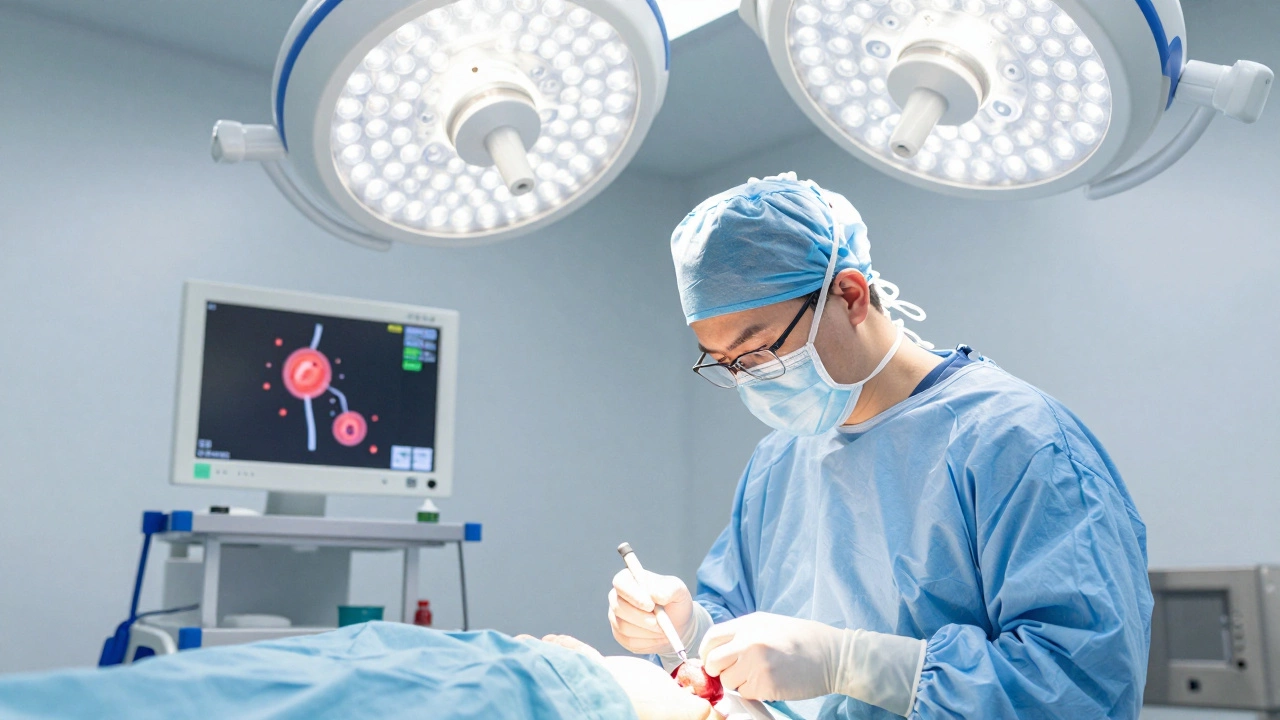
The reason these cancers are so easy to treat isn’t magic. It’s timing. Cancer is like a wildfire. The smaller it is, the easier it is to put out. Once it spreads to other organs, treatment becomes harder, more expensive, and less effective.
Take breast cancer. The five-year survival rate for Stage I is 99%. For Stage IV? About 30%. That’s not because the cancer changed-it’s because the window for easy treatment closed.
That’s why screening matters. Mammograms, colonoscopies, PSA tests, skin checks, and even self-exams for testicles can catch cancer before symptoms appear. Many people wait until they feel pain or notice a lump. By then, it’s often too late for the easiest treatments.
There’s no single test that catches all cancers. But for the cancers with the best outcomes, we have reliable screening tools. The problem isn’t lack of technology-it’s lack of action.
What’s NOT easy to treat
It’s fair to ask: if some cancers are so easy to beat, why do people still die from them? The answer lies in the ones that are hard to catch.
Pancreatic cancer, for example, often shows no symptoms until it’s advanced. By the time it’s found, it’s usually spread to the liver or nearby organs. The five-year survival rate? Just 13%. Lung cancer, especially in smokers, is often diagnosed late too. Ovarian cancer is sneaky-it mimics bloating or indigestion. Many women wait months before seeing a doctor.
These cancers aren’t more aggressive. They’re just harder to detect. That’s why research is focused on blood tests that can spot cancer early-like the ones now being tested for ovarian and pancreatic cancer. One new test, called Galleri, can detect over 50 types of cancer from a single blood draw. It’s not perfect yet, but it’s a step forward.

What you can do right now
Knowing which cancers are easiest to treat isn’t just about statistics. It’s about action. Here’s what you can do today:
- Get screened according to your age and risk. If you’re over 50, get a colonoscopy. Women over 45 should talk to their doctor about mammograms. Men over 50 should discuss PSA testing.
- Know your body. A new mole, a lump in the neck, changes in bowel habits, or unexplained weight loss aren’t "just aging." They’re signals.
- Don’t ignore painless symptoms. Thyroid and testicular cancers often don’t hurt. That’s why they’re dangerous-they go unnoticed.
- Ask about screening options. Not all doctors bring it up. If you’re unsure, ask: "Based on my age and family history, what cancer screenings do I need?"
The easiest cancers to treat aren’t the ones with the least risk. They’re the ones we catch early. And that’s something you have control over.
Myth vs. Reality: Common Misconceptions
There are a lot of myths around cancer treatment. Let’s clear up a few:
- Myth: If cancer is curable, it’s not serious. Reality: Even curable cancers can be life-changing. Thyroid removal means lifelong hormone therapy. Testicular cancer can affect fertility. Cure doesn’t mean no consequences.
- Myth: Only smoking causes lung cancer. Reality: About 20% of lung cancer deaths happen in people who never smoked. Radon, air pollution, and genetics play roles too.
- Myth: If I don’t have symptoms, I don’t need screening. Reality: The cancers with the best survival rates are often symptom-free until it’s too late.
- Myth: All cancers need chemo. Reality: Many early cancers are cured with surgery alone. Chemo is for advanced or high-risk cases.
The more you understand how cancer works, the better you can protect yourself.