Aging Skin Treatment Planner
Your Skin Concerns
Treatment Insights
Select your concerns and click 'Get Recommendations' to see personalized treatment options.
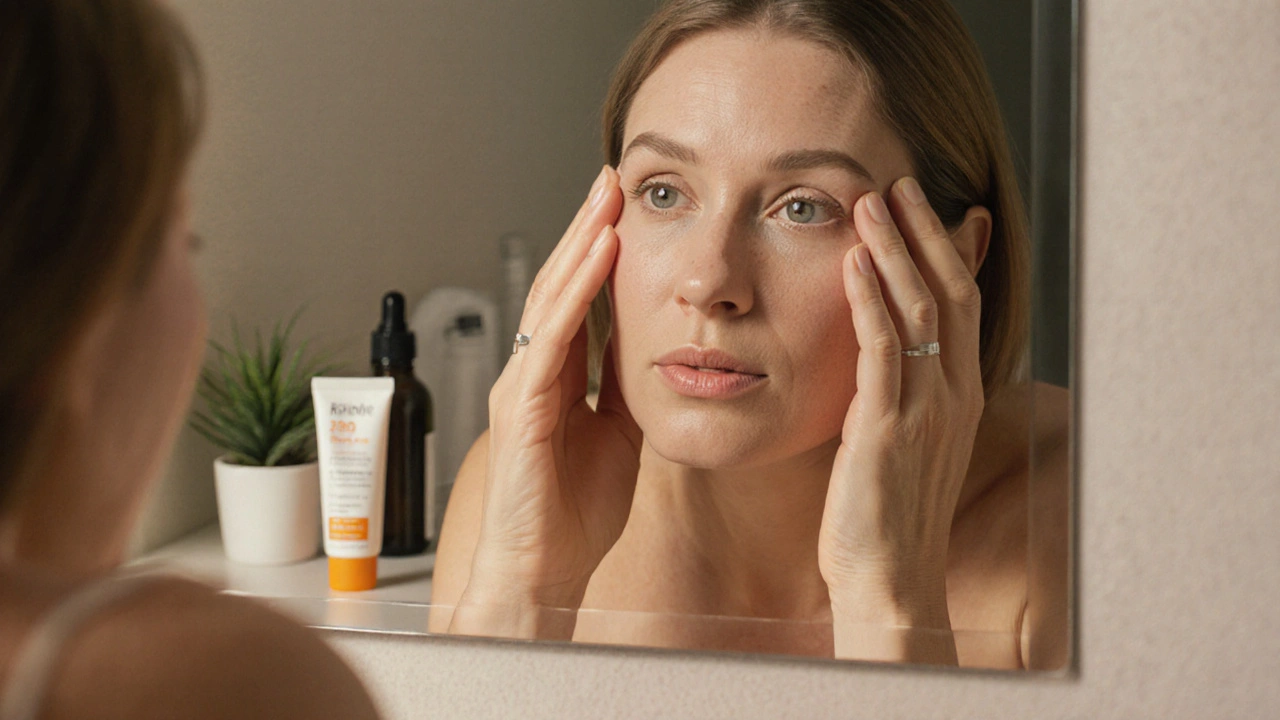
When you look in the mirror and notice your skin isn’t holding up like it used to, it’s not just about vanity. Your skin is telling you something. It’s thinner. Less elastic. Drier. And those fine lines? They’re not going away with more moisturizer. The truth is, there’s no single magic fix for an aging face-but there are treatments that actually work, backed by science and real results.
What causes skin to age?
It’s not just time. Sun exposure is the #1 culprit. UV rays break down collagen and elastin, the proteins that keep skin firm and bouncy. By age 40, most people have lost about 20% of their collagen. Smoking, poor sleep, stress, and sugar intake speed this up. Hormonal changes after menopause also thin the skin and reduce oil production, making wrinkles deeper and skin duller.
Think of your skin like a mattress. Over time, the springs lose tension. The padding flattens. You don’t just need to add more padding-you need to rebuild the springs. That’s what effective treatments do.
Top non-surgical treatments that deliver real results
If you’re not ready for surgery, you’re not alone. Most people start with non-invasive options. Here are the ones that actually move the needle:
- Retinoids (tretinoin, adapalene): The gold standard. Prescription-strength retinoids boost collagen, fade sun spots, and smooth texture. Studies show visible improvement in fine lines after 6 months of daily use. Over-the-counter retinol works too, but slower.
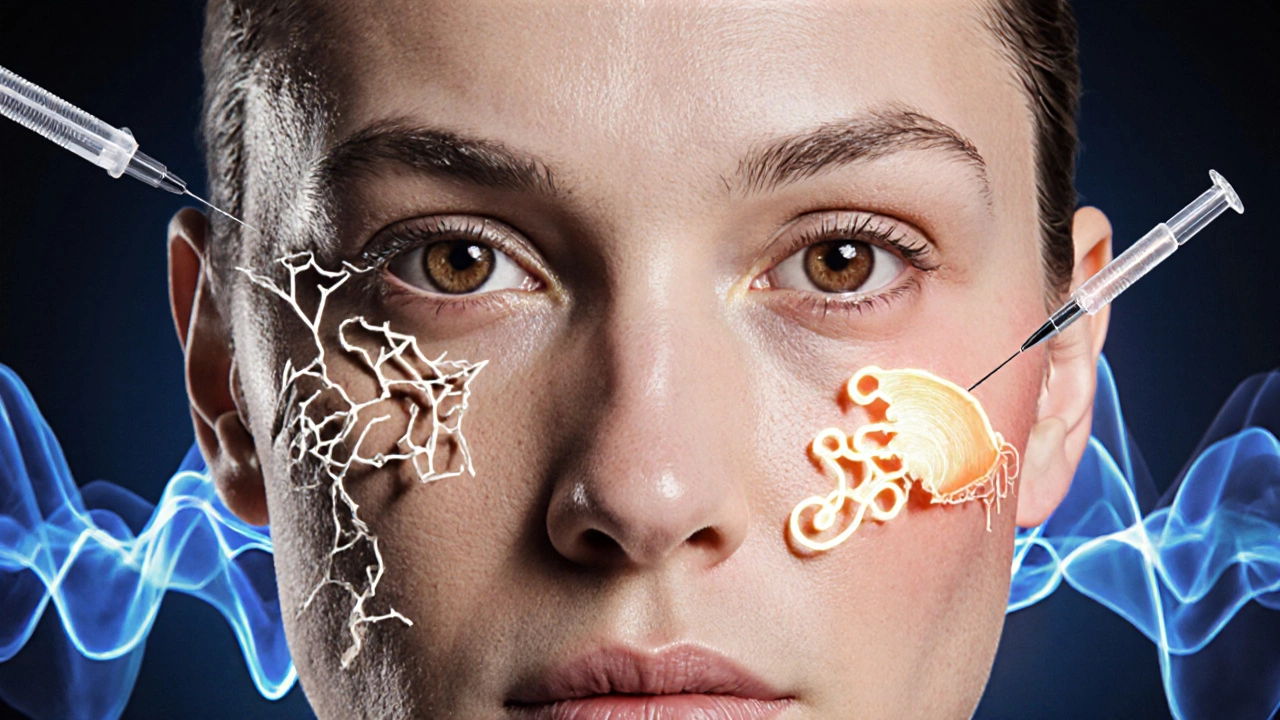
- Neuromodulators (Botox, Dysport): These block the signals that cause repetitive facial movements-frowning, squinting, forehead raising. They don’t fill wrinkles; they prevent them from deepening. Results last 3-4 months. Best for dynamic lines around the eyes, between the brows, and on the forehead.
- Fillers (hyaluronic acid like Juvederm, Restylane): These restore lost volume. Sunken cheeks, hollow temples, and deep nasolabial folds respond quickly. A skilled injector can lift the midface, soften jowls, and restore a more youthful contour. Results last 6-18 months depending on the product and area.
- Radiofrequency and Ultrasound (Thermage, Ultherapy): These use heat to tighten deeper layers of skin. No downtime. You’ll see gradual improvement over 2-6 months as new collagen forms. Best for mild to moderate sagging on the jawline and neck.
- Chemical Peels and Laser Resurfacing: These remove damaged outer skin layers. Medium-depth peels (TCA) and fractional lasers (Fraxel) improve texture, tone, and fine lines. Recovery takes 5-10 days. Results last 1-2 years with good sun protection.
Here’s what you need to know: retinoids are the foundation. Everything else builds on them. Skip the expensive creams promising "miracle" results. Stick with proven ingredients and procedures.
When surgery makes sense
Non-surgical treatments can’t fix severe sagging. If your skin is hanging off your jawline, or you have deep marionette lines that don’t improve with fillers, a surgical facelift (rhytidectomy) is the most effective option.
A traditional facelift tightens the SMAS layer-the deep structural layer beneath the skin. It lifts the cheeks, removes excess skin, and repositions fat. Recovery takes 2-4 weeks. Results last 7-10 years. It’s not a "quick fix," but it’s the only treatment that delivers long-term structural change.
Mini-lifts and thread lifts are marketed as less invasive, but they rarely last more than a year and can cause uneven results. Stick with board-certified plastic surgeons who do full facelifts regularly.
What doesn’t work (and why you’re wasting money)
The skincare aisle is full of promises. But most don’t deliver on aging skin.
- Collagen creams: Collagen molecules are too big to penetrate skin. Applying them externally does nothing for your dermis.
- Snake venom serums: These contain synthetic peptides that mimic venom’s muscle-relaxing effect. They’re weak compared to Botox and fade in days.
- LED masks and jade rollers: These may feel nice, but they don’t stimulate enough collagen to reduce wrinkles.
- "Miracle" supplements: Collagen pills? They break down into amino acids in your gut. Your body decides where to use them-not your face.
Don’t fall for buzzwords. Look for active ingredients with clinical data: retinoids, vitamin C, peptides, niacinamide, and sunscreen.
The real key: prevention and maintenance
Even the best treatments won’t last if you don’t protect your skin.
- Sunscreen daily: Use SPF 30 or higher, even on cloudy days. UVA rays penetrate glass and cause 80% of visible aging.
- Hydrate from within: Drink water. Eat omega-3s (salmon, walnuts). Avoid excessive sugar and alcohol.
- Sleep on your back: Side or stomach sleeping crushes your face into the pillow, creating sleep lines that turn into permanent wrinkles.
- Don’t smoke: Smoking cuts blood flow to the skin and destroys collagen 10 times faster than normal aging.
Think of skin care like car maintenance. You don’t wait until the engine fails to change the oil. Treat your face the same way.
What to expect from treatment timelines
Results don’t happen overnight. Here’s a realistic timeline:
- Retinoids: 3-6 months for noticeable improvement
- Botox: 3-7 days to see full effect
- Fillers: Immediate, with final results after swelling goes down (1-2 weeks)
- Ultherapy/Radiofrequency: Gradual improvement over 2-6 months
- Laser resurfacing: 2-4 weeks for healing, full results at 3 months
- Faclift: Final results visible at 3-6 months after swelling resolves
Patience is part of the process. Rushing into multiple treatments at once can damage your skin barrier and lead to worse results.
How to choose the right treatment for you
Your ideal plan depends on your skin type, age, concerns, and budget.
Early signs (late 30s-early 40s): Start with daily retinoid + sunscreen + occasional Botox for forehead lines.
Moderate aging (mid-40s-50s): Add fillers for volume loss + chemical peel or laser for texture. Consider radiofrequency for jawline tightening.
Advanced aging (60+): If skin is loose and sagging, a surgical facelift offers the most dramatic, lasting improvement. Combine with non-surgical options for maintenance.
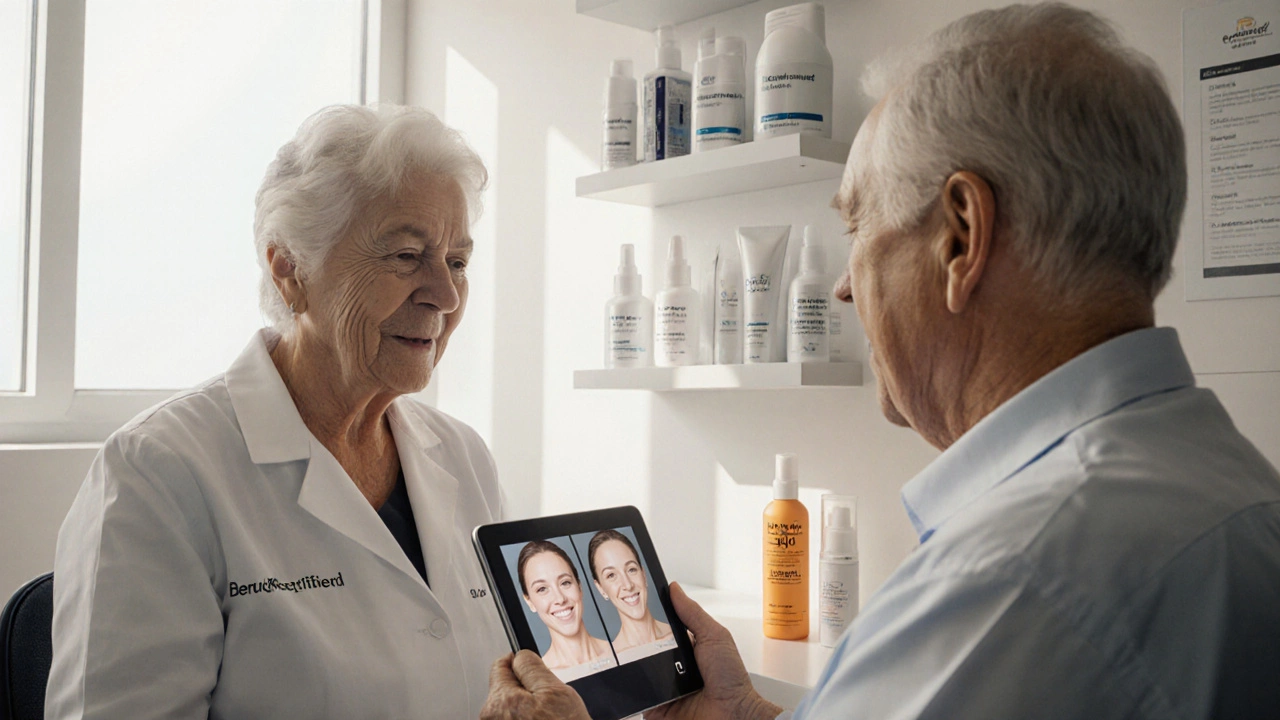
Always get a consultation with a board-certified dermatologist or plastic surgeon. They’ll assess your skin’s depth, elasticity, and bone structure-not just your wrinkles.
Costs you should know
Prices vary by region and provider, but here’s a general range (USD, 2025):
| Treatment | Average Cost | Duration of Results |
|---|---|---|
| Prescription Retinoid (monthly) | $20-$60 | Continuous use |
| Botox (1 area) | $300-$600 | 3-4 months |
| Hyaluronic Acid Filler (1 syringe) | $600-$1,200 | 6-18 months |
| Ultherapy (full face) | $1,500-$3,000 | 1-2 years |
| Fractional Laser (full face) | $1,000-$2,500 | 1-2 years |
| Faclift | $7,000-$15,000 | 7-10 years |
Remember: cheaper doesn’t mean better. Unlicensed providers or discount clinics increase risks of asymmetry, lumps, or nerve damage. Always verify credentials.
What to ask your provider
Before any treatment, ask:
- What’s your experience with this specific treatment on patients my age?
- Can I see before-and-after photos of real patients (not stock images)?
- What are the risks specific to my skin type?
- What’s the recovery process? Will I need time off work?
- Do you offer a follow-up plan? What happens if I’m not happy with results?
A good provider will listen, not push. They’ll explain why one option suits you better than another-not just what’s profitable.
Can I reverse aging skin completely?
No, you can’t reverse aging completely. But you can significantly improve skin texture, tone, firmness, and volume. Most people see a 60-80% improvement in their concerns with the right combination of treatments and consistent care. The goal isn’t to look 25 again-it’s to look like the best version of yourself at your current age.
Are at-home devices like microcurrent or RF rollers worth it?
They’re not harmful, but they’re not powerful enough to make a visible difference in deep wrinkles or sagging. Clinical devices like Thermage use much higher energy levels than anything sold for home use. If you’re using these devices, treat them as a gentle boost-not a replacement for proven treatments.
How often do I need to repeat treatments?
It depends. Botox every 3-4 months. Fillers every 6-18 months. Retinoids daily. Lasers or Ultherapy every 1-2 years. Maintenance is key. Stopping treatments means your skin will gradually return to its pre-treatment state. Think of it like going to the gym-you don’t stop after one workout and expect to stay fit.
Can I combine multiple treatments?
Yes, and often you should. A common plan: retinoid daily, Botox every 4 months, fillers once a year, and a laser peel every 18-24 months. But space them out. Don’t do laser and chemical peel in the same week. Your skin needs time to heal. Always consult your provider about timing.
What’s the safest option for sensitive skin?
Start with gentle retinoids (like adapalene), low-concentration vitamin C serums, and daily SPF. Avoid aggressive peels or lasers unless you’ve built up tolerance. Hyaluronic acid fillers are also very safe for sensitive skin since they’re biocompatible. Always patch-test new products and avoid fragranced or alcohol-heavy formulas.
Next steps: What to do today
Don’t wait for the perfect plan. Start now.
- Buy a prescription retinoid or a strong over-the-counter retinol (0.3% or higher).
- Apply SPF 30+ every morning, even indoors.
- Book a consultation with a board-certified dermatologist. Bring photos of your skin from 5 years ago.
- Stop using products with alcohol, fragrance, or glitter.
- Sleep on your back.
Your skin doesn’t need more products. It needs the right ones-and consistency. The best treatment for aging skin isn’t the most expensive one. It’s the one you’ll actually stick with.