IVF Risk & Cost Estimator
This tool helps you visualize the potential financial commitment of an IVF cycle and assess your baseline risk for Ovarian Hyperstimulation Syndrome (OHSS) based on common medical factors.
Risk Assessment Factors
Financial Projection
Includes base fees, medications, and selected add-ons for cycles.
OHSS Risk Profile
Key Takeaways for Your Situation
When you hear success stories about In Vitro Fertilization (IVF), it’s easy to picture a magical solution. A couple struggles for years, undergoes treatment, and suddenly holds a healthy baby. But behind that headline success are months of intense medical intervention, physical tolls, and emotional rollercoasters. If you are considering IVF, knowing the potential downsides isn't just about being pessimistic; it's about being prepared.
IVF is a powerful tool, but it is not without its "bad sides." From painful injections to rare but serious surgical complications, understanding these risks helps you make an informed decision. Let’s look at what can go wrong, how common these issues are, and what you can do to protect yourself.
The Physical Toll: More Than Just Injections
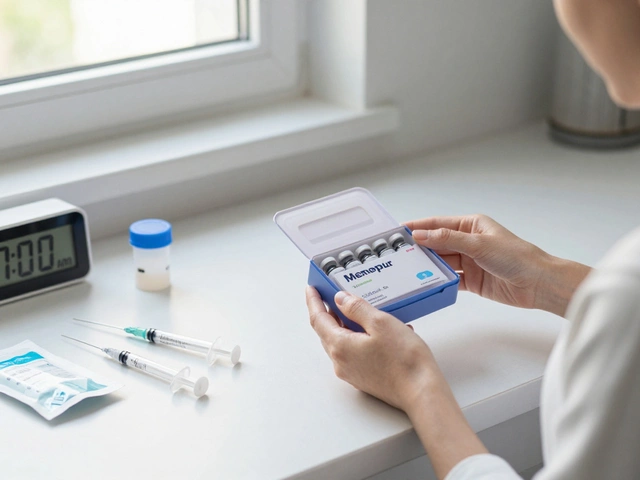
The most immediate "bad side" of IVF is the daily physical routine. It starts with hormone injections. For many women, this means self-administering shots into the abdomen every single day for up to two weeks. While the needles are tiny, the cumulative effect on your skin and muscle can be uncomfortable. Bruising, redness, and itching at injection sites are common complaints.
But the injections are just the beginning. The goal of these hormones is to stimulate your ovaries to produce multiple eggs instead of the usual one per cycle. This process forces your body into overdrive. Many patients report feeling bloated, heavy, or achy in their lower abdomen as the ovaries swell. Some describe a sensation similar to severe premenstrual syndrome (PMS) but amplified. Fatigue is another major factor. The hormonal surge can leave you feeling drained, making it hard to maintain normal energy levels during work or family time.
Then there is the egg retrieval procedure itself. Although it is done under sedation, it is still a minor surgery. You will have a needle passed through the vaginal wall into the ovaries to collect the eggs. Post-procedure, you might experience cramping, spotting, or mild nausea. Most people recover within a few days, but for some, the recovery takes longer, requiring time off from work and household duties.
Ovarian Hyperstimulation Syndrome (OHSS): The Serious Risk
One of the most significant medical risks associated with IVF is Ovarian Hyperstimulation Syndrome, commonly known as OHSS. This condition occurs when the ovaries become overly sensitive to fertility medications. Instead of just swelling slightly, they can become significantly enlarged and leak fluid into the abdominal cavity.
Mild OHSS is relatively common and usually resolves on its own with rest and hydration. Symptoms include bloating, mild pain, and slight weight gain. However, moderate to severe OHSS is less common but potentially dangerous. In severe cases, the fluid shift can lead to dehydration, electrolyte imbalances, blood clots, and kidney problems. Women with severe OHSS may need hospitalization for IV fluids and close monitoring.
Risk factors for OHSS include younger age, low body mass index (BMI), and having Polycystic Ovary Syndrome (PCOS). Doctors try to mitigate this risk by using lower doses of medication or employing protocols like "freeze-all" cycles, where no embryo transfer happens immediately, allowing the body to recover before attempting pregnancy.
Emotional Burnout and Mental Health Strain
If the physical side of IVF is tough, the emotional side can be even harder. Many couples underestimate the psychological impact of fertility treatment. The term "emotional burnout" is frequently used by fertility specialists to describe the exhaustion that comes from constant hope followed by potential disappointment.
IVF places a massive amount of pressure on relationships. You and your partner are often on the same team, but stress can manifest differently. One partner might want to talk about feelings constantly, while the other might withdraw to cope. This mismatch can lead to arguments, intimacy issues, and a sense of isolation.
Anxiety and depression rates are higher among individuals undergoing IVF compared to the general population. The uncertainty of each stage-will the eggs retrieve? Will they fertilize? Will the embryo implant?-creates a state of chronic stress. Financial strain adds another layer of anxiety, especially if insurance does not cover the full cost. It is crucial to view mental health support not as an extra, but as a necessary part of the treatment plan. Counseling or support groups can provide a safe space to vent without judgment.
Financial Burden and Hidden Costs
Let’s talk about money, because it is a major source of stress for many families. IVF is expensive. A single cycle can cost anywhere from $12,000 to $25,000 or more, depending on your location and clinic. That price tag usually covers the monitoring, retrieval, and laboratory work, but it rarely includes everything.
You also have to budget for fertility medications, which can add another $3,000 to $6,000 per cycle. Then there are additional procedures that might be recommended, such as Intracytoplasmic Sperm Injection (ICSI) for male factor infertility, Preimplantation Genetic Testing (PGT) to screen embryos for genetic abnormalities, or frozen embryo transfers (FET) in later cycles. Each of these adds thousands of dollars to the bill.
Furthermore, if the first cycle fails, you face the decision of whether to try again. Most couples require more than one cycle to achieve a live birth. This financial unpredictability can force difficult choices, such as delaying retirement savings, taking out loans, or moving to a different geographic area where treatment is cheaper-a practice known as medical tourism, which brings its own set of logistical challenges.
Risks to Pregnancy and Multiple Births
Even if IVF results in a successful pregnancy, there are specific risks associated with assisted reproductive technology. One of the most well-known risks is multiple births. Historically, clinics transferred multiple embryos to increase the chances of success. This led to twins, triplets, or even quadruplets. While having multiples might sound appealing to some, it carries higher risks for both mother and babies.
Pregnancies with multiples have a higher rate of premature birth, low birth weight, and gestational diabetes. Mothers face increased risks of preeclampsia and cesarean delivery. Today, many clinics recommend elective Single Embryo Transfer (eSET) to reduce these risks, but this means accepting a lower chance of success per cycle in exchange for a safer pregnancy outcome.
There is also a slightly increased risk of ectopic pregnancy with IVF. An ectopic pregnancy occurs when the embryo implants outside the uterus, usually in the fallopian tube. This is a medical emergency that requires immediate treatment to prevent life-threatening bleeding. Additionally, some studies suggest a small increase in the risk of certain congenital anomalies, though the absolute risk remains low. It is important to discuss these statistics with your doctor to understand your personal baseline risk.
| Risk Category | Common Symptoms/Issues | Mitigation Strategy |
|---|---|---|
| Ovarian Hyperstimulation Syndrome (OHSS) | Bloating, pain, rapid weight gain, nausea | Low-dose protocols, freeze-all cycles, close monitoring |
| Multiple Pregnancies | Premature birth, low birth weight, maternal hypertension | Elective Single Embryo Transfer (eSET) |
| Emotional Distress | Anxiety, depression, relationship strain | Counseling, support groups, open communication |
| Procedural Complications | Infection, bleeding, organ injury during retrieval | Experienced medical team, ultrasound guidance |
Rare Surgical Complications
While rare, any surgical procedure carries the risk of complications. During egg retrieval, the needle passes near major blood vessels and organs. In very rare cases, this can cause bleeding, infection, or damage to the bowel or bladder. Signs of these complications include severe abdominal pain, fever, heavy vaginal bleeding, or difficulty urinating.
It is vital to choose a reputable clinic with experienced embryologists and reproductive endocrinologists. Statistics show that complication rates drop significantly when procedures are performed by highly trained specialists. Don’t hesitate to ask your doctor about their complication rates and how they handle emergencies.
Does IVF Cause Early Menopause?
A common myth is that IVF uses up your egg supply faster, leading to early menopause. This is false. Every month, your body naturally recruits a group of follicles to develop, but usually only one becomes dominant and releases an egg. The others die off naturally. Fertility drugs simply rescue those dying follicles and allow them to grow alongside the dominant one. You are not pulling eggs from your future reserve; you are using eggs that were already destined to be lost that month. Therefore, IVF does not accelerate menopause.
How to Minimize the Bad Sides
Knowing the risks doesn't mean you should avoid IVF. It means you should approach it strategically. Here are practical steps to reduce the negative impacts:
- Choose the Right Clinic: Look for high success rates relative to your age group, but also ask about their cancellation rates and OHSS incidence. A good clinic prioritizes patient safety over aggressive stimulation.
- Advocate for Mild Stimulation: Ask if a "mild" or "mini-IVF" protocol is suitable for you. These use lower doses of medication, reducing side effects and costs, though they may yield fewer eggs.
- Prioritize Mental Health: Schedule therapy sessions before starting treatment. Build a support network of friends, family, or online communities who understand the journey.
- Plan Finances Early: Get all costs in writing. Explore financing options, grants, or shared-risk programs offered by some clinics.
- Listen to Your Body: If you feel overwhelmed, pause. Taking a break between cycles can help reset emotionally and physically.
IVF is a marathon, not a sprint. By acknowledging the bad sides-the physical discomfort, the emotional strain, the financial weight-you empower yourself to navigate the process with eyes wide open. Preparation is your best defense against the unexpected.
Is IVF painful?
The injections themselves cause minimal pain, similar to a mosquito bite. However, the egg retrieval procedure involves sedation, so you won't feel pain during it. Afterward, you may experience cramping and bloating, which can be uncomfortable for a few days. Most women manage this with over-the-counter pain relievers.
Can IVF cause cancer?
Current research suggests that IVF treatments do not significantly increase the overall risk of breast or ovarian cancer. There has been some debate about borderline ovarian tumors, but large-scale studies have not found a strong causal link. Infertility itself may carry some cancer risks, independent of treatment.
What is the success rate of IVF?
Success rates vary greatly by age. For women under 35, the live birth rate per cycle is approximately 40-50%. This drops to around 20-30% for women aged 35-37, and further declines after 40. Success depends on factors like egg quality, sperm health, and uterine receptivity.
How long does it take to recover from egg retrieval?
Most women feel back to normal within 2 to 3 days. Light spotting and mild cramping may last up to a week. If you proceed with a fresh embryo transfer, you may continue to feel hormonal symptoms. Rest is recommended for the first 24 hours post-procedure.
Are there alternatives to IVF?
Yes, depending on the cause of infertility. Less invasive options include ovulation induction with oral medications (like Clomid or Letrozole) combined with intrauterine insemination (IUI). Lifestyle changes, weight management, and treating underlying conditions like thyroid disorders or endometriosis can also improve natural conception chances.