Knee Health & Activity Risk Calculator
Discover how your current habits might be affecting your knees. This tool estimates joint load and muscle health risks based on the principles of biomechanics and cartilage nutrition.
Enter your details and click "Analyze" to see your knee health profile.
Why This Matters
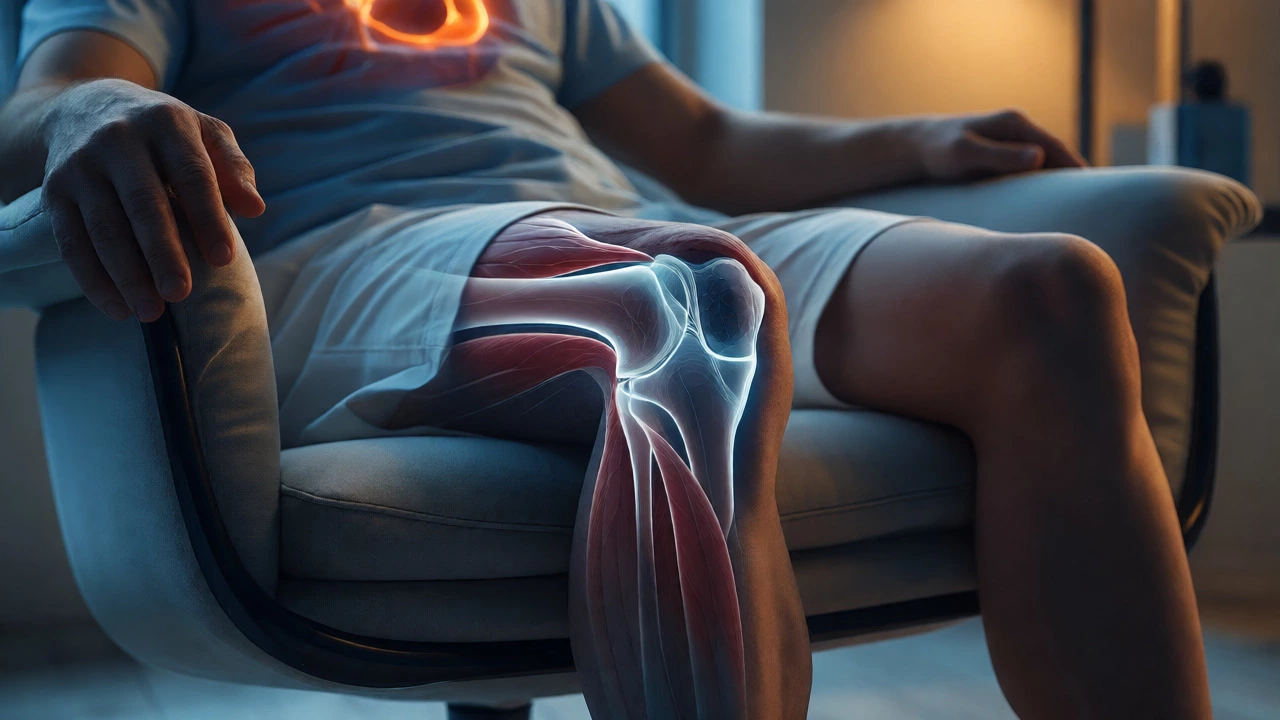
Cartilage has no direct blood supply; it relies on movement to pump nutrients. Immobilization starves the joint, while weak quadriceps fail to absorb shock, transferring excessive load to the bone. Finding the balance between rest and controlled loading is key to preventing deterioration.
You feel a sharp twinge when you stand up from your chair. The stairs have become an enemy. You’ve probably heard that if your knees are bad, you should rest them until they heal. It seems logical: if it hurts, stop moving it. But here is the hard truth that might surprise you: immobilization is often the single biggest mistake people make with deteriorating knees. By trying to protect your joints through inactivity, you are actually accelerating their decline.
This isn’t just anecdotal advice from a gym bro. It’s basic biomechanics. Your knee joint doesn’t have its own direct blood supply for the cartilage; it relies on movement to pump nutrients in and waste out. When you stop moving, that pump stops working. The cartilage starves, thins, and wears down faster. Meanwhile, the muscles around the knee-specifically the quadriceps-shrink away from disuse. This creates a vicious cycle where weaker muscles put more stress on the bone, causing more pain, which leads to even less movement.
The Myth of "Rest Until It Heals"
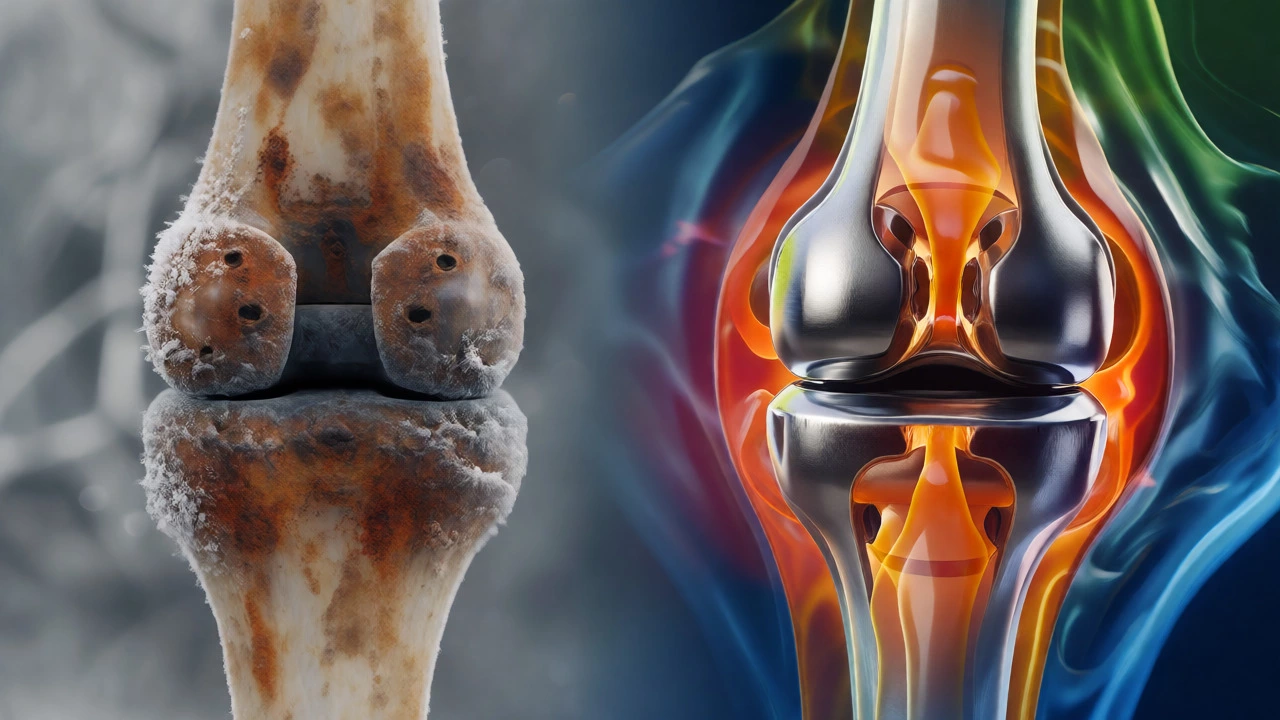
For acute injuries like a torn ligament or a fresh fracture, rest is indeed the first line of defense. But chronic conditions like osteoarthritis don’t heal with rest; they degrade with stagnation. Think of your knee like a door hinge. If you leave a door closed for years, the hinge rusts and stiffens. If you open and close it regularly, it stays lubricated and functional. Your synovial fluid-the natural oil of your knee-needs motion to circulate. Without it, friction increases, inflammation spikes, and the "bad" knee gets worse.
Many patients come into clinics in London complaining that they stopped walking because their knees hurt, only to find that six months later, their knees hurt more, and they can barely walk short distances. They didn’t protect their knees; they weakened the support system around them. The joint took the load because the muscles refused to carry their share.
Why Weak Quadriceps Are the Real Culprit
If we had to point to one specific physical failure that makes bad knees worse, it would be quadriceps atrophy. This is the medical term for the shrinking of the large muscle group on the front of your thigh. These four muscles act as shock absorbers for your knee joint. Every time you take a step, your quads contract slightly to stabilize the kneecap and absorb impact before it hits the bone-on-bone surface.
When these muscles weaken, two things happen immediately:
- Increased Joint Load: Without muscular dampening, every footfall sends a higher-impact shockwave directly into the tibiofemoral joint (where the thigh meets the shin).
- Poor Tracking: The patella (kneecap) starts to drift off-center because the inner quad (vastus medialis) is usually the first to weaken. This causes grinding and irritation under the kneecap.
A study published in the Journal of Orthopaedic & Sports Physical Therapy highlighted that individuals with stronger quadriceps reported significantly lower pain scores and better function than those with weak quads, regardless of how much arthritis was visible on their X-rays. This is crucial: the severity of your pain often correlates more with your muscle strength than with the structural damage seen on imaging.
The Sedentary Trap: How Sitting Destroys Cartilage
We live in a sedentary culture. In the UK, average sitting hours per day hover around seven to nine hours. For someone with early-stage knee issues, this prolonged flexion is damaging. When you sit for long periods, the hamstrings tighten and the hip flexors shorten. This alters your pelvic alignment, which throws off your gait (walking pattern). Suddenly, your knees aren’t tracking straight anymore. They twist slightly with each step, creating uneven wear patterns on the cartilage.
Moreover, sitting compresses the back of the knee, restricting blood flow. Remember, cartilage needs diffusion from surrounding tissues for nutrition. No blood flow means no nutrients. The longer you sit, the more your cartilage suffers. It’s not about being lazy; it’s about physiology. The body adapts to what you do most. If you sit most, your body prepares for sitting by weakening the muscles needed for standing and walking.
Moving Wrong: The Danger of High-Impact Guesswork
Okay, so resting is bad. Does that mean you should go run a marathon? Absolutely not. Another common mistake is jumping into high-impact activities without proper conditioning. Running, jumping, or heavy squatting on unprepared knees can accelerate damage. The key isn’t just "movement"; it’s controlled, low-impact loading.
People often confuse "exercise" with "pain." If an exercise causes sharp, stabbing pain, stop. But if it causes mild discomfort or fatigue in the muscles, keep going. That fatigue means the muscles are working. Here is a simple heuristic: The Pain Scale Rule. Keep activity intensity below a 3/10 on the pain scale. If pain exceeds this during or after exercise, reduce the volume or intensity, but do not stop completely.
Rebuilding the Support System: What Actually Works
To reverse the damage caused by inactivity, you need to strengthen the kinetic chain-hips, glutes, core, and quads. You don’t need a fancy gym membership. Consistency beats intensity every time. Here are three foundational movements recommended by orthopedic specialists for knee preservation:
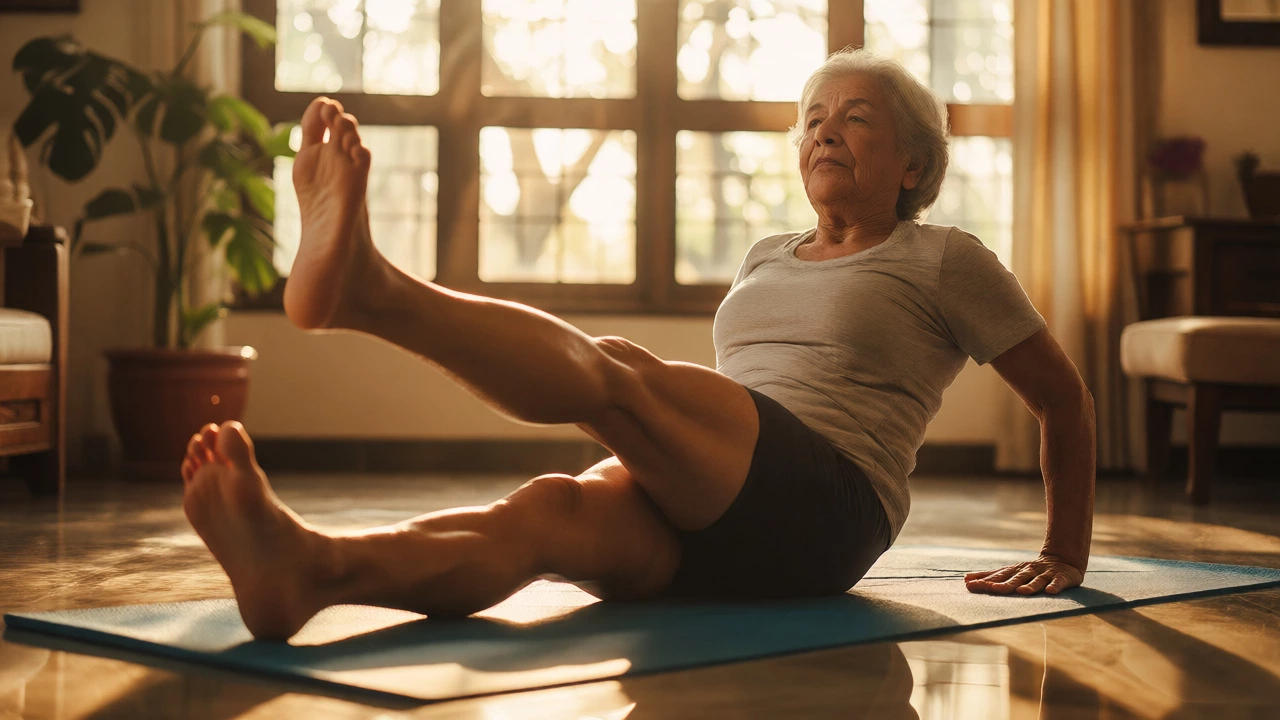
- Straight Leg Raises: Lie on your back with one leg bent and the other straight. Tighten the thigh muscle of the straight leg and lift it about 12 inches off the floor. Hold for five seconds. Lower slowly. This isolates the quad without bending the knee, minimizing joint stress while building strength.
- Glute Bridges: Lie on your back, knees bent, feet flat. Lift your hips toward the ceiling by squeezing your glutes. Strong glutes prevent your knees from collapsing inward when you walk or climb stairs.
- Step-Ups: Use a low step (like the bottom stair of your staircase). Step up with one foot, bringing the other foot up, then step down. Focus on keeping your knee aligned over your second toe. Do not let the knee cave inward.
Performing these exercises daily for ten minutes can yield noticeable improvements in stability within four to six weeks. The goal is to create a muscular corset around the knee that takes the pressure off the bones.
Nutrition and Weight Management: The Hidden Levers
While movement is the primary fix, weight management plays a supporting role. For every pound of body weight lost, you remove four pounds of pressure from your knees with every step. If you are overweight, losing even 5% of your body weight can significantly reduce pain levels. However, crash dieting often leads to muscle loss alongside fat loss, which is counterproductive. Aim for slow, steady weight loss combined with resistance training to preserve muscle mass.
Anti-inflammatory foods also matter. Diets high in sugar and processed carbohydrates can increase systemic inflammation, worsening joint pain. Incorporating omega-3 fatty acids found in fish like salmon or mackerel, along with colorful vegetables rich in antioxidants, supports joint health from the inside out. Hydration is equally critical; synovial fluid is largely water, so staying hydrated helps maintain that essential lubrication.
When to Consider Knee Replacement
Despite best efforts with lifestyle changes, some knees eventually reach a point where conservative care is no longer enough. This is where knee replacement surgery enters the conversation. It is typically reserved for end-stage osteoarthritis where quality of life is severely compromised despite months of physical therapy and medication.
Do not view surgery as a failure. View it as a tool. Modern techniques allow for faster recovery and longer implant lifespan. However, pre-habilitation-strengthening your muscles before surgery-dramatically improves post-operative outcomes. Patients who enter surgery with strong quads recover mobility faster than those who enter with weak ones. So, even if you are heading toward surgery, fixing the "inactivity mistake" now will pay dividends later.
| Approach | Impact on Cartilage | Impact on Muscle Strength | Pain Level Risk |
|---|---|---|---|
| Total Rest / Immobilization | Negative (Starvation) | Negative (Atrophy) | High (Stiffness) |
| High-Impact Exercise (No Prep) | Negative (Wear) | Variable | Very High (Acute Injury) |
| Controlled Low-Impact Movement | Positive (Nutrition) | Positive (Strengthening) | Low (Managed) |
Frequently Asked Questions
Is walking good for bad knees?
Yes, walking is generally excellent for knee health, provided it is done on flat surfaces with supportive shoes. It promotes circulation and maintains range of motion. Start with short durations (10-15 minutes) and gradually increase. Avoid walking on steep hills or uneven terrain if you experience significant pain.
Should I use ice or heat for knee pain?
Use ice if your knee is swollen, hot, or inflamed after activity. Use heat if your knee feels stiff, achy, or tight, especially in the morning or before exercise. Heat relaxes muscles and improves blood flow, while ice reduces inflammation and numbs pain.
How long does it take to see results from strengthening exercises?
Most people notice improved stability and reduced pain within 4 to 6 weeks of consistent daily exercise. Structural changes in muscle tissue take time, so patience is key. Do not expect overnight fixes, but do expect gradual improvement if you stay consistent.
Can cycling help my bad knees?
Cycling is one of the best low-impact exercises for knees. It strengthens the quads and hamstrings without placing excessive weight-bearing stress on the joint. Ensure your saddle height is correct to avoid straining the knee; your leg should be almost fully extended at the bottom of the pedal stroke.
Does losing weight really help knee pain?
Absolutely. Biomechanical studies show that for every 1 pound of weight lost, there is a 4-pound reduction in knee joint load with each step. Over thousands of steps a day, this adds up to massive savings for your cartilage. Weight loss is often the most effective non-surgical intervention for obese patients with knee osteoarthritis.
Next Steps for Your Knees
If you have been resting your knees due to pain, it is time to break the cycle. Start today with gentle range-of-motion exercises. Try the straight leg raise mentioned above. Notice how your muscles feel. If you feel sharp joint pain, modify the movement. If you feel muscle fatigue, you are doing it right.
Consider consulting a physiotherapist for a personalized assessment. They can identify specific imbalances in your gait or muscle activation patterns that generic advice might miss. Remember, your knees are not fragile glass ornaments; they are robust mechanical structures designed to move. Give them the work they were built for, and they will likely serve you well for years to come.