
Interactive Skincare Routine Builder
Step 1: Define Your Profile
Step 2: Build Your Routine
Click each step to toggle it in your AM/PM routine.
Your Custom Routine
Morning (AM)
- 1. Gentle Cleanser
- 2. Vitamin C Serum
- 3. Lightweight Moisturizer
- 4. Broad Spectrum SPF 30+
Evening (PM)
- 1. Thorough Cleanser
- 2. Retinol or Exfoliant
- 3. Rich Moisturizer
You’ve probably seen those ten-step routines on social media that leave you wondering if your bathroom counter needs a structural upgrade. But here’s the truth: effective skincare isn’t about how many bottles you own; it’s about what they actually do for your skin barrier. If you’re feeling overwhelmed by terms like "serum," "toner," and "essence," take a breath. Dermatologists generally agree that you only need four core categories to keep your skin healthy, protected, and glowing. These aren’t just marketing inventions-they are functional pillars that address cleaning, hydrating, treating, and protecting.
Think of your skin like a house. You wouldn’t paint the walls without fixing the roof first, right? The same logic applies here. Before you buy that expensive anti-aging cream, you need to understand the basic architecture of a routine. Whether you have oily, dry, or sensitive skin, these four types remain constant. What changes is the specific formulation within each type. Let’s break down exactly what these four types are, why they matter, and how to pick the right ones for your specific needs.
The Foundation: Cleansing
Everything starts with removing the junk. Throughout the day, your skin accumulates sebum (oil), sweat, environmental pollutants, makeup, and dead skin cells. If you don’t wash this away, nothing else you apply can penetrate properly. Cleansers are products designed to lift impurities from the skin surface without stripping its natural moisture barrier. They come in various forms-gels, creams, foams, and oils-but their job is singular: cleanliness.
A common mistake is over-cleansing. If your face feels tight or squeaky after washing, you’ve likely stripped too much natural oil. This triggers your skin to produce even more oil to compensate, leading to breakouts. For most people, cleansing twice a day-once in the morning to remove night-time residue and once at night to clear the day’s grime-is sufficient. If you wear heavy makeup or sunscreen, consider double cleansing: start with an oil-based cleanser to dissolve waterproof products, then follow with a water-based cleanser to clean the skin itself.
The Hydrator: Moisturizing
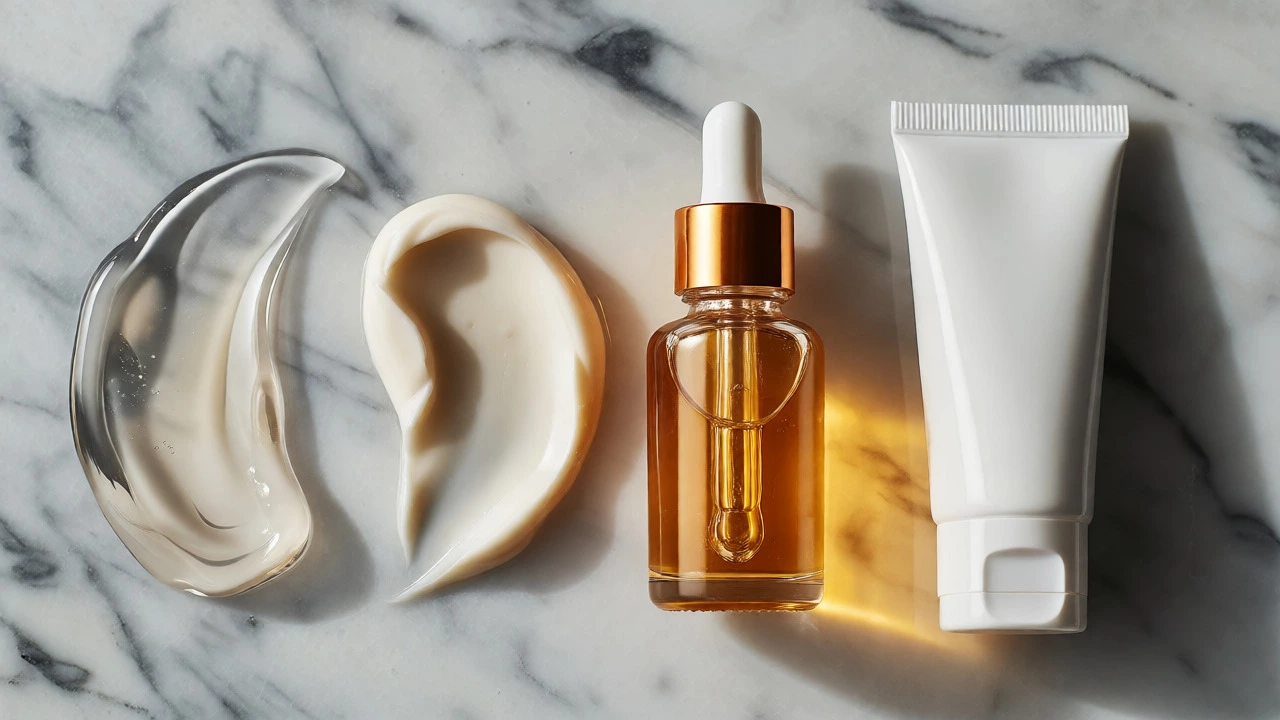
Once your skin is clean, it’s thirsty. Even oily skin needs hydration. Moisturizers work by trapping water in the skin and reinforcing the lipid barrier that keeps irritants out. Without adequate moisture, your skin barrier weakens, leading to redness, sensitivity, and premature aging signs like fine lines.
Not all moisturizers are created equal. Here is a quick guide to matching texture to skin type:
| Skin Type | Recommended Texture | Key Ingredients to Look For |
|---|---|---|
| Oily/Acne-Prone | Gel or Light Lotion | Hyaluronic Acid, Niacinamide |
| Dry | Cream or Balm | Ceramides, Shea Butter, Squalane |
| Combination | Lightweight Cream | Glycerin, Aloe Vera |
| Sensitive | Fragrance-Free Cream | Colloidal Oatmeal, Centella Asiatica |
Apply moisturizer while your skin is still slightly damp. This helps seal in the water already present on the surface, boosting hydration levels significantly more than applying it to bone-dry skin.
The Protector: Sunscreen
If you do nothing else for your skin, use sunscreen. It is arguably the most critical step in any routine. Up to 90% of visible skin aging-wrinkles, dark spots, and loss of elasticity-is caused by UV exposure, not genetics. Sunscreen is a topical product that filters ultraviolet (UV) rays to prevent sunburn and long-term damage. There are two main types: mineral (physical) and chemical.
Mineral sunscreens sit on top of the skin and physically block rays using zinc oxide or titanium dioxide. They are great for sensitive skin but can sometimes leave a white cast. Chemical sunscreens absorb into the upper layers of the skin and convert UV rays into heat. Modern chemical formulas are lightweight and often preferable for daily wear under makeup. Regardless of the type, aim for SPF 30 or higher and broad-spectrum protection, which guards against both UVA (aging) and UVB (burning) rays. Remember, clouds do not block UV rays effectively, so rain or shine, you need protection every single day.
The Specialist: Treatments and Actives
This is where customization happens. While the first three steps are universal, treatments target specific concerns like acne, hyperpigmentation, or wrinkles. Treatments, often called serums or actives, contain high concentrations of specific ingredients designed to alter skin behavior. Unlike moisturizers, which primarily protect and hydrate, treatments penetrate deeper to stimulate collagen, increase cell turnover, or inhibit melanin production.
Common treatment categories include:
- Retinoids: Derived from Vitamin A, these are the gold standard for anti-aging and acne. They speed up cell turnover and boost collagen. Start slow-once or twice a week-to avoid irritation.
- Vitamin C: An antioxidant that brightens skin and protects against free radical damage from pollution. Best used in the morning under sunscreen.
- Exfoliants (AHAs/BHAs): Acids like glycolic acid (AHA) and salicylic acid (BHA) dissolve dead skin cells. AHAs work on the surface for brightness; BHAs penetrate pores to clear congestion.
Be careful mixing actives. Using too many strong treatments at once can wreck your skin barrier. If you’re new to actives, introduce one at a time. Wait at least two weeks before adding another so you can identify what works and what causes irritation.
How to Build Your Routine
Now that you know the four types, how do you put them together? Order matters because some ingredients neutralize others or require specific pH levels to work.
- Morning: Cleanse (gentle) → Treatment (Vitamin C optional) → Moisturize → Sunscreen.
- Evening: Cleanse (thorough) → Treatment (Retinol or Exfoliant) → Moisturize.
Note that you generally shouldn’t use exfoliants and retinoids on the same night if you have sensitive skin. Alternate nights instead. Consistency beats intensity. Doing the basics well every day will yield better results than sporadic, aggressive treatments.
Common Pitfalls to Avoid
One major error is skipping moisturizer because you think your skin is "too oily." Oiliness is about sebum production; dehydration is about lack of water. You can be oily and dehydrated simultaneously. Skipping moisturizer signals your skin to produce more oil, worsening the problem.
Another trap is expecting overnight miracles. Skin cycles take about 28 days. Most treatments require 6-12 weeks to show visible results. Patience is part of the process. Also, patch test new products behind your ear or on your inner arm for 24 hours before applying them to your face to check for allergic reactions.
Do I really need all four types of skincare?
Yes, for optimal health. Cleansing removes barriers to absorption, moisturizing maintains the skin barrier, sunscreen prevents damage, and treatments address specific issues. You can simplify the treatment step based on your concerns, but the other three are non-negotiable for most dermatologists.
Can I use the same moisturizer for day and night?
You can, but it’s not always ideal. Day moisturizers often include SPF or lighter textures suitable for makeup application. Night creams are typically richer and may contain reparative ingredients like peptides or retinol that make skin photosensitive. Adjusting based on the time of day can optimize results.
What is the correct order to apply skincare products?
Always apply products from thinnest to thickest consistency. Generally: Cleanser → Toner/Essence (optional) → Serum/Treatment → Eye Cream → Moisturizer → Face Oil (optional) → Sunscreen (AM only). This ensures lighter products penetrate before heavier ones create a seal.
Is sunscreen necessary on cloudy days?
Absolutely. Up to 80% of UV rays can penetrate cloud cover. Additionally, UV rays reflect off surfaces like snow, sand, and concrete. Consistent daily use prevents cumulative DNA damage that leads to premature aging and skin cancer risk.
How long does it take to see results from skincare treatments?
Hydration effects are immediate. However, active treatments like retinoids or vitamin C typically require 4 to 12 weeks of consistent use to show significant improvements in texture, tone, and fine lines. Skin cell turnover cycles average 28 days, so give products time to work.