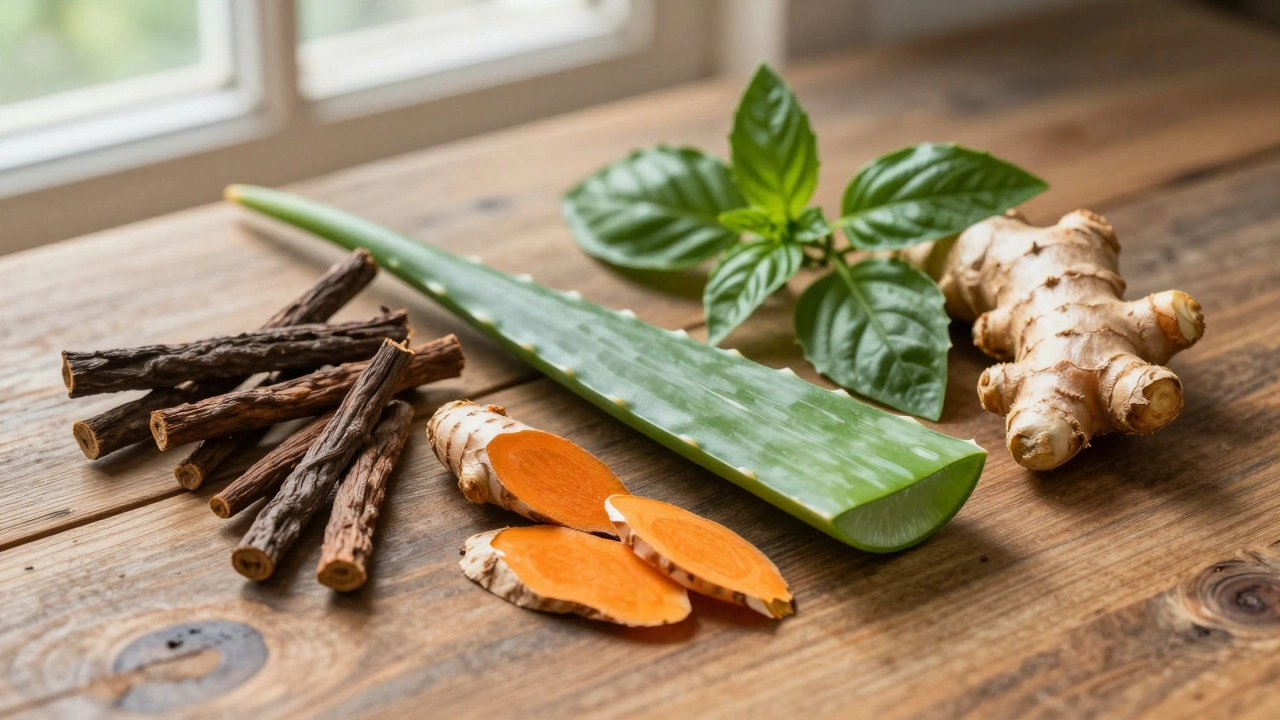
Herbal Supplement Finder
Match your health goals with the right botanical powerhouse
Plant Name
AttributeDescription will appear here.
Please select a goal above to see the recommended botanical supplement.
When we talk about healing plants, we're usually discussing Medicinal Plants, which are plants containing organic compounds that can be used for therapeutic purposes or as a preventative measure for diseases. While they aren't a replacement for emergency medicine, they interact with our biochemistry to reduce inflammation, balance hormones, and fight off infections.
Quick Takeaways: The Botanical Powerhouses
- Turmeric: The gold standard for inflammation and joint health.
- Ashwagandha: The go-to for stress, cortisol, and mental burnout.
- Aloe Vera: The ultimate skin healer and digestive aid.
- Holy Basil: A versatile herb for metabolic health and mood.
- Ginger: The best natural remedy for nausea and digestion.
The Inflammation Fighter: Turmeric and Curcumin
If you're looking for a plant that tackles the root cause of many modern ailments, look no further than Turmeric. This bright orange root isn't just for curry; it contains a bioactive compound called Curcumin. Curcumin is the active ingredient that gives turmeric its healing power, acting as a natural blocker for inflammatory enzymes in the body.
Think of inflammation like a small fire in your joints or arteries. If it's a short-term fire (like after a sprained ankle), it's helpful. But when that fire burns for years, it leads to arthritis or heart disease. Turmeric acts like a fire extinguisher. For someone dealing with stiff knees every morning, a high-quality curcumin supplement can often reduce the need for synthetic painkillers. Just a pro tip: curcumin is hard for your body to absorb on its own. Always take it with black pepper (piperine) or a healthy fat, which can increase absorption by up to 2,000%.
The Stress Buffer: Ashwagandha
While turmeric handles the physical fire, Ashwagandha handles the mental storm. This plant is what experts call an Adaptogen-a substance that helps your body 'adapt' to stress by regulating your endocrine system.
Do you ever feel 'wired but tired'? That's usually your cortisol levels peaking at the wrong time. Ashwagandha works by signaling your brain to lower the production of cortisol, the primary stress hormone. Unlike a sedative that just knocks you out, this root helps balance your energy. If you're juggling a high-pressure job and can't shut your brain off at 2 AM, Ashwagandha helps reset that internal clock. It's less about 'healing' a disease and more about preventing the damage that chronic stress does to your heart and immune system.
The Skin and Gut Savior: Aloe Vera
If we're talking about a plant that feels like it heals everything it touches, Aloe Vera is the winner. Most people only think of it for sunburns, but its utility goes much deeper. The gel inside the leaves is packed with polysaccharides and minerals that soothe damaged tissue whether it's on the outside or the inside of the body.
On the skin, it creates a protective layer that locks in moisture while killing off certain bacteria. But when taken as a purified juice, it can soothe the lining of the stomach and intestines. People with acid reflux or mild gastritis often find that Aloe Vera reduces the burning sensation in the esophagus. It’s a rare example of a plant that is just as effective for a cosmetic burn as it is for internal mucosal healing.
Comparison of Top Healing Plants
| Plant Entity | Primary Attribute | Best For... | Key Bioactive Compound |
|---|---|---|---|
| Turmeric | Anti-inflammatory | Joint pain, Arthritis | Curcumin |
| Ashwagandha | Adaptogenic | Anxiety, Insomnia | Withanolides |
| Aloe Vera | Vulnerary | Skin burns, Gastritis | Acemannan |
| Ginger | Carminative | Nausea, Digestion | Gingerol |
| Holy Basil | Metabolic Regulator | Blood sugar, Stress | Ursolic Acid |

The Digestive Dynamo: Ginger
You can't have a list of healing plants without Ginger. While it's not a 'cure-all' in the sense of fixing a broken bone, it's perhaps the most versatile plant for the gut. The active compound, Gingerol, speeds up the emptying of the stomach, which is why it's the gold standard for nausea-whether from motion sickness, pregnancy, or chemotherapy.
But ginger does more than stop you from feeling sick. It's a powerful antimicrobial agent. If you're feeling the start of a winter cold, a hot ginger tea can help clear congestion and inhibit the growth of certain bacteria in the throat. Because it improves blood circulation, it also helps warm the body and ease menstrual cramps, making it a powerhouse for female hormonal health.
The Metabolic Balance: Holy Basil (Tulsi)
In many cultures, Holy Basil, also known as Tulsi, is referred to as the 'Queen of Herbs.' It bridges the gap between the stress-relief of Ashwagandha and the inflammation-fighting of Turmeric. It's particularly effective for those struggling with blood sugar spikes.
Unlike some supplements that only do one thing, Holy Basil helps regulate glucose levels while simultaneously lowering oxidative stress in the cells. This makes it a great companion for people managing pre-diabetes or those who experience 'brain fog' after a heavy carbohydrate meal. It works by improving the way your cells respond to insulin, effectively cleaning up the metabolic waste that makes you feel sluggish.
How to Use These Plants Without Making Mistakes
Here is where most people go wrong: they assume 'natural' means 'safe in any amount.' In reality, plants are chemical factories. Taking a massive dose of Ashwagandha if you have an autoimmune disorder like Lupus could actually stimulate your immune system too much and cause a flare-up. Similarly, Turmeric can thin your blood, which is a huge problem if you're already taking medication like Warfarin or are scheduled for surgery.
The best way to integrate these is through a 'low and slow' approach. Start with a small dose and track how you feel for a week. Are you sleeping better? Is the joint pain in your hip easing up? Once you find the sweet spot, keep the dose consistent. Also, quality matters. A cheap powder from a grocery store often lacks the concentrated bioactive compounds found in a standardized extract. Look for labels that mention the percentage of active ingredients (e.g., '95% Curcuminoids').
Is there actually one plant that heals everything?
No. While some plants have very broad benefits, no single plant can cure every disease. Healing is a systemic process. You might use Turmeric for physical inflammation and Ashwagandha for mental stress, but you wouldn't use a stress-relieving root to treat a severe skin burn; for that, you'd want Aloe Vera. The 'miracle' is in using the right plant for the specific problem.
Can I take Turmeric and Ginger together?
Yes, they are actually a powerful combination. Both are members of the Zingiberaceae family and both target inflammation. Taking them together can create a synergistic effect, making them more effective for joint pain and digestive issues than taking either one alone.
How long does it take for herbal supplements to work?
It depends on the plant. Ginger works almost instantly for nausea. However, adaptogens like Ashwagandha or anti-inflammatories like Turmeric often require 2 to 4 weeks of consistent use to build up in your system before you notice a significant change in your baseline health.
Are there side effects to taking Ashwagandha?
While generally safe, some people experience mild drowsiness or a drop in blood pressure. Because it affects the thyroid and immune system, people with hyperthyroidism or autoimmune conditions should always consult a doctor first to avoid unwanted hormonal shifts.
Where should I buy these plants to ensure they are pure?
Avoid generic bulk powders with no labeling. Look for brands that provide 'Third-Party Testing' or 'COA' (Certificate of Analysis). This ensures the plant isn't contaminated with heavy metals like lead or mercury, which can sometimes be absorbed by plants depending on where they were grown.
Next Steps for Your Wellness Journey
If you're feeling overwhelmed by the choices, start by identifying your biggest 'leak.' If it's your energy and mood, start with an adaptogen like Ashwagandha. If it's physical pain, go for Turmeric. Don't try to start five different supplements at once; you'll never know which one is actually working and which one is causing a stomach ache.
For those with chronic conditions, the next logical step is to keep a health diary. Note your symptoms on a scale of 1-10, start your supplement, and re-evaluate after 21 days. This data is more valuable than any generic review online because it tells you how your specific biology reacts to the plant. If you see no change after a month, it's time to swap the plant or adjust the dosage.