Stage 4 Cancer Remission Calculator
Estimate Your Remission Probability
Enter your cancer type to see the estimated chance of complete remission based on current medical data.
Remission Probability
Complete remission means no detectable cancer on scans, normal blood markers, and absence of symptoms. It's not a cure, but can last for years with ongoing monitoring.
When someone hears the words "stage 4 cancer," it often feels like a death sentence. But that’s not the whole story. More and more people are living for years - sometimes decades - after a stage 4 diagnosis. And yes, remission is possible. Not for everyone. Not always permanent. But it happens. And understanding how and why matters more than ever.
What Does "Stage 4 Cancer" Really Mean?
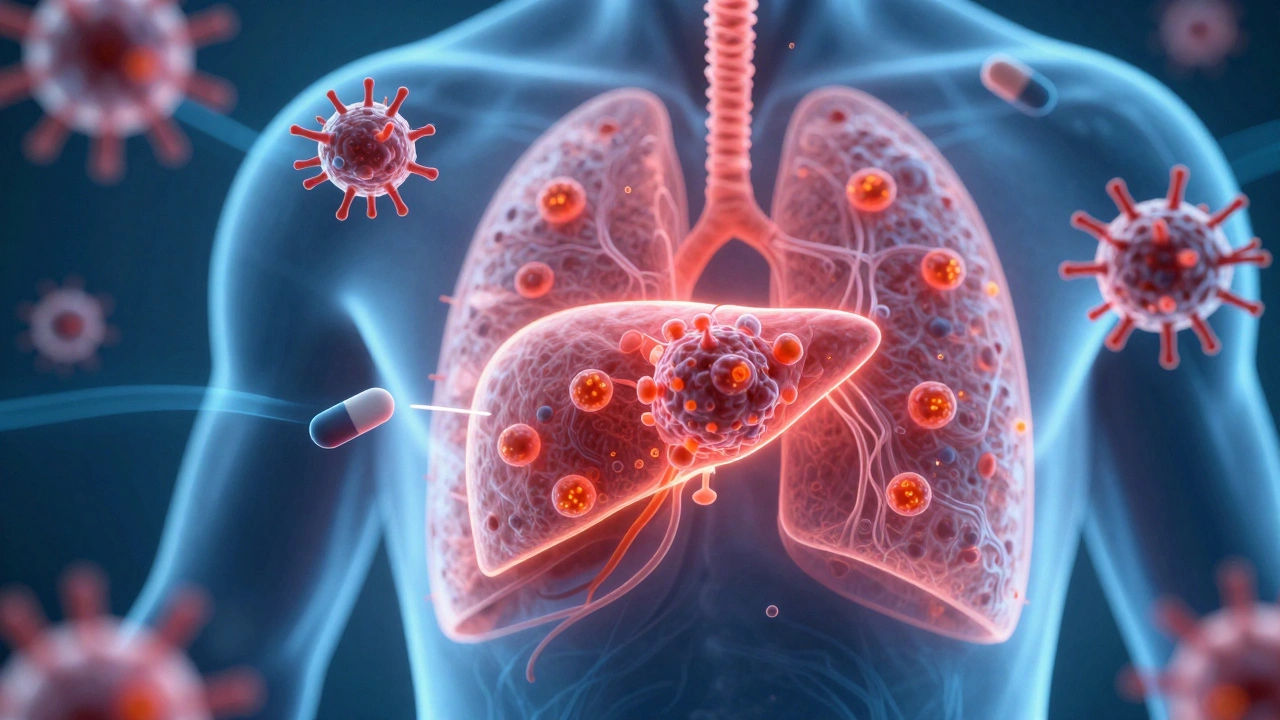
Stage 4 cancer means the disease has spread beyond its original site to distant parts of the body. This is also called metastatic cancer. Common sites include the liver, lungs, bones, or brain. It doesn’t mean the cancer is untreatable. It means it’s systemic. The goal shifts from curing to controlling.Think of it like a wildfire that’s jumped a river. You can’t put it out with a hose anymore. But you can build firebreaks, slow it down, and keep it from consuming everything. That’s what modern oncology does.
Remission Isn’t Just One Thing
Remission doesn’t mean cancer is gone forever. It means there’s no detectable sign of it - for now. Doctors use two terms:- Partial remission: Tumors have shrunk by at least 30%, and symptoms have improved.
- Complete remission: No tumors can be seen on scans, blood markers are normal, and there are no new symptoms.
Complete remission in stage 4 is rare, but not mythical. A 2022 study in The Lancet Oncology tracked over 12,000 patients with metastatic colorectal cancer. About 14% reached complete remission after targeted therapy and surgery. Some stayed in remission for five years or more.
Who Has the Best Chance?
Not all stage 4 cancers are the same. Some types respond far better to treatment than others.| Cancer Type | 5-Year Survival Rate | Chance of Complete Remission |
|---|---|---|
| Testicular Cancer | 73% | Up to 30% |
| Thyroid Cancer (differentiated) | 80% | Up to 25% |
| Colorectal Cancer | 14% | 10-15% |
| Breast Cancer (HER2-positive) | 28% | 15-20% |
| Lung Cancer (non-small cell, EGFR+) | 10% | 5-10% |
| Pancreatic Cancer | 3% | Less than 2% |
These numbers aren’t just statistics. They’re real people. A 52-year-old woman with HER2-positive breast cancer that spread to her liver got a combination of targeted drugs and immunotherapy. After 18 months, her scans were clear. She’s now in her sixth year of remission. Another man with metastatic testicular cancer had surgery after chemo - and hasn’t had a recurrence in 12 years.

What Makes Remission Possible?
It’s not luck. It’s a mix of biology, timing, and treatment.- Genetic mutations: Some cancers have specific gene changes - like BRCA, EGFR, or ALK - that make them vulnerable to targeted drugs. These drugs can be so effective, they turn stage 4 into a chronic condition.
- Immunotherapy: Drugs like pembrolizumab or nivolumab help the immune system find and kill cancer cells. In melanoma and lung cancer, this has led to long-term remission in patients who once had months to live.
- Surgery and radiation: Even in stage 4, removing a few stubborn tumors (oligometastatic disease) can change the game. A 2023 trial showed that patients with 1-3 metastases who got focused radiation lived twice as long as those who didn’t.
- Response to chemo: Some cancers, like lymphoma or testicular cancer, are still highly sensitive to chemotherapy. A full response can mean years of control.
One key insight: remission often comes after aggressive, multi-modal treatment. It’s not one drug. It’s chemo + surgery + targeted therapy + lifestyle changes. And it usually takes months - sometimes years - to see results.
Remission Doesn’t Mean Cure
This is where expectations get messy. Even if scans look perfect, cancer cells can hide. They’re not dead - just dormant. That’s why doctors don’t say "cured." They say "in remission."Most people who reach complete remission still need regular check-ups. Blood tests. Scans every 3-6 months. Some stay on low-dose maintenance therapy. Others stop treatment entirely - but stay alert.
Relapse is common. But it’s not the end. Many people go into second, even third remission. New treatments keep coming. A drug that didn’t work last year might work this year.
Hope Isn’t Just Emotion - It’s Data
In 2010, the median survival for stage 4 lung cancer was 8 months. Today, it’s over 2 years - and rising. Why? Because we stopped treating it like a single disease. Now we test for mutations. We match drugs to genes. We combine therapies.There’s a 48-year-old teacher in Manchester who was told she had six months left after stage 4 ovarian cancer spread to her peritoneum. She did six rounds of chemo, then surgery, then a PARP inhibitor. Her last scan was clear in 2023. She’s back to teaching. She calls it "living with cancer," not "beating it."
What You Can Do
If you or someone you love is facing stage 4 cancer:- Ask for molecular testing. Find out what mutations are driving the cancer. This isn’t optional - it’s essential.
- Seek a second opinion from a major cancer center. Academic hospitals have access to trials and specialists most community clinics don’t.
- Consider clinical trials. Even if you’re not eligible now, new options open every month.
- Focus on quality of life. Nutrition, sleep, stress management - these aren’t fluffy extras. They help your body handle treatment.
- Don’t assume the worst. Survival rates are averages. You’re not a statistic. You’re a person with a unique biology.
It’s Not About Winning. It’s About Time.
Stage 4 cancer isn’t a battle you win or lose. It’s a journey. Some people live for years with it. Others get long remissions. A few get lucky enough to be in the 5% who never come back.The real victory isn’t erasing cancer. It’s reclaiming life - even if it’s different than before. You can still travel. Work. Laugh with grandchildren. Hold someone’s hand. That’s what remission gives you: time.
Can stage 4 cancer go into complete remission?
Yes, complete remission is possible in some stage 4 cancers, though it’s rare. Cancers like testicular, thyroid, and certain types of breast and lung cancer have higher chances. Remission means no detectable cancer on scans or blood tests, but it doesn’t guarantee the cancer won’t return. Long-term remission - five years or more - does happen, especially with targeted therapies and immunotherapy.
Is stage 4 cancer always terminal?
No. While stage 4 cancer is advanced and often hard to cure, it’s not always terminal. Many people live for years with the disease under control. Treatments today can turn metastatic cancer into a chronic condition - like diabetes or high blood pressure. Survival rates have improved dramatically over the last decade due to precision medicine and immunotherapy.
What’s the longest someone has lived with stage 4 cancer?
There are documented cases of people living 15-20 years or more with stage 4 cancer. One well-known case is a woman with metastatic breast cancer who survived 21 years after diagnosis using a combination of hormone therapy, targeted drugs, and lifestyle changes. These are outliers - but they prove that long-term survival is possible, especially with responsive cancer types.
Can you live a normal life after stage 4 cancer remission?
Many people do. After remission, some return to work, travel, and family life. Others adjust to a new normal - maybe working part-time, exercising gently, or seeing doctors less often. Quality of life depends on the cancer type, treatment side effects, and personal support. The goal isn’t to go back to how things were - it’s to build a meaningful life despite the diagnosis.
Do all stage 4 cancer patients need chemotherapy?
No. Many patients now avoid chemo altogether. Targeted therapies, immunotherapy, hormone treatments, and radiation can be more effective and less toxic. For example, someone with EGFR-positive lung cancer might take a daily pill for years instead of getting chemo. Treatment is personalized based on genetic testing, not a one-size-fits-all approach.
Why do some stage 4 cancers respond better than others?
It comes down to biology. Some cancers have mutations that make them sensitive to specific drugs - like HER2 in breast cancer or BRAF in melanoma. Others, like pancreatic cancer, are surrounded by dense tissue that blocks drugs from reaching cancer cells. Research is focused on breaking down those barriers. What works for one person may not work for another - which is why genetic testing is so critical.