
Open-Heart Surgery Frailty & Risk Assessment Tool
Frailty Index Calculator
Answer these questions honestly to calculate your Frailty Index Score. This tool helps assess whether you might be a candidate for traditional open-heart surgery or if less invasive alternatives like TAVR might be safer.
Quick Facts
- No Age Limit: Patients in their 90s undergo surgery successfully.
- Biological Age: Organ function matters more than birth date.
- TAVR Alternative: Less invasive option for high-risk patients.
- Pre-habilitation: Exercise and nutrition can improve outcomes.
Low Risk
Frailty Index Score
Your Assessment Summary
Recommended Next Steps:
There is no specific number on a calendar that automatically disqualifies you from open-heart surgery, which is a major surgical procedure where the chest is opened to repair or replace heart structures. In fact, patients in their 80s and even 90s undergo these procedures successfully every day. The question isn't really "what age is too old?" but rather "is your body strong enough to handle the stress of surgery right now?" Doctors look at your biological age-how well your organs function-rather than your chronological age.
Biological Age vs. Chronological Age: The Real Deciding Factor
If you are 75 and run marathons, you might be a better candidate than a 60-year-old with severe lung disease and uncontrolled diabetes. This concept is known as biological age, which refers to the physiological condition of a person's body relative to their actual years lived. Surgeons use this metric to predict how well you will recover.
Your heart isn't working alone during surgery. Your kidneys need to filter waste while you're under anesthesia. Your lungs need to breathe effectively when you wake up. If any of these systems are failing, the risk goes up, regardless of whether you are 70 or 80. A comprehensive pre-operative assessment checks these vital functions. This includes blood tests to check kidney function (creatinine levels), lung capacity tests (spirometry), and sometimes cognitive screening to ensure you can follow post-surgery instructions.
Understanding the Risks: Why Age Matters
While there is no hard cutoff, statistics show that complications become more common as you get older. Here is what doctors worry about most:
- Delirium and Cognitive Decline: Older adults are more prone to confusion after surgery, often called post-operative delirium. For some, this clears up in days; for others, it can lead to long-term memory issues.
- Prolonged Ventilation: It may take longer for an older patient to breathe on their own after being taken off the ventilator.
- Infection Risk: The immune system weakens with age, making sternal wound infections more likely.
- Bleeding: Blood vessels become more fragile, and many older patients take blood thinners, increasing bleeding risks.
Despite these risks, the survival rate for standard procedures like coronary artery bypass grafting (CABG), also known as bypass surgery, remains high even in octogenarians. Studies suggest that for selected patients over 80, the mortality rate is comparable to younger groups, provided they don't have severe comorbidities.
| Age Group | Average Mortality Rate | Primary Concerns | Recovery Time |
|---|---|---|---|
| 60-70 years | 1-2% | Standard surgical risks | 4-6 weeks |
| 71-80 years | 3-5% | Renal function, infection | 6-8 weeks |
| Over 80 years | 5-10%+ | Cognitive decline, frailty | 8-12+ weeks |
The Frailty Index: A Critical Assessment Tool
One of the most important tools surgeons use today is the frailty index, which measures physical vulnerability based on weight loss, exhaustion, low activity, slowness, and weakness. You might look healthy, but if you lose weight unintentionally, walk slowly, or feel exhausted easily, you are considered "frail."
Frailty is a stronger predictor of poor outcomes than age alone. A frail 75-year-old faces higher risks than a robust 85-year-old. During your consultation, expect questions about your daily activities. Can you climb a flight of stairs? Do you live alone? Do you need help with bathing or dressing? These answers help the medical team decide if you are a good candidate for traditional open-heart surgery or if a less invasive option is safer.

Alternatives to Traditional Open-Heart Surgery
If you are deemed too high-risk for sternotomy (cutting through the breastbone), you are not necessarily out of options. Medical technology has advanced significantly, offering minimally invasive alternatives that spare the body from major trauma.
Transcatheter Aortic Valve Replacement (TAVR) is a procedure to replace a narrowed aortic valve without open-heart surgery. Instead of cracking the chest, doctors insert a new valve through a small incision in the groin or chest using a catheter. This is particularly popular for elderly patients with aortic stenosis. Recovery is much faster, often allowing patients to go home within a few days instead of weeks.
Similarly, percutaneous coronary intervention (PCI), commonly known as angioplasty with stenting, opens blocked arteries without bypass surgery. While CABG is generally more durable for complex blockages, PCI is a viable alternative for those who cannot tolerate the stress of full surgery.
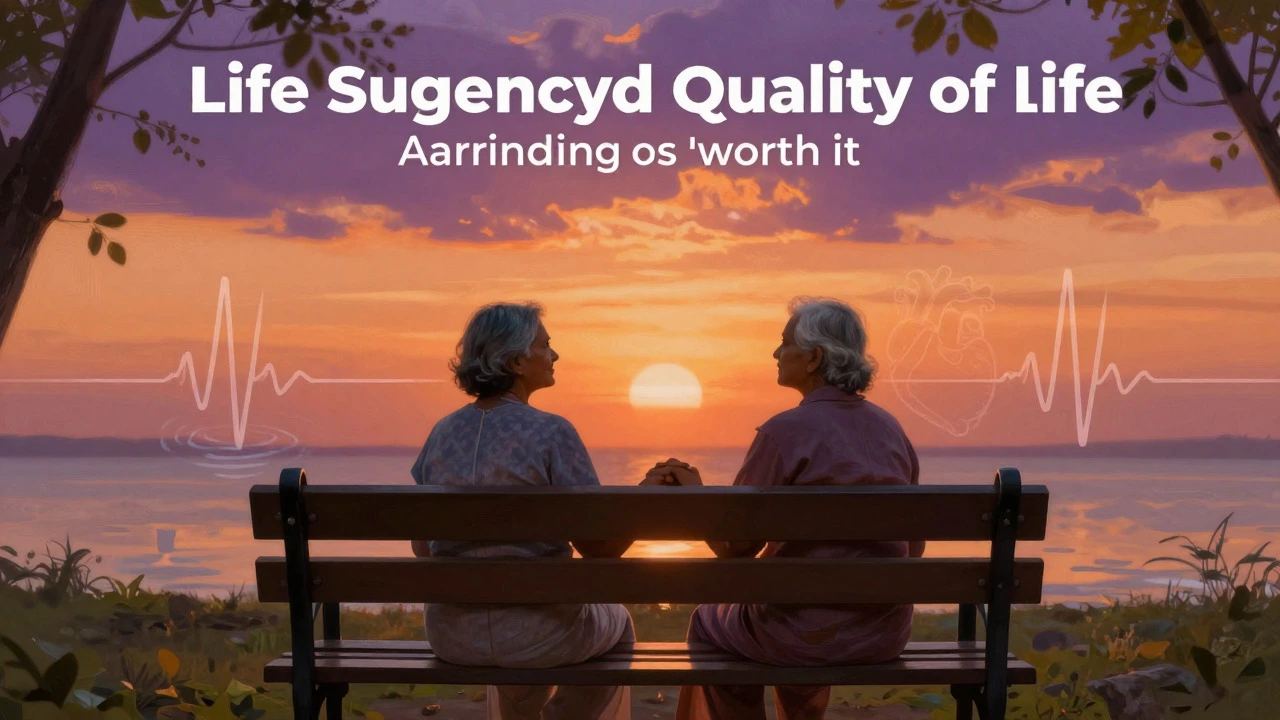
Life Expectancy After Surgery: Is It Worth It?
This is the hardest question families face. Will surgery add quality time, or just extend suffering? Data shows that for many elderly patients, successful surgery significantly improves both life expectancy and quality of life. Patients who survive the initial recovery period often live as long as their peers who did not have heart disease.
However, the definition of "worth it" varies. For some, living another five years with mild limitations is acceptable. For others, the fear of cognitive decline outweighs the benefit of extended life. Shared decision-making is crucial here. Your cardiologist should present clear data: "Without surgery, your chance of surviving two years is X%. With surgery, it is Y%."
Preparing Your Body for Surgery (Pre-habilitation)
If you are scheduled for surgery, you can actively improve your odds through pre-habilitation, which involves exercises and nutritional interventions before surgery to improve physical resilience. Even short periods of preparation can make a difference.
- Nutrition: Increase protein intake to support muscle mass and wound healing. Malnutrition is a major risk factor for complications.
- Exercise: Start walking daily. Aim for 15-30 minutes if possible. This builds lung capacity and cardiovascular endurance.
- Mental Health: Reduce anxiety. Stress hormones can impair immune function. Meditation or counseling can help.
- Medication Review: Ensure all medications are optimized. Some drugs may need to be paused before surgery.
When Surgery Might Be Deferred or Avoided
There are scenarios where the risks outweigh the benefits. If you have severe dementia, terminal cancer, or end-stage organ failure (kidney or liver), open-heart surgery may not be recommended. In these cases, palliative care focuses on symptom relief rather than curative intervention.
Also, consider your social support system. Recovering from open-heart surgery requires help at home. If you live alone with no family or caregivers nearby, the risk of readmission due to falls or medication errors increases. Discussing home care arrangements beforehand is essential.
What is the oldest age for open-heart surgery?
There is no strict upper age limit. Patients in their 90s have undergone successful open-heart surgery. The decision depends on biological fitness, frailty status, and overall health rather than the number on a birthday card.
Is TAVR better than open-heart surgery for seniors?
For high-risk elderly patients with aortic stenosis, TAVR is often preferred because it avoids cutting the breastbone. It has a shorter recovery time and lower immediate risk, though long-term durability is still being studied compared to traditional surgical valves.
How does dementia affect heart surgery decisions?
Severe dementia increases the risk of post-operative delirium and complicates recovery. If a patient cannot participate in rehabilitation or manage medications, doctors may recommend against major surgery, opting for less invasive treatments or palliative care instead.
Can I reverse my decision after being cleared for surgery?
Yes, informed consent is ongoing. If you feel overwhelmed or new health issues arise, you can pause or cancel the procedure. It is vital to communicate any changes in your health or preferences to your surgical team immediately.
What is the average recovery time for an 80-year-old?
Recovery is slower for older adults. While hospital stay may be 5-7 days, full recovery at home can take 3 to 6 months. Physical therapy and cardiac rehab are strongly recommended to regain strength and prevent complications.