Knee Stiffness Recovery Pathway Tool
Select your primary situation below to receive a tailored recovery recommendation based on proven strategies.
Mild Stiffness
General inactivity or mild osteoarthritis. No recent surgery.
Post-Surgical
Recent knee replacement or surgery. Struggling with bending/straightening.
Pain & Swelling
Acute flare-ups, redness, or heat preventing movement.
Severe Lock-Up
No improvement after months of PT. Hard scar tissue blockage.
Recommended Strategy
Primary Recommendation
Description goes here.
- Timeline --
- Risk Level --
-
Best For
--
Your knee feels like it’s filled with concrete. Every step down the stairs is a negotiation, and getting out of your car requires a full-body maneuver that leaves you sweating before you’ve even started. It’s frustrating, isolating, and frankly, exhausting. But here is the question that keeps patients up at night: can you reverse knee stiffness? The short answer is yes, but not in the way most people hope. You cannot magically dissolve years of cartilage damage or undo the scar tissue from a past surgery overnight. However, you can significantly improve range of motion, reduce pain, and regain functional independence through targeted intervention.
If you are dealing with chronic stiffness, whether from osteoarthritis or post-surgical recovery, understanding the mechanics behind the lock-up is the first step to unlocking it. Before we get into the exercises, it helps to know where you stand. For those looking for comprehensive health resources and verified medical directories while navigating these challenges, you might find useful information at this resource, though for immediate physical relief, we need to focus on biomechanics and consistency.
Why Your Knee Feels Like Rusty Hinges
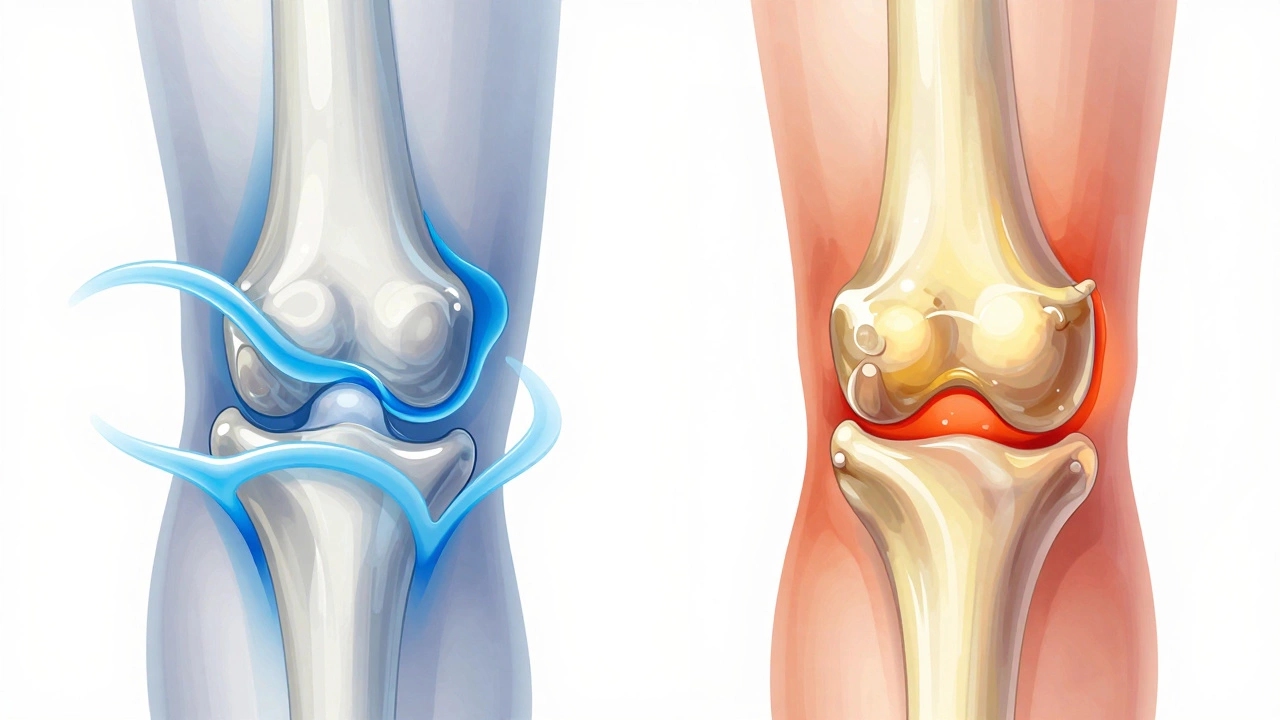
To fix the problem, you have to understand what is causing it. Knee stiffness isn’t just one thing; it’s usually a combination of three factors: inflammation, mechanical blockage, and muscle inhibition. When your joint is inflamed, the synovial fluid-the natural lubricant inside your knee-thickens. Think of it like cold honey versus warm water. Cold, thick fluid doesn’t flow well, making every movement feel gritty and resistant.
Then there is the mechanical aspect. If you have had a knee replacement a surgical procedure where damaged parts of the knee joint are replaced with artificial components, scar tissue (arthrofibrosis) can form around the new implant. This tissue is tough and unyielding, physically blocking the joint from bending fully. Even without surgery, osteoarthritis causes bone spurs (osteophytes) to grow along the edges of the joint. These bony projections can literally jam the mechanism, preventing full extension or flexion.
Finally, your muscles play a huge role. When your knee hurts, your brain subconsciously tells your quadriceps and hamstrings to tighten up to protect the joint. This is called muscle guarding. Over time, these shortened muscles pull on the knee cap and joint capsule, creating a cycle of tightness that makes stiffness worse. Breaking this cycle requires more than just waiting it out.
The Golden Window: Timing Is Everything
If you recently had surgery, you are operating under a strict deadline. The first six weeks after a total knee arthroplasty the standard surgical treatment for end-stage knee arthritis are critical. During this period, the tissues are healing but still pliable. If you don’t achieve at least 90 degrees of flexion and near-full extension within this window, reversing the stiffness becomes exponentially harder. After three months, scar tissue matures and becomes much tougher to break down.
For non-surgical cases, such as osteoarthritis, timing is less about a hard deadline and more about consistent daily management. Chronic stiffness tends to worsen with inactivity. The old adage “motion is lotion” holds true here. Moving the joint pumps fresh synovial fluid into the space, nourishing the remaining cartilage and keeping the joint capsule stretched. Neglecting movement leads to further contracture, meaning the joint permanently loses its ability to straighten or bend.
Proven Exercises to Regain Range of Motion
You cannot talk your way out of knee stiffness; you have to move your way out. Here are four specific movements that target the common restrictions. Perform these gently. Pain should be manageable-a sharp, stabbing pain means stop immediately. A dull ache or stretching sensation is normal.
- Heel Slides: Lie on your back with legs straight. Slowly slide your heel toward your buttocks, bending the knee. Hold for five seconds, then slowly slide it back down. Use a towel under your foot if it’s too slippery. Aim for 10-15 repetitions, two to three times a day. This targets flexion.
- Prone Hangs: Lie face down on the floor with your ankles hanging off the edge of the bed or couch. Let gravity gently pull your knee into extension. Relax your thigh muscles completely. Stay here for 30-60 seconds. This is crucial for restoring full straightening, which many patients neglect because they focus only on bending.
- Seated Knee Extensions: Sit in a chair with your feet flat. Slowly lift one heel until your leg is straight, squeezing your quad muscle at the top. Hold for five seconds, then lower slowly. This strengthens the quadriceps, which helps stabilize the knee and reduces the protective tightening mentioned earlier.
- Calf Raises: Stand holding onto a counter for balance. Rise up on your toes, then lower down. This warms up the posterior chain and improves blood flow to the lower leg, reducing overall stiffness.
Consistency beats intensity. Doing these exercises for 10 minutes twice a day is far more effective than an hour-long session once a week. Your joints respond to frequent, low-load stimulation.
When Home Care Isn't Enough: Professional Interventions
Sometimes, despite your best efforts, the stiffness remains stubborn. This is often the case with severe arthrofibrosis after knee replacement. In these scenarios, manual therapy by a skilled physical therapist is essential. They use specific techniques to mobilize the joint capsule and break up adhesions. Don’t shy away from this help; therapists have tools and leverage that you simply don’t have on your own body.
In more extreme cases, doctors may recommend a Manipulation Under Anesthesia (MUA). This procedure involves putting you to sleep and forcibly bending and straightening the knee to break up scar tissue. It sounds intense, but it is a standard rescue procedure when progress stalls. Success rates are highest when performed within the first three to four months post-surgery. Waiting longer reduces the likelihood of success because the scar tissue has become too dense.
Another option is corticosteroid injections. While these don’t reverse structural stiffness, they dramatically reduce inflammation. Less inflammation means less pain, which allows you to participate more aggressively in physical therapy. It’s a bridge, not a cure, but bridges can get you across difficult stretches of recovery.

Diet and Lifestyle: The Hidden Factors
Your knee doesn’t exist in a vacuum. Systemic inflammation affects every joint in your body. If you are eating a diet high in processed sugars, refined carbs, and trans fats, you are fueling the fire. Anti-inflammatory foods can make a tangible difference in how stiff you feel each morning. Focus on omega-3 fatty acids found in fatty fish like salmon, walnuts, and flaxseeds. Turmeric and ginger also have proven anti-inflammatory properties.
Weight management is another critical factor. Every pound of body weight exerts four pounds of pressure on your knees when walking. Losing just 10 pounds can remove 40 pounds of stress from your joints daily. This reduction in load decreases wear and tear, allowing the surrounding tissues to heal and relax. It’s not just about aesthetics; it’s about biomechanical efficiency.
| Strategy | Best For | Timeframe for Results | Risk Level |
|---|---|---|---|
| Home Exercise Program | Mild to moderate stiffness, maintenance | 2-6 weeks | Low |
| Physical Therapy | Post-surgical recovery, significant restriction | 4-12 weeks | Low |
| Corticosteroid Injection | Acute inflammation flare-ups | Immediate to 2 weeks | Low-Moderate |
| Manipulation Under Anesthesia | Severe arthrofibrosis, failed PT | Immediate (with follow-up PT) | Moderate-High |
Preventing Future Lock-Ups
Reversing stiffness is hard work; preventing it is easier. The key is maintaining flexibility and strength long-term. Don’t stop exercising just because the pain goes away. Incorporate dynamic stretching into your daily routine. Yoga and Pilates are excellent for building core stability and joint mobility simultaneously.
Listen to your body’s warning signs. If you notice increased stiffness after a long period of sitting, get up and move. Set a timer if you have to. Prolonged static positions cause the joint capsule to cool down and tighten. Regular micro-movements keep the synovial fluid circulating and the tissues supple.
Also, prioritize sleep. Poor sleep increases pain sensitivity and reduces the body’s ability to repair tissue. Aim for seven to eight hours of quality rest. Your knees do their best healing work while you’re unconscious. Ignoring sleep hygiene undermines all your daytime efforts.
How long does it take to reverse knee stiffness?
The timeline varies based on the cause. For mild stiffness due to inactivity, you may see improvement in 2-4 weeks with consistent exercise. Post-surgical stiffness can take 3-6 months of dedicated physical therapy. Severe cases involving scar tissue may require interventions like MUA, followed by several weeks of rehabilitation. There is no instant fix, but measurable progress should occur within the first month of consistent effort.
Can knee stiffness go away on its own?
Rarely. While acute inflammation may subside with rest, chronic stiffness caused by osteoarthritis or scar tissue will not resolve without intervention. In fact, resting too much often makes stiffness worse by allowing the joint capsule to tighten further. Active movement is required to maintain and restore range of motion.
Is heat or ice better for stiff knees?
Use heat before exercise to loosen up the tissues and increase blood flow. Apply ice after activity if there is swelling or acute pain. Heat helps with flexibility, while ice helps with inflammation. Using both strategically can maximize your mobility gains.
What causes knee stiffness in the morning?
Morning stiffness is typically caused by fluid accumulation and reduced circulation during sleep. In osteoarthritis, this is known as “gel phenomenon.” Gentle movement upon waking, such as ankle circles or seated leg swings, can help pump fluid out of the joint and restore mobility quickly.
When should I see a doctor for knee stiffness?
Consult a healthcare provider if stiffness is accompanied by severe pain, redness, warmth, fever, or if the knee locks mechanically (gets stuck and won’t move). Also seek advice if home exercises do not yield any improvement after four weeks, or if you are unable to bear weight on the leg.