Vitamin B12 Kidney Safety Checker
Enter your daily intake and select any applicable health conditions to see a personalized safety assessment based on medical guidelines. This tool helps identify if you fall into a "Caution" or "Monitor" category.
(Note: Results will disappear when you refresh the page.)
Assessment Result
Analysis Summary
Key Insight
Recommended Actions
You’ve probably heard that Vitamin B12 is the safe vitamin. It’s water-soluble, which means your body flushes out whatever it doesn’t need through urine. Unlike fat-soluble vitamins like A or D, where toxicity is a real concern, B12 seems harmless in excess. But here’s the question keeping people up at night: can taking too much B12 actually hurt your kidneys?
The short answer is no. For most healthy people, high doses of Vitamin B12 do not cause kidney damage. In fact, if you already have kidney disease, your doctor might monitor your B12 levels closely, but they rarely blame the vitamin for causing the problem in the first place. However, "safe" doesn’t mean "consequence-free." High B12 levels can be a red flag for other health issues, and there are rare scenarios where supplementation plays a role in kidney stress.
How Your Body Handles Excess Vitamin B12
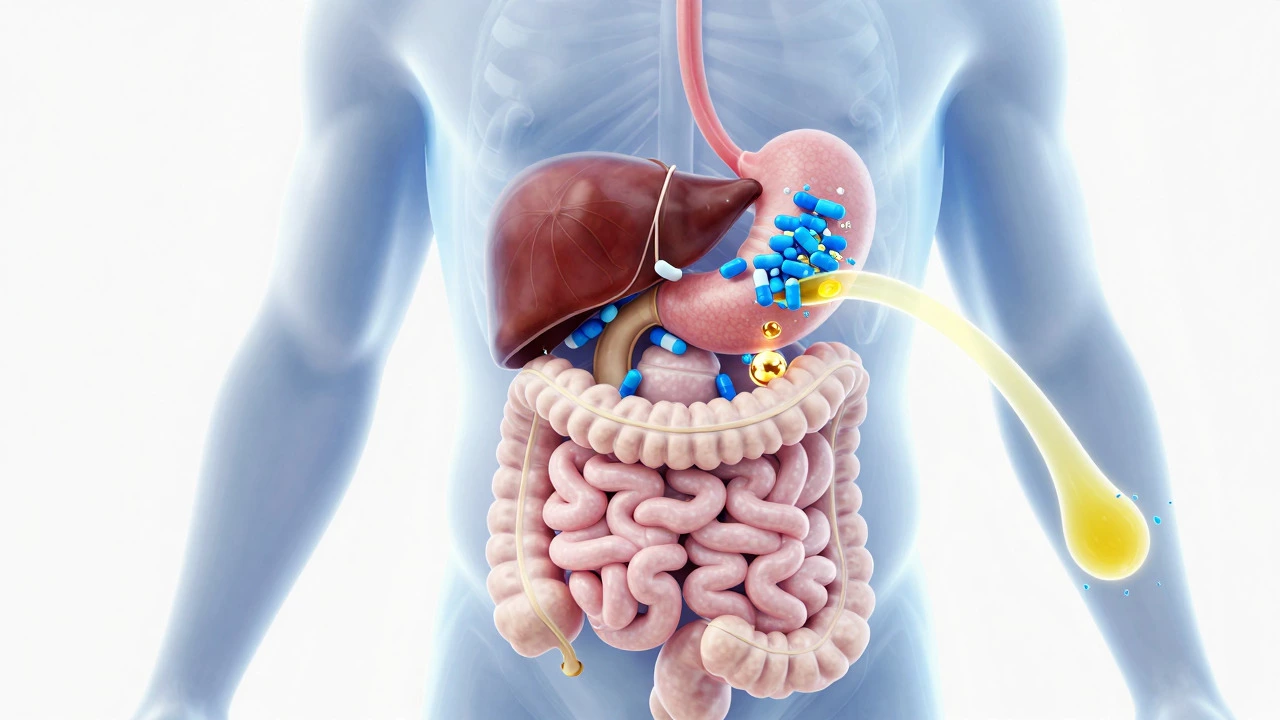
To understand why B12 isn’t typically toxic to your kidneys, you need to look at how your body processes it. When you swallow a B12 supplement-whether it’s a pill, a sublingual tablet, or part of an energy drink-the vitamin travels to your stomach. There, it binds with intrinsic factor, a protein produced by your stomach lining. This complex then moves to your small intestine, specifically the ileum, where it gets absorbed into your bloodstream.
Your liver acts as the main storage unit for Vitamin B12. It can hold enough reserves to last you three to five years. Because your body has this massive buffer, it doesn’t panic when you take a high dose. If your blood levels spike, your kidneys simply filter the excess and excrete it in your urine. This is why your pee might turn a bright yellow after taking B-complex vitamins; that’s just the unabsorbed B vitamins leaving your system.
This efficient filtration system protects your kidneys from direct chemical damage caused by B12 accumulation. The kidneys work hard, yes, but filtering water-soluble vitamins is within their normal operational capacity. You aren’t overloading them with toxins; you’re just asking them to process more fluid waste than usual.
When High B12 Levels Are a Warning Sign, Not a Cause
Here is where things get tricky. While taking extra B12 usually doesn’t damage your kidneys, having very high levels of B12 in your blood *can* indicate that something else is wrong with your organs, including your liver or kidneys.
If your blood test shows extremely high B12 levels (often above 2000 pg/mL) and you aren’t taking supplements, doctors get concerned. This elevation can happen because your cells are dying and releasing stored B12 back into the bloodstream. This cell turnover can occur due to:
- Liver disease: Conditions like hepatitis or cirrhosis can cause liver cells to rupture, dumping B12 into the blood.
- Kidney failure: If your kidneys aren’t filtering properly, B12 can build up in the blood because it’s not being excreted efficiently.
- Certain cancers: Blood cancers like leukemia can increase B12 levels due to rapid cell production and breakdown.
In these cases, the high B12 is a symptom, not the culprit. Your kidneys aren’t damaged *by* the B12; the B12 is high *because* your kidneys (or liver) are struggling. It’s crucial to distinguish between correlation and causation here. Seeing a high number on a lab report shouldn’t make you stop taking your prescribed B12 immediately, but it should prompt a conversation with your healthcare provider to rule out underlying conditions.
Rare Side Effects and Individual Sensitivities
Even though B12 is generally safe, "generally" leaves room for exceptions. Some people experience side effects from high-dose supplementation, even if those side effects don’t directly involve kidney tissue destruction.
One reported issue is acne or rosacea flare-ups. High doses of B12 can alter the composition of bacteria on your skin, leading to breakouts. While this doesn’t affect your internal organs, it’s a visible sign that your body might be sensitive to the dose.
There are also anecdotal reports of headaches, nausea, and diarrhea. These are usually mild and resolve once you lower the dose. However, for someone with pre-existing kidney issues, any additional strain on the body-even from mild gastrointestinal upset-can be uncomfortable. Dehydration from diarrhea, for instance, can temporarily stress the kidneys, but this is an indirect effect, not a direct toxic reaction to the vitamin itself.
B12 and Pre-Existing Kidney Disease
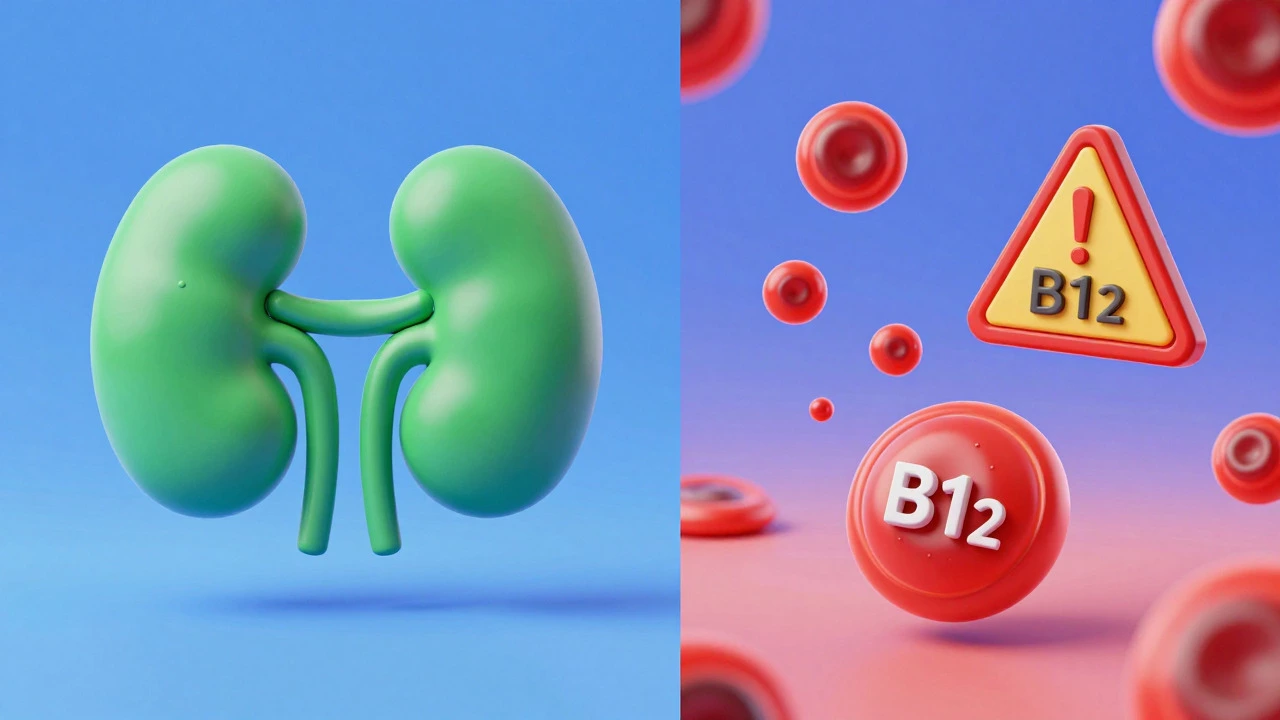
If you have chronic kidney disease (CKD), the rules change slightly. People with CKD often have anemia, a condition where you don’t have enough healthy red blood cells. Anemia is common in kidney patients because failing kidneys produce less erythropoietin, a hormone that tells your body to make red blood cells. Additionally, dialysis can wash out water-soluble vitamins like B12.
Because of this, many nephrologists (kidney specialists) actually *recommend* B12 supplementation for dialysis patients to help manage anemia. In this context, B12 is therapeutic, not harmful. However, monitoring is key. Since the kidneys are already compromised, their ability to regulate fluid and electrolyte balance is reduced. While B12 itself isn’t nephrotoxic (kidney-toxic), taking megadoses without medical supervision could lead to imbalances in other nutrients or interactions with medications used to treat kidney disease.
For example, some studies suggest that very high levels of B12 might interact with certain antibiotics or chemotherapy drugs. If you are on a complex medication regimen for kidney health, always check with your doctor before adding high-dose supplements. The interaction risk is low, but it’s not zero.
The Role of Herbal Supplements and Hidden Ingredients
Since you’re looking into herbal supplements, it’s important to note that B12 is rarely sold as a pure herbal product. It’s a synthetic or bacterial-derived vitamin. However, many "energy blends" or "kidney support" formulas include B12 alongside herbs like dandelion root, nettle leaf, or parsley.
Here’s the catch: while B12 is safe, some herbal ingredients in these multi-vitamin blends can stress the kidneys if taken in large amounts. For instance, excessive consumption of licorice root can raise blood pressure and lower potassium levels, which strains the kidneys. Similarly, high doses of vitamin C (often paired with B vitamins) can increase oxalate production, potentially leading to kidney stones in susceptible individuals.
So, if you’re worried about kidney damage from a supplement containing B12, look at the *other* ingredients. The B12 is likely innocent, but the herbal cocktail around it might not be. Always read the label carefully. Look for third-party testing seals (like USP or NSF) to ensure the product contains what it claims and nothing harmful.
| Vitamin Type | Solubility | Toxicity Risk | Kidney Impact |
|---|---|---|---|
| Vitamin B12 | Water-soluble | Very Low | Minimal; excess excreted in urine |
| Vitamin D | Fat-soluble | Moderate/High | High doses can cause calcium buildup, stressing kidneys |
| Vitamin C | Water-soluble | Low/Moderate | High doses may increase kidney stone risk in prone individuals |
| Vitamin A | Fat-soluble | High | Excess can cause liver and kidney stress |

Who Should Be Cautious with B12 Supplements?
While the average person can safely take high-dose B12, certain groups should proceed with caution:
- People with Leber’s Disease: This is a rare genetic eye disorder. B12 can worsen optic nerve damage in these patients. It’s a specific contraindication, unrelated to kidneys, but critical to know.
- Poly-cystic Kidney Disease (PKD) Patients: Some research suggests that high levels of homocysteine (which B12 helps lower) might affect PKD progression. While lowering homocysteine is generally good, the interplay is complex. Consult a specialist.
- Individuals on Metformin: Metformin, a common diabetes drug, can interfere with B12 absorption. Doctors often prescribe B12 to counteract this. Here, the supplement is necessary, but dosing should be monitored to avoid unnecessary excess.
Practical Tips for Safe Supplementation
If you want to boost your energy or correct a deficiency, follow these guidelines to keep your kidneys happy:
- Stick to Recommended Doses: The Recommended Dietary Allowance (RDA) for adults is 2.4 micrograms per day. Many supplements contain 500-1000 micrograms. This is still considered safe, but there’s no benefit to taking mega-doses unless prescribed.
- Hydrate Well: Since excess B12 is excreted via urine, drinking plenty of water helps your kidneys flush it out easily. Dehydration puts unnecessary strain on the filtration system.
- Get Tested First: Don’t guess. Ask your doctor for a serum B12 test. If you’re deficient, supplement. If you’re normal, you probably don’t need a high-dose pill every day.
- Watch for Interactions: Tell your doctor about all supplements you take, especially if you have kidney issues. Some herbal remedies can interact with prescription meds.
Conclusion: Balance Is Key
So, can too much B12 damage your kidneys? For the vast majority of people, no. Your body is designed to handle excess B12 by flushing it out. The real risks lie in ignoring underlying health problems that manifest as high B12 levels, or in combining B12 with other potentially stressful substances in herbal blends.
Treat supplements as tools, not candy. Use them to address a specific need, stay hydrated, and listen to your body. If you feel fine and your blood work looks good, your kidneys are likely thanking you for the simple, effective support of a well-managed nutrient intake.
What are the symptoms of too much Vitamin B12?
True toxicity from B12 is rare. However, high doses can sometimes cause acne, rosacea, headaches, nausea, or diarrhea. If you experience these, try lowering your dose. Persistent symptoms should be discussed with a doctor.
Does Vitamin B12 cause kidney stones?
No, Vitamin B12 itself does not cause kidney stones. However, high doses of Vitamin C, which is often found in the same multivitamins, can increase oxalate levels and potentially contribute to stone formation in susceptible people.
Is it safe to take 1000 mcg of B12 daily?
Yes, for most healthy adults, 1000 mcg is considered safe. The body absorbs only what it needs, and the rest is excreted. However, long-term use of such high doses should be monitored by a healthcare provider, especially if you have existing health conditions.
Can B12 injections harm the kidneys?
B12 injections deliver the vitamin directly into the muscle, bypassing the digestive system. They are generally safe for the kidneys. The same principle applies: excess is filtered and excreted. Allergic reactions are rare but possible, so medical supervision is recommended.
Why would my B12 levels be high if I’m not taking supplements?
High B12 levels without supplementation can signal underlying issues such as liver disease, kidney dysfunction, or certain types of cancer. It’s important to consult a doctor to investigate the root cause rather than assuming it’s harmless.