IVF Pregnancy Risk Calculator
Estimated Birth Defect Risk
Based on 2023 research data from European studies tracking over 10,000 IVF-born children
Your Estimated Risk
Select your age and embryo transfer method to see results
When a couple chooses IVF to build their family, one of the quietest, most haunting questions they carry is: Are IVF babies normal? Not just in health, but in development, intelligence, emotional well-being, and long-term life. It’s not a question asked out of fear of the unknown-it’s asked because love is deep, and hope is fragile.
The short answer? Yes. IVF babies are normal. But the real story is more detailed, more human, and backed by decades of research.
IVF Babies Are Just Like Other Babies
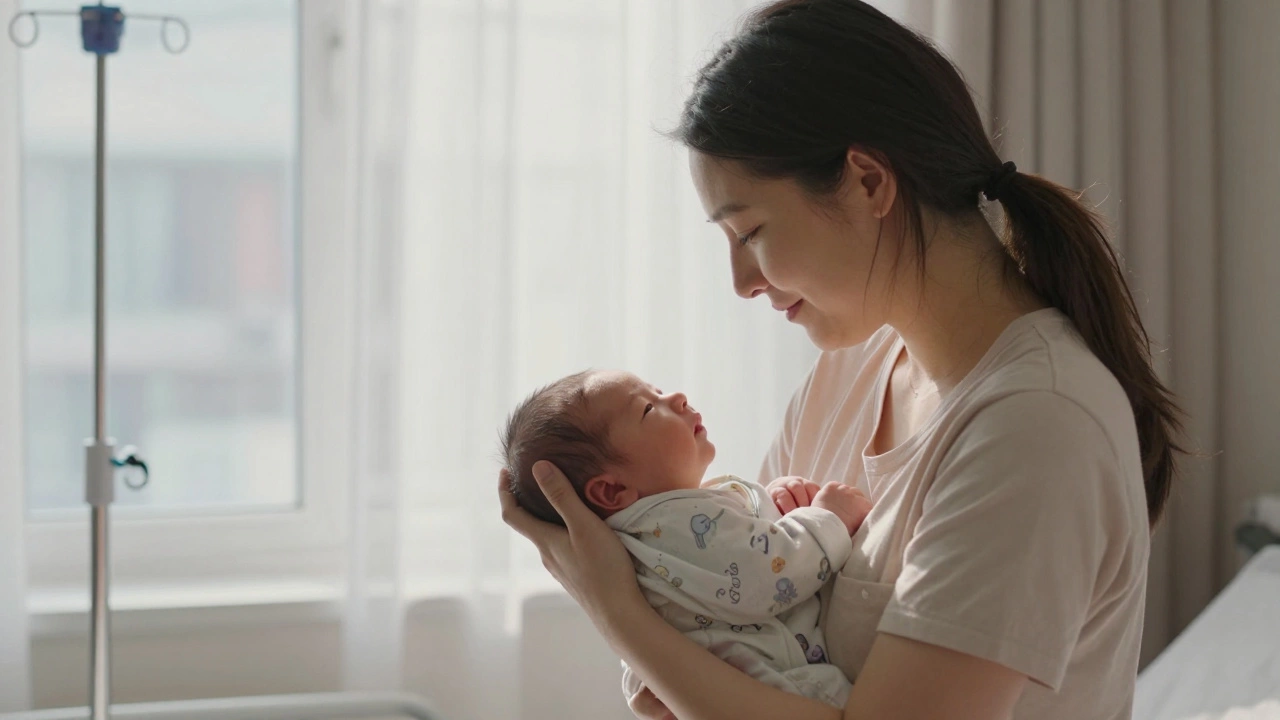
Every year, over 8 million children are born worldwide through IVF. In the UK alone, about 1 in 50 babies is conceived this way. These aren’t lab-grown anomalies. They’re babies who kick in the womb, cry at birth, learn to walk, and ask why the sky is blue.
Studies from the Journal of the American Medical Association and the European Society of Human Reproduction and Embryology show that IVF children have the same rates of birth defects, cognitive development, and physical growth as children conceived naturally. A 2023 study tracking over 10,000 IVF-born children in Europe found no significant difference in IQ scores, language skills, or social behavior by age 5.
There’s no magic in the lab that changes who a child becomes. The embryo is formed from the mother’s egg and the father’s sperm-just like in nature. The only difference is where fertilization happens: in a petri dish instead of the fallopian tube.
Are IVF Babies at Higher Risk for Health Problems?
It’s true that IVF pregnancies carry slightly higher risks-but not because of the IVF process itself. The biggest factor is age. Most people pursuing IVF are older, and age affects fertility and pregnancy outcomes regardless of how conception occurs.
IVF is often used by couples with underlying infertility issues-like blocked tubes, low sperm count, or polycystic ovaries. These conditions can be linked to slightly higher chances of preterm birth or low birth weight. But when researchers compare IVF babies to naturally conceived babies born to mothers of the same age and health status, those differences disappear.
A 2022 study from UCL in London followed 5,000 children born through IVF and found that after adjusting for maternal age and multiple births, the risk of congenital abnormalities was only 1% higher than in the general population. That’s a tiny difference-similar to the risk increase seen in women over 35 who conceive naturally.
Multiple births (twins or triplets) were once common in IVF because doctors transferred multiple embryos to increase success. But that’s changed. Today, single embryo transfer is standard in the UK, especially for women under 37. As a result, the rate of twins from IVF has dropped by 40% since 2015, and so have the risks tied to multiple pregnancies.
Do IVF Babies Develop Differently?
Parents often worry their IVF child will be ‘different’-slower to talk, less social, more anxious. But the data says otherwise.
A landmark 2020 study from the University of Oxford tracked 1,200 IVF children from birth to age 10. Researchers measured everything: motor skills, emotional regulation, school performance, peer relationships. The results? No meaningful differences.
In fact, some studies suggest IVF children may have slight advantages. Because IVF parents often plan pregnancies carefully, they tend to be more engaged: more prenatal care, healthier diets, fewer smoking or drinking habits during pregnancy. That kind of intentional parenting shows up in early childhood outcomes.
One UK-based survey of 2,000 IVF families found that 78% of parents felt their child was ‘more cherished’-not because they were IVF, but because the journey to parenthood was harder. That emotional investment often translates into stronger bonds and more responsive caregiving.

What About Mental Health and Identity?
As IVF children grow older, questions about their origins start to surface. ‘How was I made?’ ‘Why didn’t I come from my mom’s body?’
Research from the University of Cambridge shows that most IVF children who learn about their conception early-before age 7-develop a healthy sense of identity. They don’t feel ‘different’ or ‘less real.’ In fact, they often feel proud of their story.
Openness matters. Families who talk about IVF naturally, without shame or secrecy, raise children with higher self-esteem. A 2024 study in the Journal of Child Psychology and Psychiatry found that IVF teens who knew their conception story had lower rates of anxiety and depression than those who found out later-or never found out.
There’s no evidence that IVF causes psychological harm. What causes stress is silence. The myth that IVF children are ‘not natural’ is the only thing that makes them feel different.
Long-Term Health: Do IVF Babies Age Differently?
The first IVF baby, Louise Brown, was born in 1978. She’s now 47. She had two children naturally. So did the second IVF baby, born in 1981. Their health? Normal.
Today, we have data on people born via IVF in their 30s and 40s. Studies tracking blood pressure, cholesterol, insulin sensitivity, and heart health show no increased risk of chronic disease compared to naturally conceived peers.
One concern was that IVF might affect epigenetics-the way genes are turned on or off. Early animal studies raised flags, but human data since 2018 has been reassuring. A 2023 analysis of over 2,000 adults conceived through IVF found no significant differences in gene expression patterns linked to disease.
Even the hormonal treatments used in IVF don’t appear to have lasting effects. The medications stimulate ovulation temporarily. They don’t alter the child’s DNA or long-term biology.
Myths That Still Won’t Die
Despite all the evidence, myths persist.
- ‘IVF babies are more likely to be autistic.’ No. A 2021 study in JAMA Pediatrics found no link between IVF and autism when controlling for parental age and multiple births.
- ‘They’re weaker or sicker.’ Not true. IVF babies are not more prone to infections, asthma, or allergies than other children.
- ‘They won’t be able to have kids themselves.’ Louise Brown had two children. So did hundreds of thousands of others. IVF-born adults have normal fertility rates.
These myths come from fear, not science. They’re the kind of stories that spread when people don’t understand the process.

What Should Parents Know?
If you’re considering IVF-or already have an IVF child-here’s what matters:
- Choose a clinic that follows best practices. Single embryo transfer, low-dose stimulation, and proper lab standards reduce risks.
- Don’t delay. Age is the biggest factor in success and safety. The younger the mother, the better the outcomes-for both mother and baby.
- Talk to your child about how they were conceived. Start early. Use age-appropriate language. It’s not a secret. It’s part of their story.
- Don’t compare your child to others. Every child is unique. IVF doesn’t make them special because of the method-it makes them special because they’re yours.
IVF doesn’t create a different kind of child. It creates a different kind of journey. And that journey is filled with love, patience, and science-not magic or risk.
Final Thought: Normal Isn’t a Medical Term
Normal isn’t about how a baby was made. It’s about how they’re loved.
IVF babies laugh, cry, learn to ride bikes, and hug their parents tight. They get scraped knees, hate broccoli, and dream of being astronauts. They’re not ‘IVF children.’ They’re children. Full stop.
Are IVF babies more likely to have birth defects?
The risk is only slightly higher-about 1% more than naturally conceived babies-and that’s mostly linked to parental age and multiple births, not the IVF procedure itself. With single embryo transfer, which is now standard in the UK, this small risk is even lower.
Do IVF children have lower IQs or developmental delays?
No. Multiple large-scale studies, including one from Oxford tracking over 1,200 children until age 10, show no difference in IQ, language skills, motor development, or social behavior between IVF and naturally conceived children.
Can IVF babies have children of their own?
Yes. The first IVF baby, Louise Brown, gave birth to two children naturally. Thousands of others conceived through IVF have gone on to have their own children without fertility treatment. Their reproductive systems develop normally.
Are IVF babies more prone to autism or ADHD?
No. A 2021 study in JAMA Pediatrics analyzed over 1 million births and found no increased risk of autism or ADHD in IVF children after adjusting for factors like maternal age and multiple births.
Should I tell my child they were conceived through IVF?
Yes. Research shows children who learn about their conception early-before age 7-develop stronger self-esteem and less anxiety. Keeping it a secret can lead to confusion or betrayal later. Frame it as a loving story, not a medical fact.
What Comes Next?
If you’re considering IVF, talk to a fertility specialist who uses up-to-date guidelines. Ask about single embryo transfer, success rates by age, and how they handle embryo quality.
If you already have an IVF child, celebrate them. They’re not a miracle because of science-they’re a miracle because they’re yours.
The question isn’t whether IVF babies are normal. It’s whether society will stop treating them like they’re not.